Congressional -
            Executive Commission on China
  Home     Search     Printer Friendly Subscribe/Unsubscribe to
Commission Email & Newsletter


Return to the 2006 Annual Report Home Page

The CECC has prepared the following HTML version of its 2006 Annual Report for the readers' convenience. If you would like to view the official Government Printing Office text of the Annual Report, please refer to the Adobe Acrobat PDF or Plain Text Format versions.

CONGRESSIONAL-EXECUTIVE COMMISSION ON CHINA

2006 ANNUAL REPORT

IX. North Korean Refugees in China

Findings

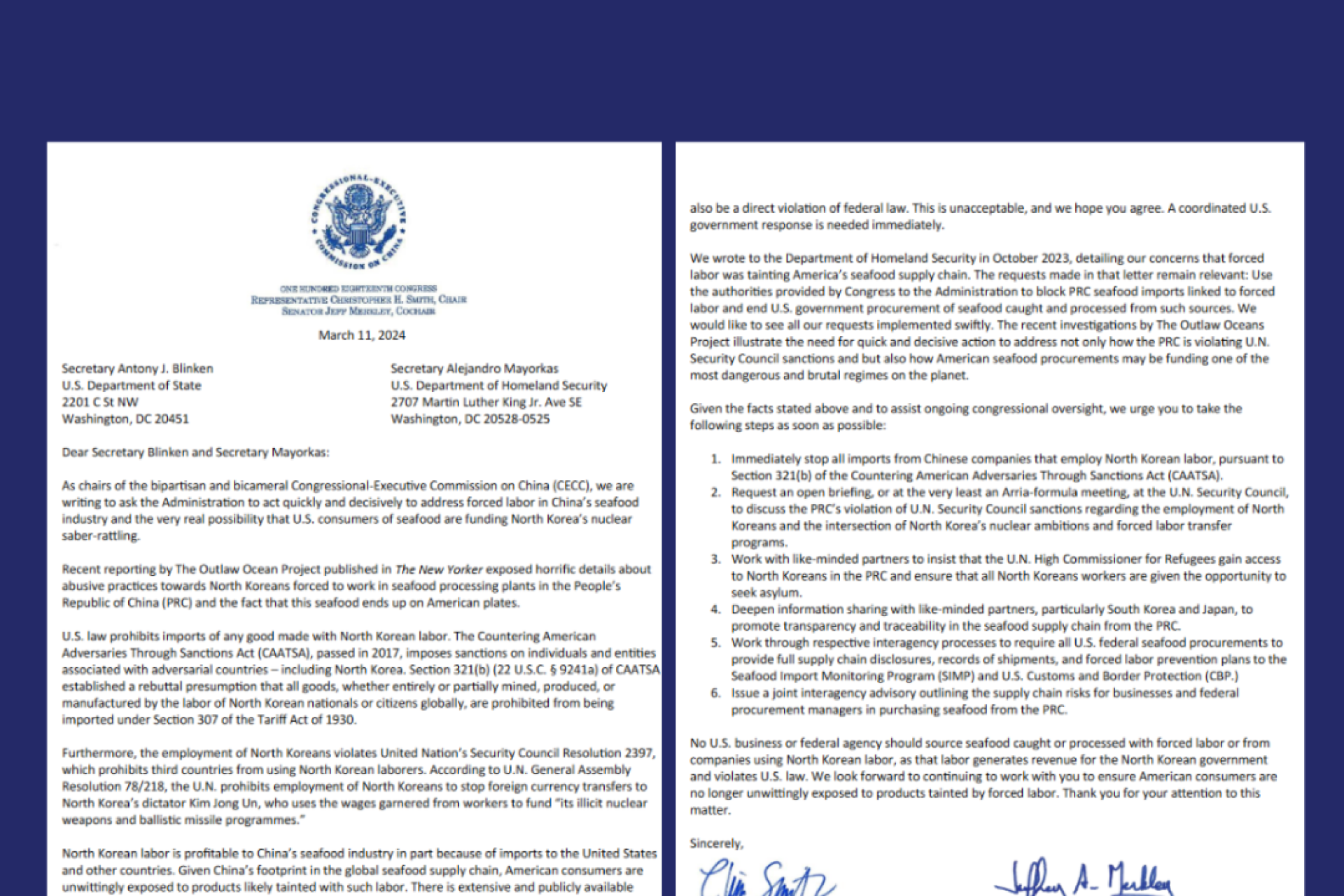
  • The Chinese government forcibly repatriates North Korean refugees facing starvation and political and religious persecution in their homeland, contravening its obligations under the 1951 Convention relating to the Status of Refugees and its 1967 Protocol. Chinese authorities detained and returned to the Democratic People's Republic of Korea (DPRK) thousands of North Koreans in 2005. The government classifies all North Koreans who enter China without documents as illegal economic migrants and claims it must return them to the DPRK, even though North Korean defectors meet the definition of refugees under international law. Repatriated North Koreans face long prison sentences, torture, and execution.
  • Without legal status, North Korean refugees in China are vulnerable to abuse and exploitation. There are an estimated 20,000 to 50,000 North Koreans currently hiding in northeastern China, and some NGOs estimate that the number of refugees is much higher. The government refuses the UN High Commissioner for Refugees (UNHCR) access to North Korean refugees, and fines and imprisons humanitarian workers who assist North Koreans in China. Officials in Beijing met with UNHCR Antonio Guterres in March 2006 during the first UNHCR visit to China since 1997. In July 2006, the Chinese government for the first time allowed three North Korean refugees to travel directly from the U.S. Consulate in Shenyang, Liaoning province, to the United States to seek asylum.

The Chinese government forcibly repatriates North Korean refugees fleeing starvation and political and religious persecution in their homeland.1 The U.S. State Department and NGO sources report that Chinese authorities detained and returned to the Democratic People's Republic of Korea (DPRK) thousands of North Koreans in 2005.2 The government provides financial rewards to security officials who detain North Koreans and to citizens who reveal the locations of refugees.3

The government's repatriation of North Korean refugees contravenes its obligations under the 1951 Convention relating to the Status of Refugees (1951 Convention) and its 1967 Protocol. The 1951 Convention and its Protocol mandate that "no Contracting State shall expel or return ('refouler') a refugee in any manner whatsoever to the frontiers of territories where his life or freedom would be threatened on account of his race, religion, nationality, membership of a particular social group or political opinion."4 The government bases its policy of repatriating North Koreans on a 1961 treaty with the DPRK and a subsequent 1986 border protocol,5 but international law concerning refugees supersedes any such bilateral commitments.6

The government classifies all North Koreans who enter China without documents as illegal economic migrants and claims it must return them to the DPRK, even though North Korean defectors meet the definition of refugees under international law. In March, a Ministry of Foreign Affairs (MFA) spokesperson reiterated the government's position that undocumented North Koreans in China are "illegal migrants and not refugees."7 The 1951 Convention and its Protocol, however, define a refugee as someone who, "owing to well-founded fear of being persecuted for reasons of race, religion, nationality, membership of a particular social group or political opinion, is outside the country of his nationality and is unable or, owing to such fear, is unwilling to avail himself of the protection of that country."8 The UN Special Rapporteur on Human Rights in North Korea also recognized in a 2005 report that North Koreans who have crossed the border into other countries for reasons of livelihood are refugees sur place, or those "who did not leave their country of origin for fear of persecution, but who fear persecution upon return."9

Repatriated North Koreans face long prison sentences, torture, and execution. Article 233 of the amended North Korean Penal Code states that any citizen "who crosses a frontier of the Republic without permission shall be committed to a detention labor facility for up to two years," and Article 62 says that any citizen "who defects to a foreign country or to the enemy in betrayal of the country and the people shall be committed to a reform institution for not less than five years. In cases where the person commits an extremely grave offense, he or she shall be given life imprisonment in a reform institution, the death penalty or have their property confiscated."10 According to international NGO sources, the "grave offenses" include leaving the DPRK multiple times,11 meeting with foreigners, and returning to the DPRK with the intention of becoming Christian missionaries.12 Testifying before a Commission hearing, an international humanitarian worker said that North Korean officials summarily executed one refugee's repatriated sister and son for converting to Christianity and interacting with Chinese Christians while in China.13 Conditions in North Korean labor camps and prisons are harsh, and defector testimonies "document cases of beatings, forced labor, degrading treatment, torture, and execution."14

Without legal status, North Korean refugees in China are vulnerable to abuse and exploitation. Jay Lefkowitz, U.S. Special Envoy for Human Rights in North Korea, estimates that at least 20,000 to 50,000 North Koreans currently are hiding in northeastern China.15 Some NGOs estimate that the number of refugees is much higher.16 Trafficking in North Korean women, who make up two-thirds of the refugees,17 is widespread,18 and the Chinese government has done little to combat the network of traffickers along the North Korean border.19 International NGOs estimate that traffickers intercept 70 to 80 percent of all North Korean women entering China.20 Traffickers sell the majority of women into marriage and a smaller number into prostitution21 [see Section V(e)--Status of Women--Trafficking of Women and Girls]. Few North Korean children and children born in China from Chinese-Korean marriages have access to education,22 and traffickers have sold babies born to North Korean women in China.23

Officials in Beijing met with Antonio Guterres, the UN High Commissioner for Refugees (UNHCR), in March 2006 during the first UNHCR visit to China since 1997. State Councilor Tang Jiaxuan told Guterres that "the Chinese government attaches great importance to the protection of refugees."24 During Guterres' visit, an MFA spokesperson said that the Chinese government was "considering how to improve and perfect the . . . legal system" pertaining to refugees.25 The State Council is considering new Regulations on the Administration of Refugees, according to its 2006 Legislative Plan.26 Guterres said the UNHCR would be "fully engaged in supporting the Chinese authorities to make sure that this legislation is in full compliance with international law."27

The government refuses the UNHCR access to North Korean refugees, and Chinese guards outside the UNHCR office in Beijing block access to North Korean and other refugees. This policy contravenes a 1995 agreement between the UN and the Chinese government which provides that "UNHCR personnel may at all times have unimpeded access to refugees and to the sites of UNHCR projects in order to monitor all phases of their implementation."28 Chinese security forces that guard the UNHCR office29 and foreign embassies30 in Beijing drive away North Koreans who try to present refugee petitions or seek asylum. In a March 30 statement, the White House expressed "grave concern" over China's repatriation of refugee Kim Chun-hee and called upon the Chinese government "not to return North Korean asylum seekers without allowing UNHCR access to these vulnerable individuals."31 In July 2006, the Chinese government for the first time allowed three North Korean refugees to travel directly from the U.S. Consulate in Shenyang, Liaoning province, to the United States to seek asylum.32

The government fines and imprisons international humanitarian workers who assist North Koreans in China. Chinese authorities sentenced South Korean citizen Choi Yong-hun to five years in prison and fined him 30,000 yuan (US$3,750) in May 2003 for assisting North Koreans in China.33 Authorities in Yanji city in the Yanbian Korean Autonomous Prefecture detained U.S. citizen Philip J. Buck in May 2005 for his role in assisting North Koreans in China to seek asylum in a third country.34 In August 2006, authorities convicted Reverend Buck of human smuggling, and sentenced him to deportation and prohibition from returning to China.35 A South Korean Ministry of Foreign Affairs and Trade report released in September 2005 said that, of the 64 South Koreans detained by Chinese authorities since 2001 for helping North Koreans in China, 15 are still in detention.36 The government imposes fines of 1,000 yuan (US$125) on Chinese citizens who shelter North Korean refugees37 and offers financial rewards to citizens who turn in those assisting North Koreans.38


Notes to Section IX--North Korean Refugees in China

1 Bill Powell, "Long Walk to Freedom," Time Magazine (Online), 23 April 06;<www.time.com> U.S. Committee for Refugees and Immigrants (Online), "World Refugee Survey 2006," China section, 14 June 06.<www.refugees.org> In August 2005, Chinese authorities detained seven North Koreans seeking asylum in a South Korean international school in Yantai and repatriated them in September. For the two years before the incident, North Korean refugees had been largely successful in seeking asylum on international school grounds in China. Park Song-wu, "China Hands Over 8 NK Refugees," Korea Times (Online), 11 October 05; "China Changes Tack on Asylum," Seoul JoongAng Daily (Online), 11 October 05.<joongangdaily.joins.com>

2 Bureau of Democracy, Human Rights, and Labor, U.S. Department of State, Country Reports on Human Rights Practices--2005, China (includes Tibet, Hong Kong, and Macau), 8 March 06.<www.state.gov> More than one-third of the 65 North Korean refugees in Yanbian interviewed by Refugees International in 2003 and 2004 had been repatriated at least once, and 14 percent had been repatriated multiple times. Joel Charny, "Acts of Betrayal: The Challenge of Protecting North Koreans in China," Refugees International, April 2005, 11.<www.refugeesinternational.org>

3 Life Funds for North Korean Refugees (Online), "Mother of 5-year-old Repatriated to North Korea," 1 March 06;<www.northkoreanrefugees.com> Joel Charny, "North Korean Asylum Seekers in China Face Heightened Risk of Deportation," Refugees International (Online), 27 August 04.<www.refugeesinternational.org> In June 2004, public notices posted throughout Yanji asked residents to be on the lookout for illegal North Korean migrants and to turn in any to local police for deportation. Charny, "Acts of Betrayal," 9.<www.refugeesinternational.org>

4 Convention relating to the Status of Refugees, 28 July 51 by the United Nations Conference of Plenipotentiaries on the Status of Refugees and Stateless Persons convened under General Assembly resolution 429 (V) of 14 December 50, art. 33. China acceded to the Convention on September 24, 1982.<www.unhcr.org>

5 Democratic People's Republic of Korea Ministry of State Security, People's Republic of China Ministry of Public Security, Mutual Cooperation Protocol for the Work of Maintaining National Security and Social Order in the Border Area, Rescue the North Korean People Urgent Action Network (RENK), 12 August 86.<www.bekkoame.ne.jp> The protocol commits each side to treat as illegal those border crossers who do not have certificates, except in cases of "calamity or unavoidable factors." According to James Seymour, RENK obtained and translated the document in December 2002. Seymour writes that "this document cannot be authenticated, but it does not seem implausible." James Seymour, "China: Background Paper on the Situation of North Koreans in China," commissioned by the UNHCR, Protection Information Section, January 2005, 13.<www.nautilus.org>

6 Seymour, "China: Background Paper on the Situation of North Koreans in China," 5.<www.nautilus.org>

7 Ministry of Foreign Affairs (Online), "Foreign Ministry Spokesperson Qin Gang's March 21, 2006 Press Conference" [2006 nian 3 yue 21 ri waijiaobu fayanren Qin Gang zai liexing jizhehui shang da jizhe wen], 21 March 06.<2006年3月21日外交部发言人秦刚在例行记者会上答记者问 | ipc.fmprc.gov.cn> The UNHCR distinguishes between refugees and economic migrants by defining the latter as someone who "leaves a country voluntarily to seek a better life. Should he or she elect to return home they would continue to receive the protection of their government." UNHCR, "The 1951 Refugee Convention: Questions & Answers," July 2003, 10.<www.unhcr.org>

8 Convention relating to the Status of Refugees, art. 1.<www.unhcr.org>

9 The UN Special Rapporteur on Human Rights in North Korea, "Question of the Violation of Human Rights and Fundamental Freedom in any Part of the World: Situation of Human Rights in the Democratic People's Republic of Korea," 10 January 05, 13.<www.unhcr.org>

10 DPRK Penal Code, amended 2004, arts. 233, 62. For an English translation of the quoted sections of these articles, see Norma Kang Muico, "An Absence of Choice: The Sexual Exploitation of North Korean Women in China," Anti-Slavery International, 9 November 05, 2.<www.antislavery.org> Sometime during and after the 1995-1998 famine, the North Korean government began to distinguish between repatriated North Koreans who sought political refugee status in China and those who simply crossed the border in search of food or employment. The government seems to have reduced the standard sentence for those in the latter category to less than six months. Charny, "Acts of Betrayal," 12.<www.refugeesinternational.org>

11 Liberty in North Korea (Online), "LiNK Team Returns From China," 6 December 05.<www.linkglobal.org>

12 Charny, "Acts of Betrayal," 2.<www.refugeesinternational.org>

13 Combating Human Trafficking in China: Domestic and International Efforts, Hearing of the Congressional-Executive Commission on China, 6 March 06, Testimony and Written Statement Submitted by Abraham Lee, Director of Public Relations, Crossing Borders; Muico, "An Absence of Choice," 10.<www.antislavery.org>

14 Muico, "An Absence of Choice," 12.<www.antislavery.org>

15 North Korea: Human Rights Update and International Abduction Issues, Joint Hearing of the Subcommittee on Africa, Global Human Rights and International Operations and Subcommittee on Asia and the Pacific, Committee on International Relations, U.S. House of Representatives, 27 April 06, Testimony and Written Statement Submitted by Jay Lefkowitz, Special Envoy for Human Rights in North Korea, U.S. Department of State.<www.internationalrelations.house.gov>

16 Joel Charny points out that although the most common estimate of North Koreans in China is 100,000 to 300,000, the estimate is "problematic" given the lack of publicly available data and the fact that many North Koreans in China move back and forth across the border seeking temporary employment rather than political asylum. Charny, "Acts of Betrayal," 5.<www.refugeesinternational.org>

17 Mikyoung Kim, "Beijing's Hot Potato: North Korean Refugees and Human Rights Debates," Association for Asian Research (Online), 16 March 05.<www.asianresearch.org>

18 Office to Monitor and Combat Trafficking in Persons, U.S. Department of State, 2006 Trafficking in Persons Report, 5 June 06.<www.state.gov>

19 Combating Human Trafficking in China, Written Statement and Testimony of Wenchi Yu Perkins, Director, Anti-Trafficking and Human Rights Program, Vital Voices, Written Statement and Testimony of Abraham Lee.

20 Ibid.; Life Funds for North Korean Refugees (Online), "Speech to Joint Session of NGOs and Lawmakers of 4 Nations," 1 Aug 05.<www.northkoreanrefugees.com> According to Norma Kang Muico, "[t]raffickers seek out North Korean women to exploit at river crossings, train stations, or markets." Muico, "An Absence of Choice," 3.<www.antislavery.org> In addition to the high number of trafficked North Korean women in China, many women are trafficked multiple times, escaping only to be caught again. Combating Human Trafficking in China, Written Statement and Testimony of Abraham Lee.

21 Muico, "An Absence of Choice," 3, 5, 6.<www.antislavery.org> Traffickers rely on deception and coercion to force North Korean women into marriage or prostitution. Combating Human Trafficking in China, Written Statement and Testimony of Abraham Lee. There is a considerable market for wives in the Yanbian Autonomous Region, where the male-female ratio among the unmarried age group after schooling is 14:1. Charny, "Acts of Betrayal," 11.<www.refugeesinternational.org>

22 Most of these children do not have access to education because they are not Chinese citizens. The Chinese government does not recognize Chinese-North Korean marriages and does not grant citizenship to children born from these marriages. Charny, "Acts of Betrayal," 11;<www.refugeesinternational.org> Life Funds for North Korean Refugees (Online), "Border Report January 2006," January 2006.<www.northkoreanrefugees.com>

23 Life Funds for North Korean Refugees (Online), "Interview with Our Local Staff Members in China," January 2006.<www.northkoreanrefugees.com>

24 "State Councilor: China To Continue Strengthening Cooperation With UNHCR," People's Daily (Online), 23 March 06.<english.people.com.cn>

25 "Foreign Ministry Spokesperson Qin Gang's March 21, 2006 Press Conference."<2006年3月23日外交部发言人秦刚在例行记者会上答记者问 | ipc.fmprc.gov.cn>

26 "The State Council's Legislative Plan for 2006" [Guowuyuan 2006 nian lifa jihua], Eastday (Online), 30 March 06.<国务院2006年立法计划 |shszx.eastday.com>

27 UNHCR (Online), "Statement to Media by UN High Commissioner for Refugees Antonio Guterres, on Conclusion of His Mission to the People's Republic of China," 23 March 06.<www.unhcr.org>

28 Article III(5) United Nations (United Nations High Commissioner for Refugees) and China, Agreement on the Upgrading of the UNHCR Mission in the People's Republic of China to UNHCR Office in the People's Republic of China, UNTS Vol. 1898/1899, I-3237, 1 December 95, 61-71.<www.internationalrelations.house.gov> Excerpted text available at: North Korea: Human Rights, Refugees, and Humanitarian Challenges, Hearing of the Subcommittee on Asia and the Pacific, Committee on International Relations, U.S. House of Representatives, 28 April 04, Written Statement Submitted by Tarik M. Radwan, Assistant Professor of Law, Handong International Law School, Pohang, Korea, and Advocate with Jubilee Campaign.

29 Bureau of Population, Refugees, and Migration, U.S. Department of State, The Status of North Korean Asylum Seekers and the U.S. Government Policy Towards Them, 11 March 05.<www.state.gov>

30 Benjamin Kang Lim, "Women Most Vulnerable of North Korean Refugees," Reuters, posted on the Crossing Borders Web site, 27 July 05.<www.bahraintribune.com>

31 White House (Online), "Statement on China's Treatment of Kim Chun-hee," 30 March 06;<www.whitehouse.gov> "High Commissioner for Refugees Visits China, Objects to North Korean Repatriation," CECC China Human Rights and Rule of Law Update, May 2006, 2-3.

32 "The Lucky Ones," Wall Street Journal (Online), 4 August 06.<online.wsj.com> In 2005, the Chinese government allowed several hundred North Koreans to travel to South Korea after they had sought refuge at diplomatic compounds or international schools in China. Nevertheless, most North Koreans hiding in China who wish to seek asylum have to travel to a third country to seek asylum or resettlement as refugees. In May 2006, six refugees arrived in the United States as the first North Koreans to be granted asylum under the North Korean Human Rights Act of 2004. The six North Koreans had traveled secretly through China to a Southeast Asian country to seek refuge in a U.S. Embassy. U.S. Department of State, Country Reports on Human Rights Practices--2005, China;<www.state.gov> Melanie Kirkpatrick, "The New Underground Railroad," Wall Street Journal (Online), 12 May 06.<www.opinionjournal.com>

33 The Plight of North Korean Migrants in China: A Current Assessment, Staff Roundtable of the Congressional-Executive Commission on China, 19 April 04, Written Statement Submitted by Kim Sang Hun, activist on behalf of North Korean refugees.

34 David Chircop, "Everett Pastor Out of Chinese Prison," Everett Daily Herald (Online), 21 Aug 06.<heraldnet.com>

35 David Chircop, "Everett Missionary Hopes to Shine a Light on China," Everett Daily Herald (Online), 23 Aug 06.<heraldnet.com>

36 "Fifteen South Koreans Detained in China for Aiding N.K. Defectors," Yonhap News (Online), 23 September 05.

37 U.S. Committee for Refugees and Immigrants, "World Refugee Survey 2006."<www.refugees.org>

38 Life Funds for North Korean Refugees, "Speech to Joint Session of NGOs and Lawmakers of 4 Nations."<www.northkoreanrefugees.com>

   Back to Top   Back To Top

  Previous Page  Previous Page
  Site Map   |  Contact Us  

The page was last modified on December 8, 2006
© 2002-2005 Congressional-Executive Commission on China - All Rights Reserved.