Congressional -
            Executive Commission on China
  Home     Search     Printer Friendly Subscribe/Unsubscribe to
Commission Email & Newsletter

Return to the 2006 Annual Report Home Page

The CECC has prepared the following HTML version of its 2006 Annual Report for the readers' convenience. If you would like to view the official Government Printing Office text of the Annual Report, please refer to the Adobe Acrobat PDF or Plain Text Format versions.

CONGRESSIONAL-EXECUTIVE COMMISSION ON CHINA

2006 ANNUAL REPORT

V. Monitoring Compliance with Human Rights


V(d) Freedom of Religion

Introduction | Regulation on Religious Affairs | Other Developments | Religious Freedom for Tibetan Buddhists | Religious Freedom for China's Catholics and China-Holy See Relations | Religious Freedom for China's Muslims | Islam in the Xinjiang Uighur Autonomous Region | Religious Freedom for China's Orthodox Christians | Religious Freedom for China's Protestants | Government Persecution of Falun Gong

Findings

  • Chinese government restrictions on the practice of religion violate international human rights standards. Freedom of religious belief is protected by the Chinese Constitution and laws, but government implementation of Communist Party policy on religion, and restrictions elsewhere in domestic law, violate these guarantees. The Chinese government tolerates some aspects of religious belief and practice, but only under a strict regulatory framework that represses religious and spiritual activities falling outside the scope of Party-sanctioned practice. Religious organizations are required to register with the government and submit to the leadership of "patriotic religious associations" created by the Party to lead each of China's five recognized religions: Buddhism, Catholicism, Daoism, Islam, and Protestantism. Those who choose not to register with the government, or groups that the government refuses to register, operate outside the zone of protected religious activity and risk harassment, detention, imprisonment, and other abuses. Registered communities also risk such abuse if they engage in religious activities that authorities deem a threat to Party authority or legitimacy.
  • The 2004 Regulation on Religious Affairs (RRA) has not afforded greater religious freedom to Chinese citizens, despite government claims that it represented a "paradigm shift" by limiting state control over religion. Like earlier local and national regulations on religion, the RRA emphasizes government control and restrictions on religion. The RRA articulates general protection only for freedom of "religious belief," but not for expressions of religious belief. Like earlier regulations, it also protects only those religious activities deemed "normal," without defining this term. Although the RRA includes provisions that permit registered religious organizations to select leaders, publish materials, and engage in other affairs, many provisions are conditioned on government approval and oversight of religious activities.
  • Chinese government enforcement of Party policy on religion creates a repressive environment for the practice of Tibetan Buddhism. Party policies toward the Dalai Lama and Panchen Lama, the second-ranking Tibetan spiritual leader, seek to control the fundamental religious convictions of Tibetan Buddhists. Government actions to implement Party policies caused further deterioration in some aspects of religious freedom for Tibetan Buddhists in the past year. Officials began a patriotic education campaign in Lhasa-area monasteries and nunneries in April 2005. Expressions of resentment by Tibetan monks and nuns against the continuing campaign resulted in detentions, expulsions, and an apparent suicide. Chinese officials continue to hold Gedun Choekyi Nyima, the boy the Dalai Lama recognized as the Panchen Lama in May 1995, in incommunicado custody along with his parents.
  • Tibetan Buddhist monks and nuns constituted 21 of the 24 known political detentions of Tibetans by Chinese authorities in 2005, compared to 8 of the 15 such known detentions in 2004, based on data available in the Commission's Political Prisoner Database. None of the known detentions of monks and nuns in 2005 took place in Sichuan province, a shift from the previous three years, but known detentions of monks and nuns in Qinghai and Gansu provinces increased during the same period. Based on data available for 50 currently imprisoned Tibetan monks and nuns, their average sentence length is approximately nine years and six months. In one positive development, the government permitted the resumption of a centuries-old Tibetan Buddhist tradition of advanced study that leads to the highest level of scholarly attainment in the Gelug tradition.
  • Government repression of unregistered Catholic clerics increased in the past year. Based on NGO reports, officials in Hebei and Zhejiang provinces detained a total of 38 unregistered clerics in 13 incidents in the last year, while in the previous year officials detained 11 clerics in 5 incidents. The government targets Catholic bishops who lead large unregistered communities for the most severe punishment. Bishop Jia Zhiguo, the unregistered bishop of Zhengding diocese in Hebei province, has spent most of the past year in detention. Bishop Jia has been detained at least eight times since 2004.
  • Government harassment and abuse of registered Catholic clerics also increased in the past year. In November and December 2005, three incidents were reported in which officials or unidentified assailants beat registered Catholic nuns or priests after they demanded the return of church property. In April and May 2006, officials began a campaign to increase control over registered Catholic bishops. Officials detained, sequestered, threatened, or exerted pressure on dozens of registered Catholic clerics to coerce them into participating in the consecration of bishops selected by the state-controlled Catholic Patriotic Association but not approved by the Holy See.
  • Government authorities also restricted contact between registered clergy and the Holy See, denying bishops permission to travel to Rome in September 2005 to participate in a meeting of Catholic bishops. Authorities continued to permit some registered priests and nuns to study abroad.
  • The Chinese government strictly controls the practice of Islam. The state-controlled Islamic Association of China aligns Islamic practice to Party goals by directing the training and confirmation of religious leaders, the publication of religious materials, the content of sermons, and the organization of Hajj pilgrimages, as well as by indoctrinating religious leaders and adherents in Party ideology and government policy.
  • The government severely represses Islamic practice in the Xinjiang Uighur Autonomous Region (XUAR), especially among the Uighur ethnic group. Local regulations in the XUAR impose restrictions on religion that are not found in other parts of China. The government's religious repression in the XUAR is part of a broader policy aimed at diluting expressions of Uighur identity and tightening government control in the region. The government continues to imprison Uighurs who engage in peaceful expressions of dissent and other non-violent activities. Writer Nurmemet Yasin and historian Tohti Tunyaz remain in prison for writing a short story and conducting research on the XUAR.
  • The Chinese government continues to repress Chinese Protestants who worship in house churches. From May 2005 to May 2006, the government detained nearly 2,000 house church members, according to one U.S. NGO. Almost 50 percent of the reported detentions of Protestant house church members and leaders took place in Henan province, where the house church movement is particularly strong. In June 2006, Pastor Zhang Rongliang, the leader of one of China's largest house churches, was sentenced to seven years and six months in prison for "illegally crossing the national border" and "fraudulently obtaining a passport." Authorities have detained or imprisoned Pastor Zhang multiple times since 1976. Pastor Gong Shengliang is serving a life sentence in declining health, and was beaten in prison during the past year.
  • The Chinese government continues to maintain strict control over the registered Protestant church. The RRA requires that all Protestants worship at registered churches, regardless of their differences in doctrine and liturgy. The state-controlled Three-Self Patriotic Movement, which leads the registered Protestant church in China, continues to impose a Party-defined theology, called "theological construction," on registered seminaries that is intended to "weaken those aspects within Christian faith that do not conform with the socialist society." In the past year, authorities detained a registered Protestant pastor in Henan province for conducting a Bible study meeting at a registered Protestant church outside his designated geographic area.
  • The Chinese government continues to disrupt the relationships that many house churches maintain with co-religionists outside China, including raiding meetings between house church leaders and overseas Protestants, and preventing foreign travel by house church leaders. The Chinese government also continues to restrict and monitor the ties of the registered Protestant Church with foreign denominations.
  • Government persecution of the Falun Gong spiritual movement continued during the past year. Authorities use both criminal and administrative punishments to punish Falun Gong practitioners for peacefully exercising their spiritual beliefs. The state-controlled press has reported on at least 149 cases of Falun Gong practitioners currently in prison, but Falun Gong sources estimate that up to 100,000 practitioners have been detained since 1999. Manfred Nowak, UN Special Rapporteur on Torture, reported after his November 2005 visit to China that Falun Gong practitioners account for two-thirds of victims of alleged torture by Chinese law enforcement officers. Tsinghua University student Wang Xin was sentenced to nine years' imprisonment in 2001 for downloading Falun Gong materials from the Internet and printing leaflets.
  • Despite strict government controls on the practice of religion, Chinese authorities accommodate the social programs of Buddhist, Daoist, Catholic, Muslim, and Protestant communities when these programs support Party goals. For example, domestic Muslim civil society organizations carry out social welfare projects, and international Muslim charities have supported projects in Gansu and Shaanxi provinces, as well as in the XUAR. The Amity Foundation, affiliated with the registered Protestant Church, sponsors projects in social services and development aid, including education, healthcare, and care for the elderly.

Introduction

Chinese government restrictions on the practice of religion violate international human rights standards.1 Freedom of religious belief is protected by the Chinese Constitution2 and laws,3 but government implementation of Communist Party policy on religion, and restrictions elsewhere in domestic law, violate these guarantees. Although Party doctrine acknowledges the presence of religion in Chinese society, the Party's central tenets remain at odds with religion.4 The Party promotes atheism among Chinese citizens, and has continued efforts to dismiss religious believers from its ranks.5

The government acknowledges only five belief systems as religions entitled to legal protection: Buddhism, Catholicism, Daoism, Islam, and Protestantism. While the State Administration for Religious Affairs (SARA) has established an office to oversee religions and folk beliefs other than these five,6 legal protections are restricted to these five in practice,7 with only limited exceptions.8 Some local regulations also restrict legal protections to these five religions.9 Religious organizations affiliated with recognized religions must register with the government and apply for government approval to establish churches, mosques, temples, or other religious venues. The government claims that citizens do not need official approval to conduct worship services in private homes "mainly attended by relatives and friends for religious activities such as praying and Bible reading,"10 but no national law or regulation specifically protects worship at home,11 and authorities have shut down services held in private homes.12

The Chinese government tolerates some aspects of religious belief and practice, but only under a strict regulatory framework that represses religious and spiritual activities falling outside the scope of Party-sanctioned practice. The government's policies create a hierarchy of religious communities subject to different forms of government control. The government and Party exercise control over registered religious communities through the "patriotic religious associations" created by the Party to lead each recognized religion.13 The patriotic associations ensure that religious doctrine conforms to state policy by controlling such matters as the training of religious leaders, contacts with religious groups outside China, the interpretation of religious texts, the content of sermons, and the publication of religious materials.14 Despite such controls, a visiting delegation from the U.S. Commission on International Religious Freedom found that the government nonetheless provides a "zone of toleration" for registered religious communities acting within the parameters set by the government.15 Religious adherents also have reported being able to worship in authorized venues without direct government interference.16 Those who choose not to register with the government, or groups that the government refuses to register, operate outside the zone of protected religious activity and risk harassment, detention, imprisonment, and other abuses. Members of approved organizations also risk harassment, detention, imprisonment, and other abuses if they engage in religious activities that authorities deem a threat to Party authority or legitimacy.

Legal protections for freedom of religion are narrow. By stating only that "religious belief" is under constitutional protection,17 the Constitution does not broadly protect the exercise of religion, including public expressions of belief. Instead, the Constitution and Chinese laws and regulations provide protection only for "normal religious activity." Laws and regulations do not clearly define what constitutes "normal religious activity," and this vague term is subject to arbitrary interpretation by implementing officials.18

Officials interpret and implement domestic laws and policies on religion inconsistently, resulting in uncertainty among religious believers about potential government actions. Such inconsistencies have led to additional restrictions in practice beyond those specified in law. In some cases, regional variations in implementation have resulted in more official tolerance for religion, and in unregistered groups being allowed to operate.19 In a few cases, local authorities have registered groups affiliated with a religion not recognized by the central government, as well as groups that are part of a recognized religion but have not affiliated with a patriotic religious association.20 In other cases, however, variations in implementation have resulted in official abuses and repression of religious activities.

Although the SARA acknowledges and manages some "folk" beliefs, the government does not give them the same protections as recognized religions, despite widespread practice throughout China. The government tolerates some practices associated with "folk" religions,21 but also designates some other popular practices as "feudal superstitions," which it denounces and in some cases penalizes.22

The government does not recognize spiritual movements as belief systems protected under the law, and in some cases, the government persecutes practitioners. The government designates some spiritual movements, such as the Falun Gong, as "cults" and applies criminal and administrative punishments against them.23 In 2006, the government continued its campaign of persecution against Falun Gong members.

Foreign residents or visitors may conduct worship services for foreign members of their own religious communities,24 and foreign faith-based NGOs operate in China.25 National rules governing foreigners' religious activities forbid them, however, from "cultivating followers from among Chinese citizens," distributing "religious propaganda materials," and carrying out other missionary activities.26

Regulation on Religious Affairs

The 2004 Regulation on Religious Affairs (RRA)27 has not afforded greater religious freedom to Chinese citizens, despite government claims that it represented a "paradigm shift" by limiting state control over religion.28 Like earlier local and national regulations on religion,29 the RRA emphasizes government control and restrictions on religion. The RRA articulates general protection only for freedom of "religious belief,"30 but not for expressions of belief. Like earlier regulations, it also protects only those religious activities deemed "normal,"31 without defining this term. Although the RRA includes provisions that permit registered religious organizations to select leaders, publish materials, and engage in other affairs, many provisions are conditioned on government approval and oversight of religious activities.32

Party doctrine guides implementation of the RRA. The Party's United Front Work Department continues to administer religious matters alongside the government's religious affairs bureaus,33 and in doing so, ensures that the RRA is implemented in line with Party directives. During 2006, local authorities cited Party policy as a guiding influence when addressing religious issues and implementing the RRA.34

The RRA and related regulations35 subject religious communities to onerous and arbitrary registration requirements that give the government discretion to deny recognition to religious communities. Like earlier regulations,36 the RRA requires religious groups to apply for approval from the government to operate as an organization or to establish a venue for religious activities.37 Among other requirements, a group must have 50 or more members to apply for recognition as an official organization.38 Once recognized, religious organizations must fulfill conditions such as demonstrating a "necessity to frequently carry out collective religious activities" to gain permission to build a venue for religious activities.39

The RRA's protections for religious activities are limited. Although the RRA states that it protects the "lawful rights and interests" of religious believers, it does not specifically protect individual public displays of religious belief, which is a protected component of religious freedom under international human rights standards.40 In addition, it requires collective religious activities "in general" to be conducted at registered venues41 and does not specify that religious believers or religious members of a family may practice a religion within their own homes, although some local regulations appear to permit this practice.42

International human rights standards define freedom of religion to include the "freedom to prepare and distribute religious texts or publications."43 While the RRA provides that authorized religious organizations and venues may compile and print materials for internal and public distribution, the RRA requires such publications to be prepared in accordance with national regulations.44 The Chinese government imposes strict prior restraints on religious literature in national regulations that go beyond restrictions on other types of publications45 [see Section V(a)--Special Focus for 2006: Freedom of Expression].

The RRA provides for government oversight of the appointment of religious personnel. Although the RRA permits authorized religious organizations to select religious personnel, it requires them, in most cases, to report this selection to the local religious affairs bureau.46 In addition, the RRA singles out the appointment of reincarnated Tibetan Buddhist lamas and Catholic bishops for reporting to higher levels of government, and in the case of reincarnated Tibetan Buddhist lamas, appointments require government approval.47

The RRA provides administrative penalties, ranging from fines to the possibility of administrative detention, for violations of its provisions.48 While it sanctions government officials who abuse their authority when administering religious policy,49 it is unclear whether this provision protects unregistered organizations and venues that lack legal standing. The RRA directs most of its provisions on legal liability at ordinary citizens, religious organizations, or venues that violate its provisions.50 Some of the RRA's penalties are absent in earlier regulations. For example, the RRA for the first time proscribes Hajj pilgrimages that are organized without government authorization and subjects violators to fines.51

The RRA also represents a codification, and in some cases expansion, of limited protections for authorized religion found in older regulations on religion. For example, the RRA permits registered religious organizations and venues to engage in social welfare activities, as earlier local regulations have allowed.52 It also permits registered religious organizations and venues to accept contributions from abroad,53 while previous regulations have not granted this permission in such explicit terms.54 The RRA specifies time limits for decisionmaking by government agencies, and permits administrative appeal of actions and decisions by religious affairs bureaus.55

At the same time, the RRA lacks some of the restrictions found in earlier regulations. For example, the RRA does not specify that only the five recognized religions are protected, and does not reinforce the authority of patriotic religious associations by naming them, as in the case of some local regulations.56 Some observers suggest that the omission of previous controls, coupled with vague language within the RRA, may signify more tolerance toward religion.57 Without further clarification, however, such omissions and wording do not grant new rights. Moreover, the RRA's vague language, including the lack of a definition of "normal religious activity," generates inconsistent interpretations not only in the implementation of the RRA itself but also in the drafting of new local regulations.

The RRA does not mention the status of local regulations.58 Since the RRA entered into force, however, at least six provincial-level governments have issued new or amended comprehensive regulations on religion. These regulations are generally consistent with the RRA with respect to provisions on establishing religious organizations and venues,59 but differ in other areas. For example, a new regulation from Henan province restricts the term "religion" to Buddhism, Daoism, Islam, Catholicism, and Protestantism.60 In April 2005, the Shanghai municipal government amended its 1995 regulation on religious affairs to remove a previous reference to the five recognized religions.61 All of the new and amended regulations appear to provide citizens with a degree of permission to practice an authorized religion at home, but the wording of each regulation on this issue varies.62 The amended Shanghai regulation expands its previous section on legal liability, increasing both penalties and protections for religious believers;63 the Henan regulation contains the most detailed provision on the liability of government officials.64

Other Developments

In December 2005, the government announced the establishment of the China Religious Culture Communication Association (CRCCA), which it described as a non-profit social organization designed to promote religious exchanges, cooperation with other countries, and the dissemination of information about religion in China. Ye Xiaowen, Director of the State Administration for Religious Affairs (SARA), leads the association. CRCCA honorary chairman Bishop Fu Tieshan, Vice Chairman of the Standing Committee of the National People's Congress and Chairman of the Catholic Patriotic Association, called the association's establishment "beneficial for accurately publicizing China's policies on freedom of religious belief and the real state of affairs for religious belief."65

The government adopted measures during 2005 that provide freer access to information on religious regulations and to religious sites that charge admission. The SARA launched a Web site on December 1, 2005, that posts religion-related news and regulations, bringing greater transparency to the administration of religious affairs.66 The government also issued a circular in December 2005 requiring that religious sites charging admission to tourists must provide free entrance to religious adherents, although Chinese journalists investigating the circular in January 2006 found that implementation was inconsistent.67

Religious Freedom for Tibetan Buddhists

Chinese government enforcement of Communist Party policy on religion creates a repressive environment for the practice of Tibetan Buddhism. The Party tolerates religious activity only within the strict requirements of the Chinese Constitution, laws, regulations, and policies.68 The government interprets and enforces these requirements in a manner that interferes with the Tibetan Buddhist monastic education system and discourages devotion to the Dalai Lama and other important Tibetan Buddhist teachers who live in exile.69

Party polices toward the Dalai Lama and Panchen Lama, the second-ranking Tibetan spiritual leader, seek to control the fundamental religious convictions of Tibetan Buddhists. Government actions to implement Party policies caused further deterioration in some aspects of religious freedom for Tibetan Buddhists during the past year. Officials began a patriotic education campaign in Lhasa-area monasteries and nunneries in April 2005.70 The Chinese government and the Party mandate patriotic education as a recurrent feature of religious education to indoctrinate Tibetans on the relationship between religion and patriotism toward China, and to end the Dalai Lama's influence among Tibetans. Monks and nuns must pass examinations on political texts,71 agree that Tibet is historically a part of China, accept the legitimacy of the Panchen Lama installed by the Chinese government, and denounce the Dalai Lama.

In May 2006, Zhang Qingli,72 Secretary of the Tibet Autonomous Region (TAR) Party Committee, called on senior government and Party officials to widen the patriotic education campaign to include a broader population, and to intensify the "rectification" and restructuring of each monastery and nunnery's Democratic Management Committee (DMC),73 according to the TAR Party newspaper.74 Zhang told the officials that the Party is engaged in a "fight to the death struggle" against the Dalai Lama and his supporters, and that the Dalai Lama is "the biggest obstacle hindering Tibetan Buddhism from establishing normal order." Comprehensive implementation of the Regulation on Religious Affairs (RRA)75 will lead to the "normalization of religious order" and the "standardization of religious activity," Zhang said. Li Guangwen, Executive Vice Chairman of the TAR People's Congress Standing Committee, stressed "the need to step up legislative work in the area of the anti-separatism struggle and the management of religious affairs"76 at a meeting of Standing Committee members, probably in early June. In August, Zhang confirmed the Party's plans to broaden patriotic education in an interview with Western media: "We are organizing patriotic education everywhere, not just in monasteries. Those who do not love their country are not qualified to be human beings."77

Expressions of resentment by Tibetan monks and nuns against the continuing campaign resulted in detentions, expulsions, and an apparent suicide. At Sera Monastery, when monks were to be tested on patriotic education in July 2005, officials reportedly expelled 18 monks, of whom police detained 8.78 At about the same time, public security officials detained monk Tsering Dondrub and subjected Jangchub Gyaltsen, a Sera "disciplinarian,"79 to one year of surveillance80 for their roles in arranging an oral reading of a prayer that mentioned the Dalai Lama.81 Drepung Monastery monk Ngawang Jangchub apparently committed suicide in October 2005, after he argued with patriotic education instructors.82 Public security officials detained five Drepung monks (Abbot Ngawang Phelgyal, Ngawang Namdrol, Ngawang Nyingpo, Ngawang Thubten, and Phuntsog Thubwang) on November 23 after they refused instructions from patriotic education instructors to sign a document denouncing the Dalai Lama as a splittist, pledging loyalty to the Chinese government, and agreeing that Tibet is part of China.83 On November 25, some 400 monks gathered in Drepung's main courtyard and protested together silently against the patriotic education campaign and the accompanying crackdown.84 Authorities threatened to remove them by force and sealed the monastery for two days.85 Officials conducting patriotic education at Gyabdrag Nunnery in June 2005 expelled more than 40 nuns, and authorities expelled 13 nuns from Shugsib Nunnery.86

In December 2005, the government and Party stepped up a campaign to challenge the Dalai Lama's role as the spiritual leader of Tibetan Buddhists by increasing the prominence of Gyaltsen Norbu, the boy the State Council installed in 1995 as the 11th Panchen Lama.87 An official Chinese report on the 10th anniversary of Gyaltsen Norbu's installation referred to him as "the highest ranking figure in Tibetan Buddhism" and "the leader of Tibetan Buddhism."88 Chinese news media reports that rank Gyaltsen Norbu above the Dalai Lama, however, contradict previous official statements about the relationship between the Dalai Lama and Panchen Lama. In November 1995, Li Ruihuan, then a senior Politburo member, described the late 10th Panchen Lama89 as "a prominent leader of China's Tibetan Buddhism,"90 and a 1992 Chinese government White Paper described the 10th Panchen Lama as the "co-leader of Tibetan Buddhism with the Dalai Lama."91

Gyaltsen Norbu demonstrated support of the Party's policy92 to merge Tibetan Buddhism with patriotism toward China when he pledged at a December 2005 ceremony to be "a good living Buddha who loves his motherland, his religion, and serves his country and its people."93 A week later, he concluded a Buddhist ritual at the tombs of his predecessors by saying that he would "live up to the expectations of the Chinese Communist Party and the central government."94 Gyaltsen Norbu made his first appearance before an international gathering at the First World Buddhist Forum in Hangzhou city, Zhejiang province, on April 13, 2006.95 He told some 1,000 monks, nuns, and scholars from more than 30 countries that, "Defending the nation and working for the people is a solemn commitment Buddhism has made to the nation and society."96 The forum's organizers97 did not allow the Dalai Lama, Tibetan Buddhism's foremost representative, to attend. Qi Xiaofei, Deputy Director of the State Administration of Religious Affairs (SARA) told reporters on April 12 that the Dalai Lama is a stubborn secessionist who would "surely pose a really disharmonious note" if he had been invited.98

Chinese officials continue to hold Gedun Choekyi Nyima, the boy the Dalai Lama recognized as the Panchen Lama in May 1995, in incommunicado custody along with his parents.99 After the Dalai Lama announced his recognition of Gedun Choekyi Nyima, Chinese officials took the then six-year-old boy and his parents into custody. The State Council declared the Dalai Lama's announcement "illegal and invalid"100 and installed Gyaltsen Norbu, whose appointment continues to stir widespread resentment among Tibetans. The UN Committee on the Rights of the Child recommended in September 2005 that the Chinese government "allow an independent expert to visit and confirm the well-being" of Gedun Choekyi Nyima.101 In an official response to the UN Special Rapporteur on Freedom of Religion or Belief in September 2005, Chinese officials claimed that Gedun Choekyi Nyima is leading a "normal, happy life and receiving a good cultural education."102

The Party intends to strengthen its authority over Tibetan Buddhism by controlling the selection of the religion's most important leaders, including the Dalai Lama. Party officials assert that the next Dalai Lama will be selected in the same manner as Gyaltsen Norbu: by drawing a name from a golden urn. In July 2005, Jampa Phuntsog (Xiangba Pingcuo), Chairman of the TAR government, referred to the Dalai Lama's advancing age and told reporters that the next Dalai Lama will be identified by "the traditional rules of Tibetan Buddhism since the Qing dynasty."103 He denied that the Party interferes in the process.104 In 1995, however, Party Central Committee member and State Councilor Luo Gan, who is now a Politburo Standing Committee member, presided when Gyalsten Norbu's name was pulled from a golden urn.105 Jampa Phuntsog's comment about "the traditional rules of Tibetan Buddhism" refers to a 1792 Qing Dynasty edict demanding that the Tibetan government in Lhasa reform religious, administrative, economic, and military practices to suit the Qing court.106 The first of the edict's 29 articles directed that the Dalai Lama and Panchen Lama be selected by drawing lots from a golden urn, and that a high-ranking Chinese official must be present to confirm the result. Tibetans used their own methods, however, to identify the current Dalai Lama and his predecessor.107 Article 27 of the Regulation on Religious Affairs issued in 2004 includes the principle of the Qing directive by requiring that the identification of reincarnated lamas be performed in accordance with "religious ritual and historic conventions" and be subject to government approval.108

Tibetan Buddhist monks and nuns constituted 21 of the 24 known political detentions of Tibetans by Chinese authorities in 2005, compared to 8 of the 15 such known detentions in 2004, based on data available in the Commission's Political Prisoner Database (PPD) as of August 2006. This increased proportion in part reflects monks imprisoned for expressing their resentment of the patriotic education campaign. None of the known detentions of monks and nuns in 2005 took place in Sichuan province, a shift from the previous three years,109 but known detentions of monks and nuns in Qinghai and Gansu provinces in 2005 increased during the same period.110 Tibetan monks and nuns make up about 70 percent of the 103 currently detained or imprisoned Tibetan political prisoners, according to PPD data. Thirty-two of the monks and nuns were detained or imprisoned in the TAR, 22 in Sichuan province, 12 in Qinghai province, and 6 in Gansu province. Based on data available for 50 currently imprisoned Tibetan monks and nuns, their average sentence length is approximately nine years and three months. Several monks reportedly detained during patriotic education in Lhasa in 2005 remain unidentified and these figures do not reflect their cases.111

In one positive development, the government permitted the resumption in July 2004112 of a centuries-old Tibetan Buddhist tradition of advanced study that leads to the highest level113 of scholarly attainment in the Gelug tradition.114 A small number of lamas successfully completed the program in 2005 and 2006.115 Tibetan human rights monitors pointed out that even advanced lamas are required to study political texts promoting patriotism toward China,116 but also noted that the resumption of the program is a "welcome gesture."117 Chinese authorities shut the program down in 1966 at the start of the Cultural Revolution, and did not allow it to resume until 1986.118 Officials closed it again in March 1988 after Tibetan monks staged a peaceful pro-independence protest march in central Lhasa.119

Religious Freedom for China's Catholics and China-Holy See Relations

Government repression of unregistered Catholics increased in the past year.120 Based on NGO reports, officials in Hebei and Zhejiang provinces detained a total of 38 unregistered clerics and 90 unregistered laypersons in 13 incidents during the past year, while the preceding year officials detained 11 clerics in 5 incidents.121 Twelve of the 13 detention incidents reported since October 2005 occurred in Hebei province, where the unregistered Catholic community is particularly strong.122 The other reported detention incident occurred in Zhejiang province.123 Officials in Fujian province demolished an unregistered Catholic church in September.124

The government targets Catholic bishops who lead large unregistered communities for the most severe punishment. The government has detained Bishop Jia Zhiguo, the unregistered bishop of Zhengding diocese in Hebei province, at least eight times since 2004.125 Bishop Jia has spent most of the past year in detention. The government detained Bishop Jia from November 2005 to April 2006, when officials released him into residential surveillance.126 In May 2006, officials admitted Bishop Jia to the hospital for medical treatment, releasing him the following month into detention at an unknown location.127 Su Zhimin, the unregistered bishop of Baoding diocese in Hebei province, was detained in October 1997, and the government has refused to provide any information about his health or location.128 Su's auxiliary bishop, An Shuxin, was released after 10 years' detention in August 2006. An reportedly agreed to register with the government but not with the state-controlled Catholic Patriotic Association (CPA).129

Government harassment and abuse of registered Catholic clerics also increased in the past year. In November and December 2005, three incidents were reported in which officials or unidentified assailants beat registered Catholic nuns or priests after they had demanded that local governments return church property. In November 2005, officials beat a group of registered Catholic nuns in Tongyuan village, Shaanxi province.130 Also in November, unidentified assailants beat a group of registered Catholic nuns in Xi'an city, Shaanxi province.131 In December 2005, unidentified assailants beat a group of registered Catholic priests in Tianjin municipality.132 A Catholic news service reported additional incidents in which officials beat registered priests in Hebei province, but supplied no details.133 The recent increase in reports of violence toward registered clergy contrasts sharply with the situation between 2000 and 2004, during which there were no such reports. The same period was marked by a relative relaxation of control over registered bishops.134

In the beating incidents in Tongyuan, Xi'an, and Tianjin, the nuns or priests sought to recover property that had once belonged to Catholic dioceses or religious orders and that local governments had confiscated during the 1950s and 1960s.135 In violation of a 1980 State Council directive, local officials had refused to return the properties.136 One NGO reported that local governments in Xi'an and Tianjin have rented or sold church properties to third parties and retained the income.137 Incidents like these have occurred elsewhere in China.138

In April and May 2006, officials began a campaign to increase control over registered Catholic bishops, coercing bishops and priests to participate in episcopal consecrations not approved by the Holy See, and demanding that registered bishops uphold the government's authority to select bishops. Since the 1950s, the government has insisted that the Holy See lacks the authority to select Chinese bishops, and the state-controlled Catholic Patriotic Association (CPA) has selected bishops for the registered Church.139 Nevertheless, the registered Catholic community has increasingly acknowledged the spiritual leadership of the Holy See, and Catholic bishops and news agencies outside China have reported that, in recent years, the CPA has accepted the Holy See's discreet involvement in the selection process. Most or all recently consecrated registered bishops had been approved by the Holy See before their consecration.140

In April 2006, however, officials detained, sequestered, threatened, or otherwise exerted pressure on dozens of registered Catholic clerics to coerce them into participating in the consecration of bishops selected by the CPA but not approved by the Holy See. On April 30 and May 3, a group of registered bishops consecrated two new bishops who had not been approved by the Holy See.141 The CPA installed the new bishops in episcopal sees in Kunming city, Yunnan province, and Wuhu city, Anhui province. The CPA also installed a bishop, who was consecrated in 2000 without the approval of the Holy See, in the see of Mindong diocese in Fujian province.142 On May 19, the CPA convened a meeting of 18 registered bishops involved in recent episcopal consecrations and demanded they uphold the CPA's authority to select bishops without seeking approval from the Holy See.143 On May 27, CPA officials announced their refusal to recognize a bishop in Shaanxi province, a former registered priest who was consecrated by a registered bishop without the approval of the CPA, but with the approval of the Holy See. Officials forbade him to act as a bishop, harassed him for several months, and on September 11 detained him at an unknown location.144

Although a generation of elderly bishops has been passing away, the CPA has been slow to approve candidates for the registered sees. Over 40 registered dioceses had no bishops in April 2006.145 Because no priests were ordained during the Cultural Revolution period in the 1960s and 1970s, new bishops must be selected from priests in their thirties and early forties.146 Government officials and the Holy See are competing for the loyalty of the new bishops, since many who will be selected in the next few years are likely to be young men who will govern the Church into the distant future.147

The Holy See has not approved the consecration of new bishops for the unregistered community since 1999.148 In October 2005, an authoritative Vatican periodical recommended that the Holy See should unite the unregistered and registered communities by continuing its policy of approving the consecration of bishops only for the registered community.149 According to the proposal, as the unregistered bishops pass away, Holy See-approved registered bishops would become the sole point of reference for both communities. As a result of reports from authoritative Catholic sources abroad that most registered bishops have been legitimated or approved by the Holy See, unregistered Catholics increasingly have accepted Catholics practicing in the registered church.150

Government authorities restricted contact between registered clergy and the Holy See over the past year. In September 2005, the CPA denied bishops permission to travel to Rome to participate in a meeting of Catholic bishops.151 Since 2005, authorities have required registered clergy to report on their activities on a weekly basis.152 Authorities continued to permit some registered priests and nuns to study abroad, including in the United States. Authorities also permitted the continued development of the registered community's Catholic social service agencies, and new charitable groups have reportedly been founded.153

The Chinese government has not altered its longstanding public position that the Holy See must break relations with Taiwan and renounce its role in the selection of Chinese bishops before the government will open formal talks on establishing diplomatic relations.154 After the election of Pope Benedict XVI, the Chinese government reiterated its desire for diplomatic relations with the Holy See, but the tone of these public statements became progressively cooler during late 2005.155 In February 2006, the government responded to the elevation to the College of Cardinals of Bishop Zen Ze-kiun of Hong Kong by warning him to stay out of politics.156 In April 2006, Ye Xiaowen, Director of the State Administration for Religious Affairs, said that the issue of whether the CPA or the Holy See has the authority to select Catholic bishops "may be open to consultation."157 Church figures, however, interpreted the government's coerced consecration of bishops without Holy See approval in April and May as a diplomatic rebuff to the Holy See.158 In June, Chinese government officials met with Holy See representatives in Beijing, although the meeting reportedly yielded few concrete results.159

Religious Freedom for China's Muslims

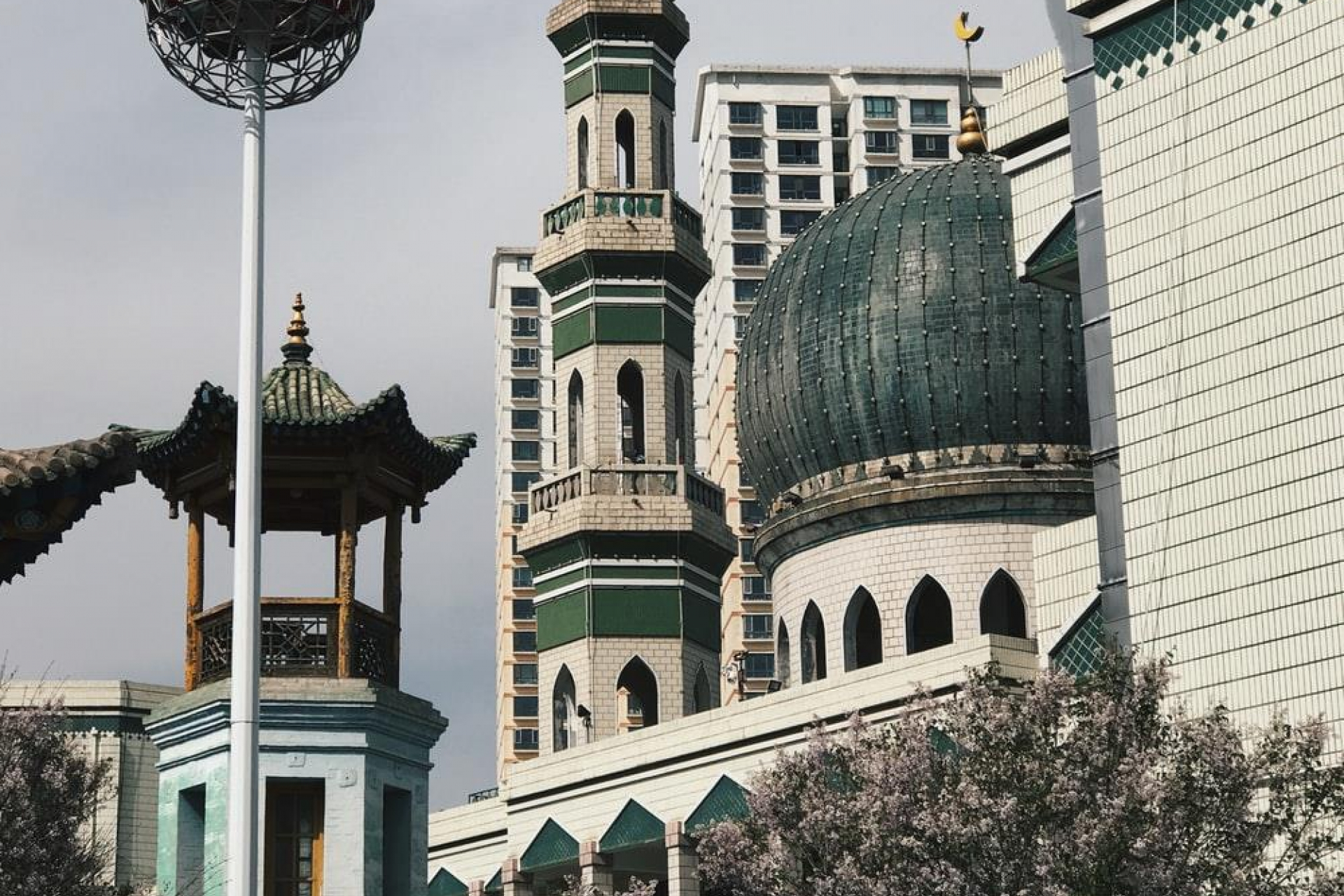
The Chinese government strictly controls the practice of Islam. The state-controlled Islamic Association of China160 aligns Islamic practice to Communist Party goals by directing the training and confirmation of religious leaders, the publication of religious materials, and the content of sermons, as well as by indoctrinating religious leaders and adherents in Party ideology and government policy.161 The Regulation on Religious Affairs acknowledges that Muslims may make pilgrimages abroad but limits such trips to those organized by the Islamic Association of China162 and penalizes those organizing pilgrimages without authorization.163 In May 2006, the Islamic Association of China announced it would establish an office to manage pilgrimages to Mecca.164 In 2005, the Association's Islamic Affairs Steering Committee, which controls the content of religious publications, announced that it was compiling a fourth edition of its "new collected sermons," noting that messages on patriotism and unity within the text contribute to building a "socialist harmonious society."165 In May 2006, the China Islamic Congress, which met to define the goals of the Islamic Association for the coming five years, passed a measure on confirming religious personnel that requires knowledge of the sermons.166

Official policy toward Islam reflects government and Party concern about maintaining control over, and stability within, China's Muslim population, which includes 10 ethnic groups under the government's classification system.167 In November 2005, the government said it was formulating national legislation to regulate halal foods, in part because of concerns that misuse of the halal label could "influence ethnic unity and social stability, and harm ethnic relations."168 After Muslims protested the publication of materials that they found offensive to Islam, the government issued a national circular in 1993 requiring strict examination of publications that "touch upon the Islamic religion" in order to "uphold social stability" and avoid "hurting the feelings of religious believers."169 A 1995 national circular on pilgrimages abroad requires provincial-level authorities to instruct pilgrims before departure on patriotism, socialism, "defending the unity of the motherland," and ethnic unity.170

The government accommodates Muslim communities in certain respects. Outside the Xinjiang Uighur Autonomous Region (XUAR), some Muslim communities and mosques have openly set up schools to provide children and adults with secular and religious education.171 Domestic Muslim NGOs carry out social welfare projects,172 and international Muslim charities have supported projects in Gansu and Shaanxi provinces, as well as in the XUAR.173

Islam in the Xinjiang Uighur Autonomous Region

The Chinese government severely represses Islamic practice in the Xinjiang Uighur Autonomous Region (XUAR), especially among the Uighur ethnic group.174 Some restrictions on religion in the XUAR are not found elsewhere in China. The XUAR's 1993 Implementing Measures for the Law on the Protection of Minors forbid parents and guardians to allow minors to engage in religious activity.175 No other provincial-level or national regulation on minors or religion contains this restriction.176 Amendments177 in 2001 to the XUAR's 1994 Regulation on the Management of Religious Affairs eliminated a clause that protected "normal religious activities," and limited the publication of religious materials to provincial-level religious organizations.178 Internal policy directives and handbooks also control the practice of religion in the region.179 One Chinese official said, "Xinjiang is different from other places in China. Islam is administered much more strictly there than elsewhere."180

In addition to these formal legal strictures, the government also implements harsh policies in practice. Authorities have detained Muslims for unauthorized possession and study of religious materials,181 forbidden students and discouraged adults from fasting during Ramadan,182 barred university students from conducting prayers in dormitory rooms,183 posted signs forbidding children from entering mosques,184 and revoked the credentials of imams deemed not to uphold Communist Party policy.185 The government limits the ability of Muslim communities in the XUAR to support social welfare programs.186 A visiting U.S. delegation in 2005 was told that the government has not authorized Uighurs to build new mosques since 1999.187

The government continued severe repression of religious practice in the XUAR during 2006, including a reported new restriction on who may enter mosques. According to one report, authorities now have included women in restrictions on mosque entry already enforced against children, Party members, and government workers, including retirees.188 Another report stated in January that authorities were conducting a month-long investigation aimed at "the masterminds of religious extremist forces" and other groups.189 In February, authorities raided a minority-language publishing market and confiscated 350 "illegally printed" religious posters.190 During the same month, official news media reported that XUAR authorities had confiscated 9,860 illegal publications involving religion, Falun Gong, or "feudal superstitions" during 2005.191 In April, Wang Lequan, XUAR Party Secretary, said that the XUAR government would intensify its work on religion and called for "resolutely curb[ing] illegal religious activities" and strengthening the "ideological and political consciousness" of religious figures.192

The government uses counterterrorism policies as a pretext for severely repressing religion in the XUAR.193 The government describes security conditions in the XUAR in a manner that suggests terrorist attacks continue in the region,194 even as official sources indicate that no terrorist attacks have taken place in the XUAR since 1999.195 Authorities continue to detain and arrest XUAR residents engaged in religious activities deemed unauthorized and have charged them with a range of offenses, including state security crimes.196 The government targets "religious extremism," splittism, and terrorism in anti-crime campaigns, calling them the "three evil forces."197 The government began tightening control over religious practice in the region in the early 1990s, following unrest in the region, but intensified its crackdown after September 11, 2001.198 Official sources published in 2001 recorded an increase in the number of Uighurs sent to prison or reeducation through labor centers since the mid-1990s because of religious activity.199

The government's religious repression in the XUAR is part of a broader policy aimed at diluting expressions of Uighur identity and tightening government control of the region. The government promotes Han migration to the XUAR, claiming it is necessary to foster "social stability," "ethnic unity," and the "unity of the state,"200 and has staffed top government and Party positions with high numbers of ethnic Han Chinese [see Section V(c)--Protection of Internationally Recognized Labor Rights--Non-discrimination in Employment and Occupation].201 In January and February 2006, the XUAR government acknowledged that migrants contribute to the region's high population growth rate, even as it announced plans to direct its population planning measures at controlling birth rates in impoverished ethnic minority regions.202 The government also announced plans throughout the year to promote language programs that decrease the use of ethnic minority languages in XUAR schools and preschools.203 The government continues to imprison Uighurs who engage in peaceful expressions of dissent and other non-violent activities. Foreign news media reported in November 2005 that Korash Huseyin, editor of the Kashgar Literature Journal, received a three-year sentence for publishing writer Nurmemet Yasin's story "Wild Pigeon."204 Yasin received a 10-year sentence in February 2005 for "inciting splittism." Other Uighurs engaged in peaceful activities, including Tohti Tunyaz, Abdulghani Memetemin, and Abduhelil Zunun, remain in prison.205 In addition, since Uighur activist Rebiya Kadeer's 2005 release into exile in the United States, the government has continued to harass her relatives in the XUAR.206 In June 2006, authorities charged Alim, Ablikim, and Qahar Abdurehim, three of Kadeer's sons, with state security and economic crimes.207 Authorities beat Alim and Ablikim, and in early July, Alim confessed to the charges against him after reportedly being tortured.208 The local procuratorate indicted Alim and Qahar on July 10.209 Authorities also have placed other family members under house arrest and surveillance.210

Religious Freedom for China's Orthodox Christians

The Chinese government has not officially recognized its small and slowly reawakening Orthodox Christian community, nor has it accommodated its need for priests and bishops.211 In recent years, Chinese officials have met with representatives of the Russian Orthodox Church to discuss these issues.212 The central government has not recognized Orthodoxy as a religion, as many had hoped after the 2004 Regulation on Religious Affairs omitted mention of the government's five recognized religions. The provincial regulations of Heilongjiang and Inner Mongolia, however, have recognized Orthodoxy, and some other localities have published documents that appear to recognize Orthodoxy while including it under the category of Protestantism.213 Local authorities have not accepted the registration of any Orthodox parishes other than the four that were registered before 2005 in Harbin city, Heilongjiang province, Labdarin city, in the Inner Mongolia Autonomous Region, and Ghulja and Urumqi cities, in the Xinjiang Uighur Autonomous Region (XUAR).214 In the XUAR, authorities have reportedly advised Orthodox Christians not to communicate with foreigners.215 The Chinese government has not permitted Chinese Orthodox priests trained in Russia to minister to Chinese Orthodox, who still have no priests to conduct divine liturgy and administer sacraments.216

Religious Freedom for China's Protestants

The Chinese government continues to repress Chinese Protestants who worship in house churches. According to reports from a U.S. NGO that monitors religious freedom in China, officials raided house church services or meetings, and detained and questioned leaders and members.217 Although public security officials held most of those whom they detained in such raids for short periods, they held house church leaders for more extended periods, sometimes for weeks or months.218 Officials also reportedly tortured or physically abused some of the house church detainees.219 Officials confiscated personal property belonging to house church leaders and members, and officials also detained foreign missionaries who provided training to house church leaders.220

From May 2005 to May 2006, the government detained nearly 2,000 house church members, according to the same U.S. NGO.221 Almost 50 percent of the reported detentions of Protestant house church members and leaders took place in Henan province, where the Protestant house church movement is particularly strong.222 Detentions were also reported in Beijing municipality and in Anhui, Hubei, Jiangsu, Jilin, Shandong, Shanxi, Sichuan, Yunnan, and Zhejiang provinces, and in the Xinjiang Uighur Autonomous Region (XUAR).223 In addition, officials demolished a large house church in Hangzhou city, Zhejiang province, and beat hundreds of house church members. Municipal officials had denied repeated requests for permission to build a church.224

The government targets house church leaders for the most severe punishment. In November 2005, officials convicted Cai Zhuohua, a house church pastor in Beijing, of "illegal operation of a business" for printing and giving away Bibles without government authorization225 [see Section V(a)--Special Focus for 2006: Freedom of Expression]. The court sentenced Cai to three years' imprisonment. Xiao Yunfei and Xiao Gaowen, his wife and brother-in-law, were sentenced to shorter terms.226 House church pastors Liu Yuhua and Wang Zaiqing also reportedly printed Bibles without permission, and in 2006 officials detained the former and formally arrested the latter.227 In December 2004, officials arrested Zhang Rongliang, a leader of the China for Christ house church network in Henan province, and several months later charged him with "illegally crossing the national border" and "fraudulently obtaining a passport."228 In June 2006, Pastor Zhang was sentenced to seven years and six months in prison.229 Officials convicted Gong Shengliang, founder of the South China Church in Hubei province, of premeditated assault and rape in 2001. Gong continues to serve a sentence of life in prison in Hubei province, although nine of the government's witnesses against him have recanted their testimony, alleging that their testimony was extracted under torture [see Section V(b)--Rights of Criminal Suspects and Defendants--Torture and Abuse in Custody]. In 2006, Gong's daughters reported that he is in poor health, and that another inmate beat Gong in prison. His lawyers have applied for his release on medical parole.230

Chinese authorities have banned some house churches as "cults," and harassment and repression of unregistered Protestants for involvement in "cults" became more prominent in mid-2006. Religious practitioners involved in what the government classifies as a "cult" are subject to prosecution under Article 300 of the Criminal Law. On five occasions in June and July 2006, officials reportedly accused or investigated house church members for involvement in "cults" (xiejiao).231 In July 2006, Xu Shuangfu and 15 additional leaders of the Three Grades of Servants house church, which was banned as a "cult" in 1999, were convicted on charges of murder and fraud.232

The Chinese government continues to maintain strict control over the registered Protestant church. The Regulation on Religious Affairs (RRA) requires that all Protestants worship at registered churches,233 regardless of their differences in doctrine and liturgy. The state-controlled Three-Self Patriotic Movement (TSPM), which leads the registered Protestant church in China, does not allow Protestants to express these differences freely.234 The TSPM continues to impose a Communist Party-defined theology, called "theological construction," on registered seminaries that, according to TSPM leader Ding Guangxun, will "weaken those aspects within Christian faith that do not conform with the socialist society."235 TSPM publications indicate that the aspects to be weakened include fundamental Protestant beliefs, such as justification by faith alone.236 TSPM publications also contain indications that some Chinese Protestants resist "theological construction," and that this resistance may be gaining in strength.237 In the past year, one instance was reported in which officials detained a registered Protestant pastor in Henan province, when the pastor conducted a Bible study meeting at a registered Protestant church outside his designated geographic area.238 The Henan provincial Regulation on Religious Affairs requires visiting registered religious personnel to secure permission from both the religious organization in their designated geographic area and the religious organization in the area they propose to visit.239 A TSPM official in the XUAR, where Protestantism is spreading rapidly among the Han Chinese population, has reportedly said that, although several years ago children used to attend church, authorities now have forbidden this throughout the region.240 A foreign expert who has done extensive research on the TSPM has said that authorities have been "siphoning off the church's main source of revenue--rental income."241

The Chinese government continues to restrict the relationships of unregistered Chinese Protestants with their co-religionists abroad, in contravention of international human rights standards.242 House church Protestants reported that authorities raided meetings between house church leaders and Protestants visiting China to conduct theological or organizational training.243 Officials have prevented some house church leaders from traveling abroad, and imprisoned others upon their return.244 Senior government officials continue to incite suspicion of overseas Christians by accusing them of "religious infiltration" intended to weaken China. Press reports have associated Protestantism with "foreign imperialism" and warn that Protestantism must be "patriotic" and not harm China.245 Despite these restrictions, Chinese house churches have become increasingly interested in theological and denominational issues,246 and major house church networks continued to have regular contacts with each other and with Protestants abroad.247

The government also restricts and monitors the foreign relationships of the registered Protestant church. Although the government permits the TSPM to maintain contact with foreign denominations and educational institutions, and to conduct exchanges with interdenominational Protestant organizations abroad, it strictly regulates these contacts and limits them to the TSPM's top leadership.248 Registered churches, however, continue to receive financial support from abroad, a right protected by Article 35 of the RRA.249

The number of reported house church and registered Protestants in China continued to increase in the past year.250 Foreign estimates of the total number of Protestants range from 30 million to 100 million. Official Chinese estimates exclude those who worship in unregistered house churches.251 In response to the rapid growth in the numbers of unregistered house churches, the government has instructed registered churches to hold home services.252 According to some reports, Protestants constitute a significant proportion of the religious practitioners within the Communist Party.253 An internal Party study found that of some 60 million Party members, 20 million engage in religious activities (9 million do so regularly), and that a majority of them are Christians.254 In October 2005, Party leaders concluded that this high level of religious practice will "change the ideology of Party members and lead to the disintegration of their political belief . . . and this will create all kinds of social and political crises in the Party and in the country." The same leaders also called for all religious adherents to be expelled from the Party.255 Party members in Liaoning province and certain members of the Party Central Committee in Beijing reportedly expressed their disagreement with this policy, and said that it is time to permit Party members to be believe in and practice a religion.256

The government continues to welcome some of the effects and influences of Protestantism, specifically those that support the Party's societal goals. Chinese Protestants report that many local officials believe that religious influence reduces criminality and contributes to social welfare.257 The government continues to welcome social service projects undertaken by the Amity Foundation, a Protestant foundation that recently sponsored projects in social services and development aid, including education, healthcare, and care for the elderly.258 A U.S.-based NGO plans to open the first private university with an openly Christian mission in China since 1949.259 A growing number of urban entrepreneurs who have become Protestants use their influence to protect and promote their religious communities.260 Likewise, a growing number of urban intellectuals who have joined the house church movement advocate for political and legal reform in China.261

Government Persecution of Falun Gong

Government persecution of Falun Gong practitioners, which began in 1999 after thousands of practitioners demonstrated peacefully outside the senior leadership compound in Beijing,262 continued during the past year. Falun Gong and other sources reported cases of arrest, abuse, detention, torture, and execution of practitioners in 2005 and 2006.263 Based on official Chinese government information, at least 202 Falun Gong practitioners are currently in prison.264 Falun Gong sources estimate that since 1999, at least 6,000 practitioners have been sentenced to prison, over 100,000 practitioners have been sentenced to reeducation through labor (RTL), and almost 3,000 Falun Gong practitioners have died from torture while in custody.265 Manfred Nowak, UN Special Rapporteur on Torture, reported after his November 2005 visit to China that Falun Gong practitioners account for 66 percent of victims of alleged torture while in government custody.266 Multiple allegations of government-sanctioned organ harvesting from Falun Gong prisoners surfaced in 2006. The U.S. State Department investigated one set of charges, but was unable to confirm them.267 A former senior Canadian government official provided transcripts of telephone calls to detention facilities and transplant centers in China, where officials there confirmed the availability of organs from Falun Gong prisoners.268 [See Section V(b)--Rights of Criminal Suspects and Defendants--Harvesting of Organs from Executed Prisoners.]

Chinese government persecution of Falun Gong practitioners contravenes the standards in Article 18 of the International Covenant on Civil and Political Rights (ICCPR).269 Article 18(1) of the ICCPR guarantees everyone "the right to freedom of thought, conscience, and religion . . . [and] to manifest his religion or belief in teaching, practice, worship, and observance." Article 18(3) specifies that "freedom to manifest one's religion or beliefs may be subject only to such limitations as are prescribed by law and are necessary to protect public safety, order, health, or morals or the fundamental rights or freedoms of others."270 The Chinese government justifies its persecution of Falun Gong on the grounds that it is necessary to protect public safety, order, and morals, an argument based on Article 36 of the Constitution.271 The UN Working Group on Arbitrary Detention (UNWGAD), however, has rejected this argument. In 2004, the UNWGAD found the detention of Falun Gong practitioner Qiu Minghua arbitrary, and added that the Chinese government had "failed to adduce any argument explaining why and how Ms. Qiu's affiliation with, or profession of, the ideas or principles of Falun Gong was or could have been detrimental to the society as a whole, or to other individuals."272

Article 300 of the Criminal Law273 and Article 27 of the newly enacted Public Security Administration Punishment Law274 provide the legal pretext for penalizing Falun Gong activities. Public security officials punish the majority of detained Falun Gong practitioners administratively, including by detaining them in RTL centers.275 [See Section V(b)--Rights of Criminal Suspects and Defendants--Administrative Detention.] According to a 1999 joint Supreme People's Court and Supreme People's Procuratorate interpretation, "cult" activities that merit punishment under the Criminal Law include publishing sect-related materials and inciting others to disturb public order.276 Individuals sentenced under Article 300 of the Criminal Law for organizing the April 1999 demonstration in Beijing, and who remain in prison today, include Li Chang, Wang Zhiwen, Ji Liewu, and Yao Jie. In 2001, officials sentenced Chongqing practitioners Chen Qi, He Haiou, Li Zongyu, and Xu Linfen to sentences from 8 to 12 years in prison for using the Internet to create and distribute information about Falun Gong. In December 2001, a Beijing court sentenced Wang Xin, Dong Yanhong, Meng Jun, Yao Yue, and Liu Wenyu, five practitioners associated with Tsinghua University, and Wang Xuefei, a university student from Shanghai, to sentences ranging from 3 to 12 years. The practitioners were convicted of using the Internet to download materials from foreign Falun Gong Web sites and printing leaflets for posting and distribution on Beijing streets.277

Officials harass and punish Chinese rights defenders and lawyers who defend Falun Gong practitioners against government persecution. [See Section V(b)--Rights of Criminal Suspects and Defendants--Access to Counsel and Right to Present a Defense.] In November 2005, authorities suspended the operating license of the Beijing Shengzhi Law Firm and its director Gao Zhisheng after he wrote an open letter to President Hu Jintao and Premier Wen Jiabao criticizing official abuses against Falun Gong practitioners.278 In January 2006, a Guangxi law firm dismissed lawyer Yang Zaixin after he represented three Falun Gong practitioners.279

The Chinese government continues its propaganda campaign against Falun Gong and other qigong disciplines that it has designated as "cults." The government alleges that "Falun Gong is not only a cult but also an anti-China political organization with base political intentions."280 The government reports that "in some places, the illegal activities of Falun Gong and other cults are not completely contained," and has maintained a campaign to distribute posters illustrating the "nature and danger" of these organizations throughout the country.281 The government campaign against Falun Gong extends to all written materials that practitioners use. In 2005, the government confiscated 4.62 million "illegal" Falun Gong and "other cult propaganda materials."282 One email provider in China blocked almost 20,000 emails relating to Falun Gong and other "reactionary" topics in 2005.283


Notes to Section V(d)--Freedom of Religion

1 See, e.g., the Universal Declaration of Human Rights, adopted and proclaimed by General Assembly resolution 217 A (III) of 10 December 48, art. 18;<www.un.org> International Covenant on Civil and Political Rights (ICCPR), adopted by General Assembly resolution 2200A (XXI) of 16 December 66, entry into force 23 March 76, art. 18.<www.ohchr.org> China has signed, but has not yet ratified, the ICCPR.<www.ohchr.org> The Chinese government has committed itself to ratifying, and thus bringing its laws into conformity with, the ICCPR and reaffirmed its commitment as recently as April 13, 2006, in its application for membership in the UN Human Rights Council. China's top leaders have previously stated on three separate occasions that they are preparing for ratification of the ICCPR, including in a September 6, 2005 statement by Politburo member and State Councilor Luo Gan at the 22nd World Congress on Law, in statements by Chinese Premier Wen Jiabao during his May 2005 Europe tour, and in a January 27, 2004 speech by Chinese President Hu Jintao before the French National Assembly.

2 PRC Constitution, art. 36.

3 For examples of protections in Chinese law, see, e.g., the PRC Regional Ethnic Autonomy Law, enacted 31 May 84, amended 28 February 01, art. 11,<中华人民共和国民族区域自治法 | www.cecc.gov> the PRC Education Law, enacted 18 March 95, art. 9,<中华人民共和国教育法 | www.cecc.gov> and the PRC Labor Law, enacted 5 July 94, art. 12.<中华人民共和国劳动法 | www.cecc.gov> Article 251 of the PRC Criminal Law penalizes state officials who infringe on citizens' right to freedom of religious belief. PRC Criminal Law, enacted 1 July 79, amended 14 March 97, 25 December 99<中华人民共和国刑法修正案 | www.cecc.gov>, 31 August 01<中华人民共和国刑法修正案(二) | www.cecc.gov>, 29 December 01<中华人民共和国刑法修正案(三) | www.cecc.gov>, 28 December 02<中华人民共和国刑法修正案(四) | www.cecc.gov>, 28 February 05<中华人民共和国刑法修正案(五) | www.cecc.gov>, 29 June 05<中华人民共和国刑法修正案(六) | www.cecc.gov>.

4 See, e.g., Chinese Communist Party Central Committee, Concerning Our Country's Basic Viewpoints and Policies on the Religion Question During Its Socialist Period [Guanyu woguo shehuizhuyi shiqi zongjiao wenti de jiben guandian he jiben zhengce], issued 31 March 82 (Document 19).< 关于我国社会主义时期宗教问题的基本观点和基本政策 | www.sara.gov.cn> This document recognized the "complex" nature of the religious situation in China and stated that the Party's policy toward religion is to "respect and protect freedom of religious belief" as a long-term policy until religion extinguishes itself. For overviews of this document and subsequent party policy, see, e.g., Beatrice Leung, "China's Religious Freedom Policy: The Art of Managing Religious Activity," 184 The China Quarterly 894, 903-13 (2005); Pitman B. Potter, "Belief in Control: Regulation of Religion in China," 174 China Quarterly 317, 319-24 (2003); Kim-Kwong Chan and Eric R. Carlson, Religious Freedom in China: Policy, Administration, and Regulation (Santa Barbara, CA: Institute for the Study of American Religion, 2005), 2-3, 18-19, 42-57.

5 See, e.g., Cheng Ming, "One-Third of CPC Members Attend Religious Activities," 1 November 05, 8-9 (Open Source Center, 24 May 06); Communist Party Committee Handan City People's Government State Property Supervision Board of Management (Online), "Communist Party Members Cannot Believe in Religion" [Gongchangdangyuan buneng xinyang zongjiao], 13 March 06.<共产党员不能信仰宗教 | gzwdw.hd.gov.cn> While Party membership is not mandatory in China, it can further career opportunities and social advancement. Bureau of Democracy, Human Rights, and Labor, U.S. Department of State, International Religious Freedom Report--2005, China (includes Tibet, Hong Kong, and Macau), 8 November 05.<www.cecc.gov>

6 State Administration for Religious Affairs (Online), "Fourth Operation Office" [Yewu sisi], last visited 5 September 06.<业务四司 | www.sara.gov.cn>

7 Some government documents have referred to the five religions as China's "main" religions. In practice, the state has created a regulatory system that institutionalizes only these five religions for recognition and legal protection, even though neither the Constitution nor national Chinese law restricts the definition of religion to these five belief systems. See, e.g., State Council Information Office, White Paper on Freedom of Religious Belief in China, 16 October 97 (stating that China's "main religions" are Buddhism, Daoism, Islam, Catholicism, and Protestantism).< 中国的宗教信仰自由状况 | www.sara.gov.cn> Officials told a visiting U.S. delegation in August 2005 that they were considering at the national level whether to allow some other religious communities to register to establish organizations or religious activity venues, but no decisions in this area have been reported. U.S. Commission on International Religious Freedom (USCIRF), "Policy Focus: China," 9 November 05, 4.<www.uscirf.gov> See also Human Rights Watch (Online), "A Year After New Regulations, Religious Rights Still Restricted, Arrests, Closures, Crackdowns Continue," 1 March 06.<hrw.org>

8 There is some limited tolerance outside this framework for some ethnic minority and "folk" religious practices, as well as some regional variation in the recognition of other religious groups. See, e.g., discussions on regional variations in implementation of religious policy and government policy toward folk religions, infra; "Religious Freedom for China's Orthodox Christians," infra; Kim-Kwong Chan, "Religion in China in the Twenty-first Century: Some Scenarios," 33 Religion, State & Society, No. 2, 87, 92; and Putian City Licheng District Ethnic and Religious Affairs Bureau (Online), "Putian Patriotic Religious Organizations" [Putian zongjiao aiguo tuanti], last visited 14 September 06.<莆田宗教爱国团体 | www.fjptlc.gov.cn>

9 See, e.g., Hebei Province Regulation on Religious Affairs [Hebeisheng zongjiao shiwu tiaoli], issued 18 July 03, art. 2.<河北省宗教事务条例 | www.cecc.gov>

10 State Council Information Office, White Paper on Freedom of Religious Belief in China.< 中国的宗教信仰自由状况 | www.sara.gov.cn>

11 Local religious regulations have specified that individuals (and in some cases "members of a family") may carry out religious activities at home or "live a religious life" at home, but none have extended this to relatives and friends. See, e.g., Shanxi Province Regulation on Religious Affairs [Shanxisheng zongjiao shiwu tiaoli], issued 29 July 05, art. 22.<山西省宗教事务条例 | www.cecc.gov> One local regulation allows some limited religious activity at home for participation by relatives and friends, but it appears to limit activities to rites related to illness, funerals, and memorials. Guangxi Zhuang Autonomous Region Temporary Provisions on the Administrative Management of Religious Work [Guangxi zhuangzu zizhiqu zongjiao shiwu xingzheng guanli zanxing guiding], issued 22 March 94.<广西壮族自治区宗教事务行政管理暂行规定 | www.cecc.gov>

12 Local authorities' actions toward such "house churches" have varied. In some places, local authorities have tolerated such services, while in other places have shut them down. U.S. Department of State, International Religious Freedom Report--2005, China.<www.cecc.gov> The government reportedly has instructed registered Protestant organizations to hold services at home, in response to the growth of such services by unregistered groups. See "Religious Freedom for China's Protestants," infra.

13 Leung, "China's Religious Freedom Policy," 897. The patriotic religious associations are "mass organizations" established under the Communist Party.

14 See, e.g., "Clear Tasks, Carrying Out Our Functions: Thoughts on the Issue of Completely Bringing into Play the Functions of the Islamic Associations" [Mingque renwu luxing zhineng--guanyu chongfen fahui yixie zuoyong wenti de sikao], 2 China Muslim, 25-27 (2005);<明确任务 履行职能——关于充分发挥伊协作用问题的思考 | china.eastview.com> "Catholic Patriotic Association Leaders Deny Bishops Permission to Attend Synod in Rome," CECC China Human Rights and Rule of Law Update, October 2005, 7.<www.cecc.gov>

15 U.S. Commission on International Religious Freedom, "Policy Focus: China," 9 November 05, 4.<www.uscirf.gov>

16 U.S. Department of State, International Religious Freedom Report--2005, China.<www.cecc.gov>

17 PRC Constitution, art. 36.

18 Chinese laws and regulations have not provided an explicit definition of this term. Article 36 of the Constitution does not clearly define the scope of "normal religious activity." It notes only, "No one may make use of religion to engage in activities that disrupt public order, impair the health of citizens or interfere with the educational system of the state." Some local regulations have indicated what activities constitute "religious activities" but not explicitly "normal" religious activities. See, e.g., Shanxi Province Regulation on Religious Affairs, art. 20.<山西省宗教事务条例 | www.cecc.gov> It is unclear whether such lists, which describe activities including Buddhist worship, Ramadan observance, and baptism, are exclusive. While such an exclusive list would at least provide citizens with more notice of what activities are protected under law, this would also contravene international human rights standards, which define religion to include a broad range of practices beyond specific acts (like Ramadan or Buddhist worship). General Comment No. 22: The Right to Freedom of Thought, Conscience and Religion (Art. 18), 30 July 93, para. 4.<www.unhchr.ch>

19 U.S. Department of State, International Religious Freedom Report--2005, China.<www.cecc.gov>

20 Ibid.<www.cecc.gov> See also, "Religious Freedom for China's Orthodox Christians," infra.

21 The State Department reports that such folk practices "are tolerated to varying degrees as loose affiliates of Taoism, Buddhism, or ethnic minority cultural practices." U.S. Department of State, International Religious Freedom Report--2005, China.<www.cecc.gov>

22 It also refers to such activities simply as "superstitions." Some activities related to "superstitions" or "feudal superstitions" are penalized under the Criminal Law and administrative regulations. See, e.g., PRC Criminal Law, art. 300; PRC Public Security Administration Punishment Law, enacted 28 August 05, art. 27(1).<中华人民共和国治安管理处罚法 | www.cecc.gov>

23 See, "Government Persecution of Falun Gong," infra, for more information. The government also has labeled some unregistered religious groups as cults. See, e.g., "UN Petition Submitted for Jailed Ailing Church Leader; Medical Parole Appeal Filed by Family Members," China Aid Association (Online), 6 March 06 (describing the case of Pastor Gong Shengliang, whom authorities sentenced in a first-instance trial for crimes including cult-related activities).<www.chinaaid.org>

24 Provisions on the Management of the Religious Activities of Foreigners within the PRC [Zhonghua renmin gongheguo jingnei waiguoren zongjiao huodong guanli guiding], issued 31 January 94, art. 4.<中华人民共和国境内外国人宗教活动管理规定 | www.cecc.gov>

25 See, e.g., China Development Brief (Online), "NGOs: the Diverse Origins, Changing Nature and Growing Internationalisation of the Species," 31 December 04;<www.chinadevelopmentbrief.com> China Development Brief (Online), "Muslim Hands Reach Out to Gansu," 6 May 05.<www.chinadevelopmentbrief.com>

26 Detailed Implementing Rules for the Provisions on the Management of the Religious Activities of Foreigners Within the PRC [Zhonghua renmin gongheguo jingnei waiguoren zongjiao huodong guanli guiding shishi xize], issued 26 September 00, art. 17.<中华人民共和国境内外国人宗教活动管理规定实施细则 | www.cecc.gov>

27 Regulation on Religious Affairs (RRA) [Zongjiao shiwu tiaoli], issued 30 November 04.<宗教事务条例 | www.cecc.gov>

28 Nailene Chou Wiest, "Religious Groups Get More Room to Move," South China Morning Post (Online), 20 October 04, (quoting Zhang Xunmou, Policy and Law Department of SARA).<china.scmp.com>

29 For a listing of national and local regulations as of 2005, see Chan and Carlson, Religious Freedom in China, 27-42.

30 RRA, art. 2.<宗教事务条例 | www.cecc.gov>

31 Ibid., art. 3.<宗教事务条例 | www.cecc.gov>

32 See, e.g., RRA, arts. 8, 13-15, 27. Some provisions permit certain acts in accordance with other regulations, such as Article 7, which permits religious organizations to publish religious materials in accordance with relevant national regulations. The relevant regulations referred to require approval to publish religious materials.<宗教事务条例 | www.cecc.gov> See, e.g., Regulation on the Administration of Printing Enterprises, arts. 7, 15, 18, 30-31;<印刷业管理条例 | www.cecc.gov> Provisions Regarding the Administration of Contracts to Print Bible Texts [Guanyu chengjie "shengjing" yinshua de guanli guiding], issued 22 November 94.<新闻出版署 国务院宗教事务局 海关总署关于承接《圣经》印件的管理规定 |