|
| Home Search Printer Friendly | Subscribe/Unsubscribe to Commission Email & Newsletter |
|
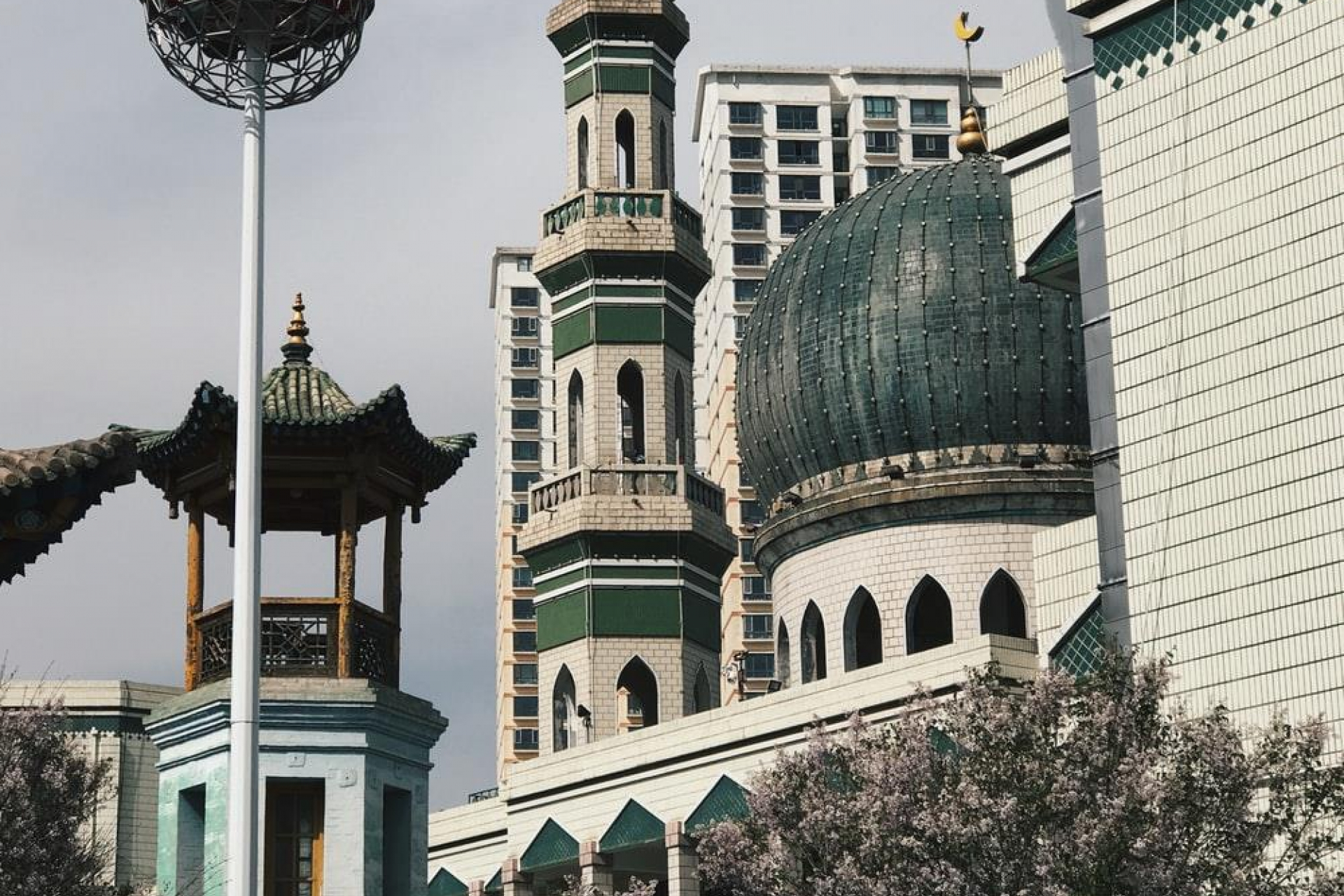
Rayburn House Office Building, Room 2255 Testimony of Mickey Spiegel As a senior researcher for Human Rights Watch, a private, independent human rights monitoring organization, I appreciate the opportunity to appear today before the Congressional Executive Commission on China to present my/our perspective on the evolution of religious policy in China following the end of the Cultural Revolution (1966-1997). From the time the Chinese government rescinded the Maoist imposed ban on all religious belief, it has steadily reinforced the structure of laws and regulations directing religious practice. The regulations that went into effect on March 1, 2005 do not appear to be a break with tradition, but an attempt to tighten the state*s control, codify Party policies, and strengthen the bureaucracy established to enforce them. The aim is two-fold: stricter control, less arbitrariness. In 1982, the Central Committee of the Chinese Communist Party promulgated Document 19, ※The Basic Viewpoint and Policy on the Religious Question during Our County*s Socialist Period.§ Its principles continue to underlie religious policy in the People*s Republic of China even as we meet to consider the implications of the new State Council Decree, ※Regulations on Religious Affairs,§ in effect since March 1, 2005. Document 19*s original formulation was sparse: ※respect for and promotion of the freedom of religious belief,§1 but it signaled a sea change. Promotion of freedom to choose to believe signaled an end to policies of repression which alienated believers and interfered with the State*s ability to turn its full attention to and to direct the attention of believers to a mutual goal of rapid modernization. Respect for a variety of beliefs spoke to the State*s determination to curb cadres who had been able with impunity to intimidate, harass, arrest, and torture believers. However, with the promulgation of the 1982 Chinese constitution which followed hard on the heels of Document 19,2 the potential for limiting the full flowering of religious belief and practice became immediately obvious. Document 19 limited freedom to believe to five major religions, Buddhism, Daoism, Islam, Catholicism and post-denominational Protestantism; article 36 of the constitution limited state protection only to ※normal§ religious activities. The ambiguity of the term ※normal§ permitted a plethora of limits on religious expression. What developing regulations explicitly allowed was considered normal; any other activity could be deemed abnormal even by a local bureaucrat. As a Chinese official said some months ago, what was illegal was abnormal; what was abnormal was illegal. But such a formulation continued to make possible arbitrary rule by local fiat, something the central leadership was determined to disallow even as it strengthened control over religious practice. At the same time, prohibition on the use of religion to disrupt public order signaled a concern, one that continues to this day, that ※hostile forces§ would use religion as a cover for fomenting subversion. Guidelines, such as those making ※patriotic§ organizations responsible for monitoring compliance with state policy, establishing a ※three-fix§ policy that limited evangelism and the use of lay religious leaders, and instituting a ※three-self§ policy that barred organizational ties to world religious bodies, gave way to emphasis on a ※rule of law.§ That new emphasis culminated in 1991 in a policy directive that carried Document 19 a step further and is still the centerpiece of religious control. Document 6, ※Circular on Some Problems Concerning the Further Improvement of Work on Religion,§3 mandated that every congregation, temple, monastery, mosque, and church had to register with the authorities. An unregistered group was by definition illegal and its members subject to arrest; a group deemed legal opened itself to control of its personnel, religious materials, activities, membership, and finances. Jiang Zemin extended the impetus toward regulation of religious activity through law when, in 1993, he stated that religion must adapt itself to a socialist society. The imperative has been interpreted to mean that everything from organization of rites and rituals to underlying theology to the day to day management of personnel, materials, and activities must meet the changing needs of society as interpreted by its rulers. By 1994, regulations codified by the State Council specified the steps required to properly register and the right of rejection reserved to those bodies charged with monitoring compliance. Local regulations made still more explicit what legally registered organizations could or could not do. There was, however, still room for small groups, operating discreetly in the shadows, to continue to meet and worship. That small space, though still in existence in 1994, narrowed again in 1999, when the Chinese government, in response to the emergence of Falungong, further reserved for itself the right to determine what in the religions it recognized constituted orthodox belief and what was heterodox and thus illegal, and to further determine what belief structures could be classified as cults and thus ipso facto illegal. The regulations that went into effect on March 1, 2005 further codify the rules restraining religious practice in China and the bureaucratic mechanism used to enforce those rules. That bureaucracy consists in part of the national State Administration of Religious Affairs; a hierarchy of religious affairs bureaus in all administrative units such as provinces, townships, and counties; the Ministry of Public Security; and local police units. Several immediate problems assert themselves. The usual twin problems of undefined terminology and vaguely worded regulatory articles make it difficult to understand precisely what compliance requires and leave considerable leeway for national and local interpretation. For example, the problem of what is ※normal§ and what is not remains; nowhere is there an explanation of ※the lawful rights and interests of religious bodies, sites for religious activities and religious citizens;§ and the requirement that those same actors ※safeguard unification of the country, unity of all nationalities and stability of society§ (article 3) leaves the state free to re-interpret the provision as the need arises and leaves religious practitioners no redress should they be charged with a violation. In addition, other than the specific requirement in Article 48 of the new regulations that the ※Regulations on Administration of Sites for Religious Activities,§ be repealed, laws and regulations remain in place that do not specifically target religious activities, but nevertheless have serious implications for religious expression. The 2005 regulations make no comment on these pre-existing laws and regulations, nor do they suggest how their implementation will affect provincial regulations. The usual practice has been for provinces and other administrative areas to follow national templates in crafting regulations specific to their jurisdiction. The most problematic addition to prior regulatory regimes, and one that I believe clearly signals an increase in State control, is the requirement that a religious body (nowhere defined) ※shall be registered in accordance with the provisions of the Regulations on Registration Administration of Associations.§ The change signals the need for a religious body to satisfy two bureaucracies, the Civil Affairs Ministry and the State Administration of Religious Affairs. The requirement not only adds to bureaucratic oversight but in theory it requires, inter alia, a religious organization to have a government agency ※as a professional leading unit,§ 50 members, full time personnel, and if local, have ※activity funds totaling in excess of 30,000 yuan.§ Most importantly, the regulations state, in article 13(2), that an application may be rejected because one with a ※similar operational scope exists in the same administrative area.§ In other words, the state is given the power to decide how many mosques are enough. Several other provisions speak directly to an increase in state control:
One omission may每每but only may每每signal a positive policy change. Nowhere in the regulations is reference made to what belief systems qualify as religions. The omission may signal that additional belief systems will be added to the short list as apparently has been the case for some aspects of popular religion. Conversely, it may signify only that the government will continue to be the sole arbiter of what is a religion and what is not. I am reluctant to consider regularizing religious belief, practice, or organization a positive development. The premise seems to be that communities of believers have the potential to challenge Beijing*s rule throughout China, though more so in Tibet and Xinjiang where religion serves as an identity marker and supports independence sentiment. I believe, the hope is that the new regulations will lay the groundwork for religious organizations to perform necessary social welfare functions that the state itself cannot support每每think hospitals, clinics, old-age homes, senior centers. But I suspect that China*s leadership has crafted the regulations in a way intended to further isolate religious belief and practice from life*s day to day minutiae. That emphatically is not freedom of religious belief, even as defined in the dry language of international human rights doctrines. No, the March 1, 2005 regulations are at best, a cosmetic cover up. 1. Chinese Law and Government, vol. 33 (March-April 2000) p. 22. 2. Constitution of the People*s Republic of China, adopted at the Fifth Session of the Fifth National People*s Congress and promulgated for implementation by the proclamation of the National People*s Congress on December 4, 1982. 3. Chinese Law and Government, vol. 33 (March-April 2000) pp. 56-63. |
| |
|
||