Congressional -
            Executive Commission on China
  Home     Search     Printer Friendly Subscribe/Unsubscribe to
Commission Email & Newsletter


XINJIANG'S UYGHURS IN THE ENSUING US-CHINA PARTNERSHIP

(Congressional-Executive Commission on China, Uyghur Panel, June 10, 2002)

Prof. Justin Rudelson, Executive Director
Institute for Global Chinese Affairs
University of Maryland
JCBENADAM@AOL.COM

China claims Xinjiang to be the front line of its own war against international terrorism and maintains that Xinjiang harbors Uyghur Muslim extremists intent on overthrowing Chinese rule with the backing of Osama bin Laden's terrorist network. While it is true that that China is invoking bin Laden's name to justify crackdowns on Islam in Xinjiang and on the Uyghurs, Beijing's own "war on terrorism", its crackdown in Xinjiang has been going on with a vengeance since at least 1996, more than five years before September 11. This is because Xinjiang has a greater potential than all other regions of China to cause upheaval. In Beijing's view, instability in Xinjiang could bring instability to Tibet, Hong Kong, and Taiwan.

Beijing uses "affirmative action" type economic rewards mixed with political and military crackdowns, believing in a very Western way, that economic development can undermine Uyghur calls for independence and solve Xinjiang's problems. As part of China's Manifest Destiny, Beijing believes it must fulfill its responsibility to modernize Xinjiang. And economically, Xinjiang has thrived. In 1991, Central Asian independence had little impact on the Uyghurs because most Uyghurs recognized then and now that Xinjiang is a lot better off economically than the countries of Central Asia.

Jiang Zemin's regime has arguably delivered China's most stable decade in the last 150 years. However, the experimental nature of Chinese development in Xinjiang opens it to risk. For example, as part of its development plans, Beijing is connecting Xinjiang to Central Asia's new trade, rail and road links with Kazakhstan and Tajikistan. But these very openings are splitting the Uyghur nation apart and exposing Xinjiang directly to Islamic militants and the drug trade emanating from these countries and beyond. In 1999, China completed the South Xinjiang railway, connecting Urumchi to Kashgar to assist its economic boom and settling large numbers of Han immigrants in this traditional Uyghur area. Militant Uyghurs are certain to accelerate violent action against these Hans and the trains that carry them.

Beijing's labeling the Uyghurs as terrorists and separatists with connections to the Taliban, al Qaeda and bin Laden is a terrifying appeal to United States anti-terrorism sympathies. So far, there is evidence of only 13 Uyghurs involved with Taliban fighters, and we do not know how many of these were from the Uyghur exile community in Pakistan. To be fair, China is in a no-win situation. No matter what it does to develop Xinjiang, many Uyghurs will only see it as a part of colonialist domination. Each discovery of oil in Xinjiang leads to Uyghur wealth being stolen. Each new road facilitates Han Chinese immigration to the region.

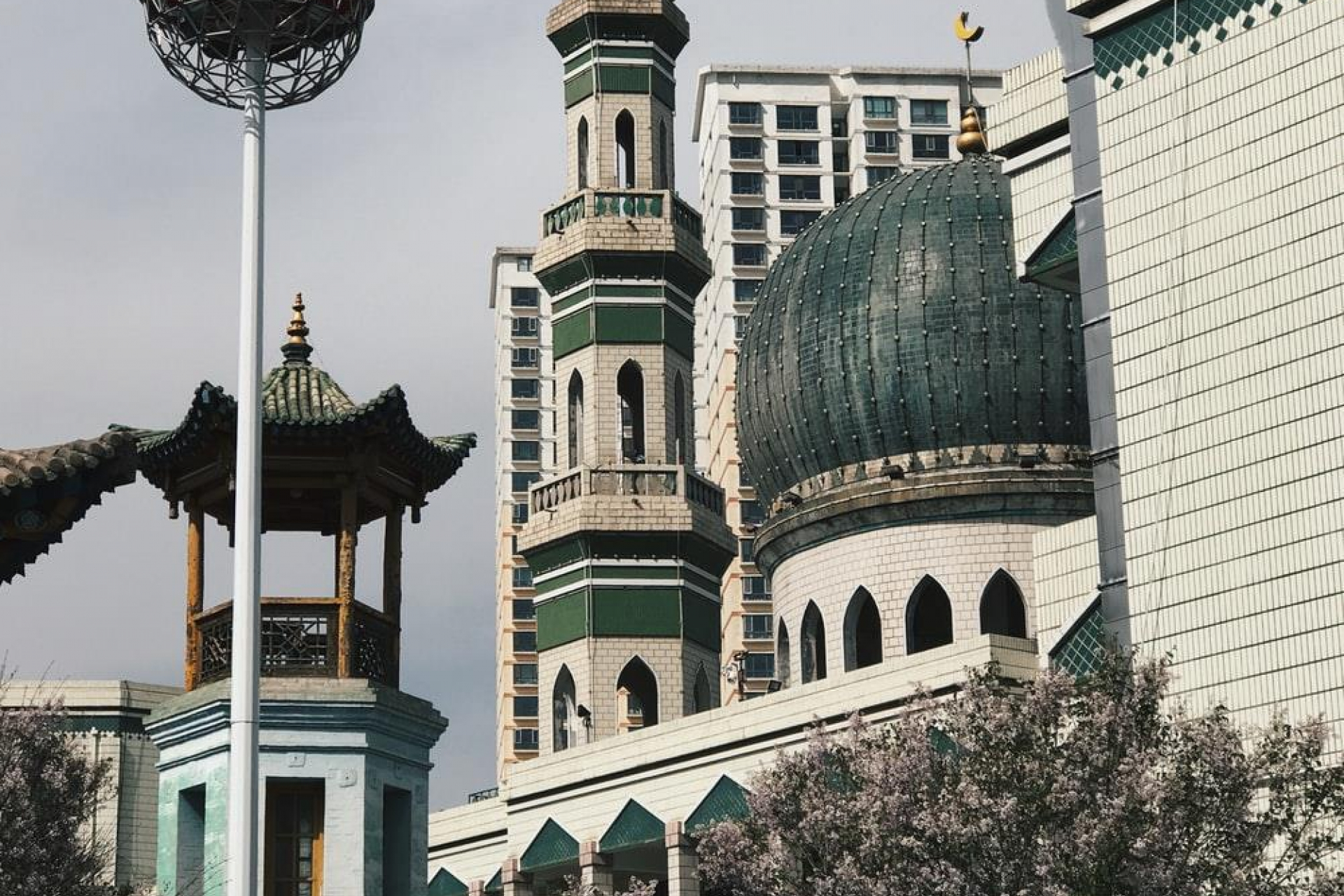
Uyghur resistance to Beijing takes many forms. Some Uyghurs look toward the Central Asian countries and ask why the Uyghurs do not have their own state. In the oasis villages, many traditional Uyghurs participate in the revival of Islam and Sufism. In the capital Urumchi, some Uyghur intellectuals, who are primarily secular and fiercely anti-Islamic, advocate blowing up all of Xinjiang's mosques because so much of the Uyghur wealth is being invested in mosques rather than in secular schools. Only a very few Uyghurs have turned to militancy. And almost all of these militants are Uyghur secular nationalists, seeking independence from China, whose struggle has no connection with Islam.

In the mid-1990s, Beijing unleashed campaigns against what it called "illegal religious activity" and "splittism" or "separatism" that equated Islam with subversion. The security alliance known as the Shanghai Five, now Shanghai Cooperation Organization, which began in 1996, gave China extreme latitude to crack down on Xinjiang's Uyghurs. Two months after the first Shanghai Five meeting, China unleashed a ruthless police crackdown called "Strike Hard" against Uyghur "splittism" that brought on a cycle of anti-government resistance and harsh reprisals that continue today. Since 1996, one Uyghur has been executed in Xinjiang an average of every four days. Few Western countries have voiced concern. By clamping down on all Islamic practice as fundamentalist or potentially militant, China provides no moderate alternative and only produces greater militancy among its Muslim populations. For example, in 1997, Uyghur students in Ili, the most secular region in all of Xinjiang, launched a grass-roots campaign against alcohol. Alcohol addiction is destroying the Uyghur people. Uyghur students developed the health campaign against alcohol to encourage liquor stores to stop their sales and to get Uyghurs to end consumption. The government saw the campaign as motivated by fundamentalist Islam and in the ensuing clashes between police and students, an estimated 300 Uyghurs were killed.

Besides alcohol, HIV/AIDS has brought the most devastating threat to Uyghur survival as a people. The HIV/AIDS epidemic in Xinjiang will develop into a significant geopolitical problem that warrants close attention from the US. Heroin started coming into Xinjiang in 1994 from Burma. Uyghurs initially smoked it but over the past few years began injecting it, creating a nightmare AIDS crisis. Within a drastically short time, Xinjiang has emerged as China's most seriously affected region and the Uyghurs are the most affected of all of China's peoples. Most of the Uyghur HIV sufferers become infected from intravenous drug use. The data on HIV prevalence among intravenous drug users is grossly underreported by as much as 5-10 times, with the rate of infection increasing by about 30 per cent annually. Drug use in China, as in the US, is a criminal offense. Clean needle exchanges are unheard of. Data on drug use is obtained at police-run detoxification centers where drug users are detained typically for about two months. Most addicts live "underground" to evade police detection.

In Xinjiang, there are no anti-retroviral drugs available. The Uyghurs face an epidemic chain of infection, devastation, and disintegration as the number of new HIV cases grows exponentially each year. Public health systems are poorly positioned to stem the disease. There are no hospitals in Xinjiang prepared to treat patients with full-blown AIDS. Testing is prohibitively expensive.

Although international teams are working in Xinjiang with the Xinjiang Red Cross, the programs are limited in scope with lack of coordination or sharing of information among the various organizations. Such coordination is crucial to prepare for the rising numbers of Uyghur patients as they develop full-blown AIDS and as Uyghur disaffection and anger mounts as the AIDS toll climbs. Young Uyghurs infected with HIV/AIDS will feel desperate, enough perhaps to strike out at Han and government targets as suicide bombers.

To deal with the AIDS nightmare in Xinjiang, China needs to partner with international organizations such as NATO, along with international health agencies to reduce opium production in Burma and Afghanistan. So far, the entire supply of heroin entering Xinjiang is from Burma. Two years ago, before the Taliban cracked down on its drug trade, Afghanistan produced 75-90 percent of the world's opium supply. The interim government of Hamid Karzai in Afghanistan is too weak to prevent Afghan peasants from selling opium again. It will be difficult for China to keep Afghan heroin from entering the Xinjiang market to meet the huge Uyghur demand. When this happens, it will be catastrophic.

The HIV/AIDS epidemic in Xinjiang and throughout the greater Central Asian region is perhaps a more pressing concern as a security issue than as a humanitarian one, warranting immediate attention from the US and its allies. Xinjiang's HIV/AIDS situation alone, put within the context of the regional HIV/AIDS epidemic affecting Russia, India, Pakistan, Afghanistan, Iran, and the Central Asian nations, starkly reveals that China and the entire geopolitical region faces a security issue of the gravest proportions. Note that in South Africa, where the AIDS trajectory has reached its most extreme extent, the military currently has an HIV infection rate of over 90% mainly spread by contact with prostitutes. It is predicted that the military of all of the nations in this region including China's will be profoundly weakened within 5-10 years by HIV infection in the same way. The HIV/AIDS epidemic is certain to dramatically affect Xinjiang and its international neighbors, and will radically affect China's national security and stability.

The treatment of opportunistic diseases associated with HIV/AIDS such as Tuberculosis and sexually transmitted diseases are sure to wipe out most, if all not all, of the economic gains that development will bring to Xinjiang and the Central Asian region and will be an impossible burden for the health care budgets of the greater Central Asian states. Moreover, the under-funded and unreformed health systems in the region are too weak to react to patients with full-blown AIDS, a situation that could provoke rioting and militant action against governments seen to be heartlessly unresponsive.

In order to assist in the fight against HIV/ AIDS in Xinjiang, and to develop the region economically, two issues that are vital to stemming militancy and terrorism, China should be invited as an observer to G-8 meetings and eventually be invited to join the G-9. A Western embrace of China is the only way to develop a long-term and consistent overall strategy to prevent the further alienation of the Turkic Muslim people of the greater Central Asian region including Xinjiang. China's current approach to the global war on terrorism, particularly its focus on anti-terrorism in Xinjiang among the Uyghurs, leads Beijing to appear to be cynically using the September 11 tragedy to repress its discontented Uyghurs. To change this perception, China needs to become a partner with the US and Russia in peacemaking, regional development, and the struggle against the HIV/AIDS epidemic, not just in anti-terrorism.


   Back to Top   Back To Top

  Previous Page  Previous Page
  Site Map   |  Contact Us  

The page was last modified on January 28, 2003
© 2002-2005 Congressional-Executive Commission on China - All Rights Reserved.