|
China Human Rights and Rule of Law Update
Statement of the Chairman and Cochairman on the Twenty-first Anniversary of the Suppression of the Tiananmen Square Democracy Protests
June 4, 2010
Twenty-one years ago, as students, government employees, journalists, workers, police, and other citizens calling for democratic reform gathered in Beijing¡¯s Tiananmen Square, and in over 100 other Chinese cities, thousands of armed forces moved into Beijing. Training its firepower directly onto crowds around Tiananmen Square, the People¡¯s Liberation Army killed or injured thousands of unarmed civilians. We express our sympathy to the relatives and friends of those killed on that day, and we stand with those who were unjustly wounded, detained, or imprisoned and with those who continue to suffer today.
We call on the Chinese government to end its harassment and detention of and its discrimination against those who were involved in the 1989 protests, not only in Beijing, but in other parts of China where protests took place, and to end its harassment, detention and imprisonment of those who continue to advocate peacefully for political reform. We call on the Chinese government to permit Tiananmen protest participants who escaped to or who are living in exile in the United States and other countries, or who reside outside of China because they have been ¡®blacklisted¡¯ in China as a result of their peaceful participation in democracy protests, to return home to China, without risk of retribution or repercussion.
Today, we honor the memory and courage of those who were injured, ill-treated or who lost their lives in the 1989 protests. Those in China who demand a full and impartial investigation into and accounting of the events surrounding June 4, 1989 and those who continue to advocate peacefully for democratic reform deserve our unconditional support.
| Source: -See Summary (2010-06-04 ) |
Posted on: 2010-06-04 |
 |
|
| Link directly to this item with: http://www.cecc.gov/pages/virtualAcad/index.phpd?showsingle=141463 |
Chinese Human Rights Defender Gao Zhisheng Disappears Again
June 4, 2010
Prominent Chinese human rights attorney Gao Zhisheng, who in late March 2010 resurfaced after having disappeared for more than a year, has again gone missing. The latest disappearance comes only a month after Gao reappeared in public following his nearly 14 months in what experts on the case describe as official custody. In late March and early April, Gao made contact with friends and family and gave several interviews, during which he reportedly appeared to be under surveillance. Multiple international news outlets now have reported that Gao failed to return to Beijing after visiting with family in western China in mid-April, and has again disappeared.
Weeks after reportedly "resurfacing" in late March 2010, prominent Chinese human rights attorney Gao Zhisheng disappeared again in mid-April, according to an April 30 New York Times (NYT) article and a May 1 Voice of America article. In early April, Gao gave several interviews to foreign reporters, claiming he had been "released" months earlier and had ended his human rights campaigning in hope of being reunited with his family. The extent of the restrictions imposed on Gao's freedom of movement and association after this reported "release" remain unclear. Gao provided few details of his circumstances or of his 14-month disappearance, according to a March 28 BBC News article. Gao's case has attracted international attention due to his legal advocacy on behalf of religious minorities, including underground Christians and the banned Falun Gong spiritual group, ethnic minorities, rural farmers, and human rights activists.
Reappearance in Late March
On March 28, 2010, NYT reported that Gao had resurfaced at Wu-Tai Mountain, a sacred Buddhist landmark in Shanxi province. Gao told reporters, via phone, that he had been "released" by authorities six months earlier, and that he had "no plans to return to his work as a rights defender," according to a March 28 Reuters article and the March 28 NYT article. While Gao repeated those assertions in later interviews, the Reuters and NYT articles indicated that Gao appeared guarded and the Reuters article noted that Gao appeared "under some sort of police surveillance." After Gao's most recent reported disappearance, an April 30 South China Morning Post article (subscription required) reported on an interview with Gao in early April. An April 30 article on the U.S. Asia Law Web site (by the same author) apparently reported on the same interview, saying "[d]espite obviously knowing that his apartment was tapped by Chinese security agents, and saying that the police had threatened the possibility of forcibly sending him to a third country if he spoke to the media, the human rights defender was quite outspoken during the conversation, seemingly contradicting statements...in which he was quoted as saying that he had given up activism." According to the article, "[d]uring his meeting with this reporter, Gao asked that he not be quoted regarding his treatment while in captivity, or his political views, saying, 'We¡¯re talking as friends¡ªif this is reported, I¡¯ll disappear again.'"
Background: Gao Zhisheng
A self-taught lawyer, Gao has repeatedly angered Chinese authorities by taking on sensitive cases and by exposing human rights abuses in China. In October 2005, Gao wrote an open letter to President Hu Jintao and Premier Wen Jiabao detailing torture of Falun Gong practitioners. A month later, authorities shut down Gao's law firm and revoked his lawyers' license. In December 2006, Gao was convicted of "inciting subversion of state power" and was given a three-year sentence, suspended for five years. After writing an open letter to the U.S. Congress in September 2007, Gao was reportedly detained and tortured for more than 50 days. In February 2009, Gao was forcibly taken by public security personnel in his hometown in Shaanxi province. Chinese officials, over the past year, have offered conflicting accounts of Gao's whereabouts and the conditions of his detention.
For more information on Gao Zhisheng and other Chinese human rights defenders, see Section II¡ªHuman Rights¡ªCriminal Justice in the CECC 2009 Annual Report.
| Source: -See Summary (2010-05-06 / English) |
Posted on: 2010-06-04 |
 |
|
| Link directly to this item with: http://www.cecc.gov/pages/virtualAcad/index.phpd?showsingle=140460 |
National People's Congress Standing Committee Issues Revised State Secrets Law
May 20, 2010
In late April 2010, the National People's Congress Standing Committee issued the revised Law on the Protection of State Secrets which takes effect in October. The revised law maintains the vague and broad definition of state secrets under the existing law that has made it susceptible to abuse by officials. It remains to be seen whether the revised law will lead to less arbitrary determinations of state secrets and whether Internet and other public information network providers will be required to do more to locate and remove state secrets.
On April 29, 2010, the National People's Congress Standing Committee passed the revised Law on the Protection of State Secrets (2010 Law), to replace the existing law in effect since 1989 (1989 Law). The definition of "state secrets" in the 2010 Law remains vague and broad despite the central government news agency's claim that the new definition narrows the scope of state secrets. The 2010 Law will take effect on October 1, 2010. Under the current state secrets legal framework, Chinese officials have wide latitude to declare almost any matter of public concern a state secret. Officials have used the state secrets designation to punish rights activists such as Huang Qi and journalists such as Shi Tao, treat information on government policies such as the death penalty a state secret, deny requests for government information, and deny criminal defendants access to counsel and an open trial.
2010 Law's Impact on Definition of State Secrets
The definitions of state secrets in both the 2010 Law and 1989 Law are similar and the wording changes do not appear to narrow the definition's scope. The 2010 Law retains the original wording for Article 2, which sets forth the following requirements for information to be a state secret:
(1) the information must relate to "state security and national interests";
(2) it must have been determined to be a state secret "in accordance with legally defined procedures"; and
(3) knowledge of it must be restricted to a defined scope of personnel for a defined length of time. As in the 1989 Law (Article 8), the 2010 Law contains a provision (Article 9) that provides a list of specific categories of "secret matters" that may constitute a state secret. This includes secrets concerning major policy decisions on state affairs, national economic and social development, and science and technology. This list remains unchanged in the 2010 Law, preserving the broad categories that give officials wide discretion to declare information a state secret, including the catch-all Item 7: "other matters that are classified as state secrets" by the department in charge of protecting state secrets. Furthermore, it is unclear whether this list is intended to be exhaustive. There is no language that says a state secret is limited to "only" information falling into these categories.
Xinhua, the central government's news agency, published an April 29 report that claims new language at the beginning of Article 9 provides a clearer definition of state secrets. Specifically, the Xinhua report points to language that says information falling into one of the categories should be classified as a state secret if it also meets the condition that "if leaked, [it] could harm the state¡¯s security and national interests in the areas of politics, economy, national defense, foreign relations, among others" (emphasis added). There are several reasons that this additional language does not narrow the scope of state secrets. First, the 1989 Law already contained an implicit requirement that information is considered a state secret if disclosure would result in some harm to "state security and interests" (Article 9). Second, the references to "politics, economy, national defense, foreign relations" are not exhaustive, as indicated by the use of "among others" (deng). Third, such categories are broad enough to encompass a wide array of information. Finally, officials may still rely on the catch-all Item 7 to declare information a state secret.
Reduction in State Secrets?
The Xinhua article also cites Professor Wang Xixin of the Peking University Law School as saying the 2010 Law would lead to a reduction in the number of state secrets because there are now fewer government department levels with the power to classify state secrets. It is, however, unclear whether there will be a reduction in the number of state secrets and what the significance of a reduction will be if it occurs. New provisions that more specifically designate who within a state agency (guojia jiguan) or unit (danwei) is responsible for determining a state secret (Article 12), require officials to conduct periodic audits of whether certain state secrets may be disclosed (Article 19), and provide limits on the period of time information may be classified as a state secret (Article 15), may reduce the number of state secrets without significantly narrowing officials' substantive discretion to declare information a state secret. The new law does not provide for any judicial review of a state agency's determination that information is a state secret. Furthermore, the new law introduces a more robust set of legal responsibilities and penalties (Section 5) that could pressure officials into declaring more information a state secret, although Article 49 also contains a penalty for officials who wrongly declare information a state secret.
Internet and Other Network Providers
The 2010 Law also contains a new Article 28 which requires "Internet and other public information network operators and service providers" to cooperate with authorities' investigation of state secret leaks and upon discovering a leak to stop transmission of the secret, preserve any relevant records, and notify officials. An official has said that existing regulations already contain similar requirements but that the inclusion in a law was needed to "keep up with the seriousness, speed and concealed nature of secrets leaked over new technologies," according to an April 29 New York Times article.
For information on how China's legal framework for state secrets denies citizens access to information on important government policies and denies criminal defendants access to counsel and an open trial, as well as for more information on political prisoner cases involving state secrets see pp. 5, 47-48, 52, 65-66, 107, 108, 141, 200, and 257 in the CECC 2009 Annual Report.
| Source: -See Summary (2010-05-06 ) |
Posted on: 2010-06-04 |
 |
|
| Link directly to this item with: http://www.cecc.gov/pages/virtualAcad/index.phpd?showsingle=140456 |
Hong Kong Government Releases Proposals for Constitutional Reform
June 4, 2010
On April 14, 2010, the Hong Kong government released its Package of Proposals for the Methods for Selecting the Chief Executive and for Forming the Legislative Council in 2012. The package of proposals increases the membership of the Legislative Council and of the committee that selects the chief executive. However, the proposals reflect limitations imposed by China in a 2007 decision on constitutional reform.
Hong Kong's current electoral system and the proposed changes
On April 14, 2010, Hong Kong Chief Secretary Henry Tang presented the government's Package of Proposals for the Methods for Selecting the Chief Executive and for Forming the Legislative Council in 2012 according to a press release issued by the Hong Kong Economic and Trade Offices in the United States. Some Hong Kong citizens reportedly have grown frustrated with the pace of democratic reform. As reported in a January 27 New York Times article, "The political system in Hong Kong is increasingly paralyzed, and street protests are growing more confrontational as public dissatisfaction on economic issues and a lack of democracy is rising."
Hong Kong's current system for selecting the chief executive and for forming the Legislative Council (Legco) is set out in the Basic Law of the Hong Kong Special Administrative Region of the People's Republic of China. Annex I of the Basic Law provides that the Chief Executive is selected by an appointed 800 member "election committee" composed of representatives of four groups: (1) industrial, commercial, and financial sectors, (2) the professions, (3) labor, social services, religious, and other sectors, and (4) members of the Legislative Council, representatives of district-based organizations, Hong Kong deputies to China's National People's Congress, and representatives of Hong Kong members of the National Committee of the Chinese People's Political Consultative Conference. As noted in a May 16 Financial Times article, the election committee is "dominated by pro-Beijing businessmen and community leaders." Under the proposals, the number of members of this committee would be increased to 1,200.
Annex II of the Basic Law provides for 60 members of Legco, 30 of whom are selected through direct geographically based elections and 30 through "functional constituencies." The Financial Times article refers to the functional constituency representatives as "primarily representing industrial and professional groups." Former Legco and chair of the Citizens Party, Christine Loh, now CEO of Civic Exchange,a Hong Kong-based public policy think tank, describes functional constituencies in a 2004 article published by the Jamestown Foundation (reprinted by the Association for Asian Research (online)). According to Loh, "some of the most influential voters are not even individuals but companies, making it extremely difficult to identify who really directs the voting decisions." The proposals would add 10 seats to Legco, 5 selected by functional constituencies and 5 directly elected, thus not changing the current 50:50 proportion. The Wall Street Journal, in an April opinion, refers to the role of functional constituencies as "a quirk of the Hong Kong system that allows business groups to elect MPs. Many of these groups are comprised of a few hundred people or less, and most are Beijing friendly." Though the functional constituency members are not selected through popular election, they wield substantial political power. The Basic Law, Annex II, Part II, provides that "passage of bills introduced by the government" require only a simple majority vote, but requires that the "passage of motions, bills or amendments to government bills introduced by individual members of the Legislative Council" require a majority vote of each of the two groups in Legco, those directly elected through geographically based elections, i.e. the geographical constituencies (GC), and those selected by the functional constituencies (FC). As Loh notes, "(t)his effectively means that 16 FC members can veto any proposal raised by the GC members" in Legco.
The proposals followed the Hong Kong government's issuance in November 2009 of the Consultation Document on the Methods for Selecting the Chief Executive and for Forming the Legislative Council in 2012, and a three-month consultation period, which ended on February 19, 2010. The scope of the government's proposals was constrained by a 2007 decision of the National People's Congress Standing Committee (NPCSC) concerning universal suffrage in Hong Kong, which provided that Hong Kong could not elect the chief executive or Legco by universal suffrage in the 2012 election, but that the chief executive may be elected by universal suffrage in 2017. The decision further provided that election of Legco by universal suffrage would only be possible after the chief executive is elected by universal suffrage, which would be some time after 2017 if Beijing agrees to allow direct elections of the chief executive in 2017. The next Legco election after 2017 will be in 2020, by which time 23 years will have passed since Hong Kong was handed over to China in 1997. According to the NPCSC decision, any bill for amending the current voting methods for the chief executive or for Legco must be approved by the NPCSC, thus giving the mainland authorities veto power over any proposals for universal suffrage in Hong Kong. In an announcement on the day the Hong Kong government issued its proposal, Qiao Xiaoyang, the deputy secretary general of the NPCSC, said that the legal effect of the 2007 decision was "beyond any doubt," according to an April 15 report titled, "Beijing seeks to end doubt on polls" in the South China Morning Post(subscription required).
Impact of the HK government's proposals, if implemented
The U.S. Department of State's 2009 Human Rights Report: China (includes Tibet, Hong Kong, and Macau) notes that the ability of citizens in Hong Kong to "participate in and change their government" is limited, and "[d]isproportionate political influence is granted to certain sectors of society through the existence of small-circle 'functional constituencies,' that elected half of the LegCo." The Hong Kong government's proposals, which Democratic Party chair Albert Ho has characterized as "making small changes to a bird cage," according the Wall Street Journal's opinion piece, do little to make the government more democratic. The current system of having a selection committee appoint the chief executive, and the role of the functional constituencies do not change. There is only a minor expansion of the numbers of participants. The proposals must be approved by a two-thirds vote in Legco. However, according to a May 3 South China Morning Post article, the government said it did not yet have the votes in Legco to pass its proposals. On May 11, the South China Morning Post said in an editorial that "all democratic legislators had rejected the package."
Two provisions of the Basic Law address prospects for democracy in Hong Kong. Further, according to a China Elections and Governance article of March 19, 2009, "Hong Kong's political future," Beijing had made formal assurances prior to the 1997 handover that Hong Kong could "make its own decisions about Legislative Council reform without referral to Beijing." According to the Wall Street Journal opinion, "Hong Kong was, after all, promised 'the ultimate aim' of universal suffrage for legislative and chief executive elections, starting in 2007." The January 28, 2010, article in the New York Times reported that the pro-democratic parties in Hong Kong are frustrated that China has "delayed or backtracked on commitments it made in the 1990s to allow people to directly elect a majority of lawmakers in the territories Legislative Council." As to provisions in the Basic Law itself, Article 45 provides that, "The ultimate aim is the selection of the Chief Executive by universal suffrage upon nomination by a broadly representative nominating committee in accordance with democratic procedures." Article 68 provides, "The ultimate aim is the election of all the members of the Legislative Council by universal suffrage."
| Source: -See Summary (2010-05-13 ) |
Posted on: 2010-06-13 |
 |
|
| Link directly to this item with: http://www.cecc.gov/pages/virtualAcad/index.phpd?showsingle=140737 |
Environmental Activist Wu Lihong Released, Alleges Abuse
June 4, 2010
Wu Lihong, a long-time environmental activist, was released from prison in Jiangsu province in April 2010 after serving a three-year sentence for fraud and extortion. Prior to his incarceration, Wu had spent years documenting pollution in the Lake Tai area of Jiangsu province. His environmental activism had made him the target of harassment over many years, but also reportedly resulted in heightened regulatory scrutiny of polluting enterprises. Wu claims that he is innocent of all charges, maintains that his confession was coerced, and has alleged mistreatment in prison. Wu's two appeals in Jiangsu courts were unsuccessful but he plans to file another appeal with the Supreme People's Court in order to challenge the original verdict in his case, to obtain compensation, and to set in motion an investigation into his allegations of mistreatment.
Authorities in Yixing city, Jiangsu province, released environmental activist Wu Lihong from the Dingshan Prison on April 12, 2010, after Wu completed a three-year sentence for alleged fraud and extortion, according to an April 12 Radio Free Asia (RFA) article (in Chinese). Prior to his detention, Wu had spent years documenting pollution in the Lake Tai area in Jiangsu province. After his release, Wu repeated allegations that he was forced to confess to the crimes, and alleged that prison officials had subjected him to abuse during his detention and imprisonment from 2007 to 2010, according to a May 11 Agence France-Presse (AFP) article and a May 11 RFA article (in Chinese). Specifically, Wu told AFP that officials subjected him to repeated beatings in prison, kept him in solitary confinement in a windowless cell, denied him visitors and phone calls to family and friends, and made him run for long periods throughout the day. In addition, Wu told RFA that he was kept under "strict control" (yanguan)¡ªwhich meant that other prisoners were not allowed to talk to him, and that he was given a little more than a minute to eat his meals while "lying prostrate like a dog." Wu also told RFA that during his interrogation in detention in 2007, domestic security personnel (guobao) whipped him with willow branches, burned him with cigarettes, kicked him, and verbally threatened him when he refused to confess. His lawyer was not allowed to see him for a period of time and also claims he was tortured, according to an August 3, 2007, Financial Times article (via Pacific Environment).
Article 247 of the PRC Criminal Law and provisions issued by the Supreme People's Procuratorate in 2005 prohibit and provide for the punishment of the use of torture to coerce a confession. Article 248 of the PRC Criminal Law provides for criminal punishment of prison, jail, and detention center officials found to have beaten inmates or detainees or subjected them to corporal punishment or abuse, or found to have ordered other inmates or detainees to do so. In addition, the Ministry of Justice issued prohibitions in February 2006 that strictly prohibit beating or subjecting inmates serving a prison (or reeducation through labor (RTL)) sentence to corporal punishment, or instigating others to beat or subject such an inmate to corporal punishment. These prohibitions subject prison and RTL officials to sanctions ranging from warnings to dismissal or, where the behavior may constitute a crime, to criminal punishment. The Chinese government is further bound by the Convention Against Torture and Other Cruel, Inhuman or Degrading Treatment or Punishment (CAT) which it ratified in 1988.
Wu documented the pollution at Lake Tai in Jiangsu province for 17 years, and, prior to his detention and imprisonment, submitted evidence he collected, including samples of water, to provincial- and central-level officials through the xinfang (petitioning) system (see CECC 2007 Annual Report, p. 138). "Between 1998 and 2006, the environmental protection agency of Jiangsu Province recorded receiving 200 reports of pollution incidents and regulatory violations from Mr. Wu," according to an October 14, 2007, New York Times (NYT) article. For his activism, the National People's Congress named him an "Environmental Warrior," in 2005. However, Wu and his family also reportedly suffered harassment related to his complaints about pollution. Wu and his wife reportedly lost their jobs, and the police interrogated and detained him. On April 13, 2006, police confiscated his computer and other belongings, detained him, and then indicted him, according to the October NYT article. His trial, originally scheduled for June 2007, was put off in order to investigate accusations of torture, according to an August 11, 2007, Reuters article. The Yixing People's Court sentenced him on August 10, 2007, to three years' imprisonment for fraud and extortion, ruling that there was no evidence he had been tortured, according to the Reuters article and the October NYT article. The court also fined him 3,000 yuan (US$400) and ordered him to return the money he allegedly extorted from enterprises, according to an August 12, 2007, Straits Times article (subscription required).
Wu told RFA in the May 11 report that he had filed two unsuccessful appeals and now planned to appeal his case to the Supreme People's Court. He said he was seeking to overturn the verdict, obtain compensation, and push for an investigation into those responsible [for his mistreatment]. An intermediate people's court in Wuxi rejected Wu's first appeal in 2007 without holding a hearing, according to a November 6, 2007, NYT article. Wu's wife later filed an unsuccessful appeal with the Jiangsu High People's Court in Nanjing, according to a May 1, 2008, article in the Economist (subscription required).
Wu Lihong's detention and imprisonment underscore the problem that whistleblowers in China do not enjoy adequate legal protections and risk retribution for their whistleblowing activities. "Fear of retribution is a major concern for whistleblowers" in China, according to a March 26, 2009, Asia Times article. Wu's case also underscores the concern expressed in a December 2008 report by the UN Committee Against Torture about "continued allegations, corroborated by numerous Chinese legal sources, of routine and widespread use of torture and ill-treatment of suspects in police custody, especially to extract confessions or information to be used in criminal proceedings" in China.
For additional information on Wu Lihong's case see the CECC Political Prisoner Database and Section II—Environment in the CECC 2007 Annual Report (pp. 138). For more information regarding the rights of criminal suspects and prisoners see the subsection "Torture, Abuse, and Deaths in Custody," in Section II—Criminal Justice in the CECC 2009 Annual Report and Section V(b)—Rights of Criminal Suspects and Defendants, in the CECC 2006 Annual Report.
| Source: -See Summary (2010-05-14 / English) |
Posted on: 2010-06-04 |
 |
|
| Link directly to this item with: http://www.cecc.gov/pages/virtualAcad/index.phpd?showsingle=140774 |
Xinjiang Authorities Tighten Controls Over Muslim Women
April 27, 2010
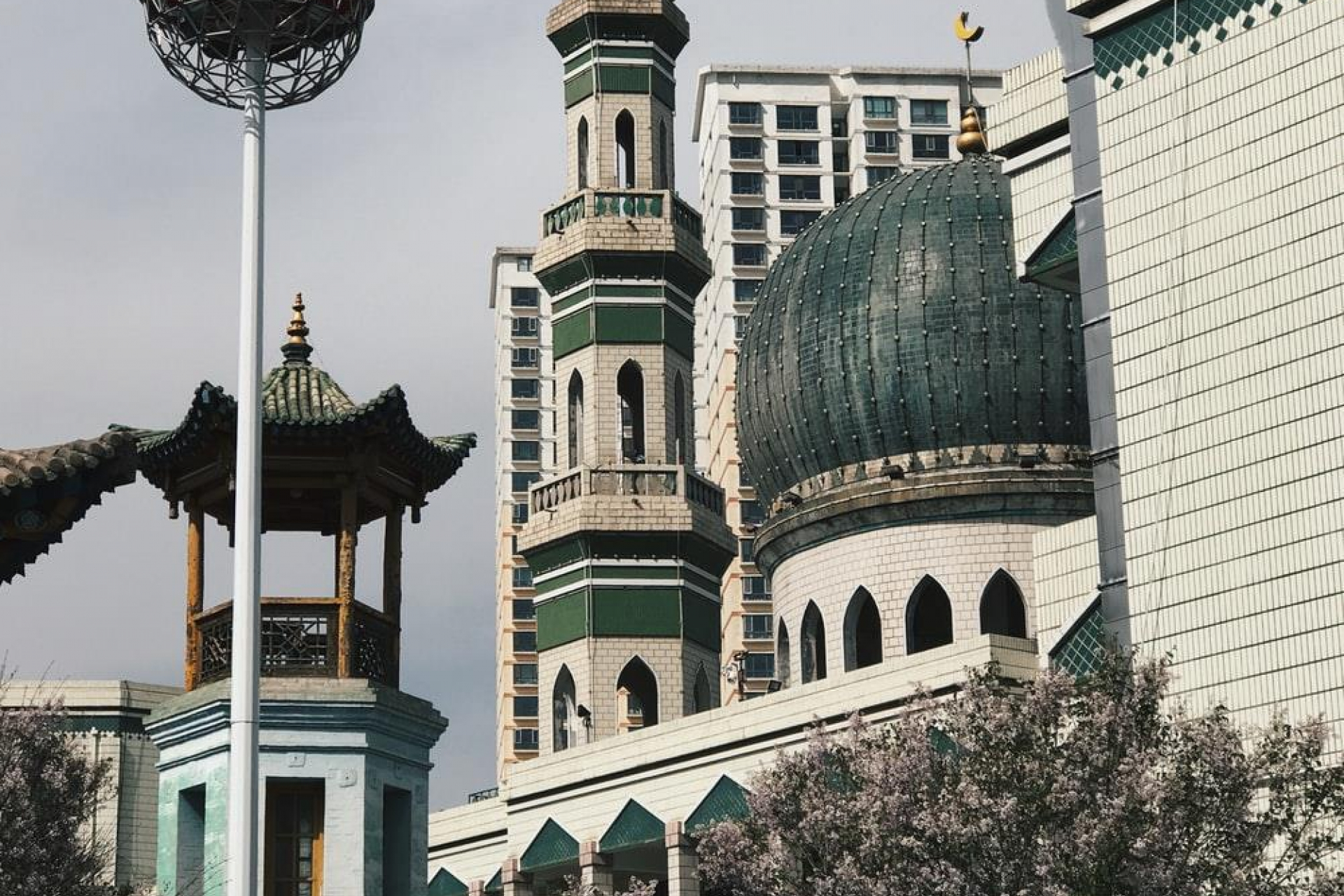
The Communist Party-controlled women's federation in the far western region of Xinjiang has strengthened efforts in the past year to control the religious practices of Muslim women. The Federation has carried out activities to regulate Muslim women religious specialists and to urge women to remove veils and face coverings. The Federation reported carrying out one local campaign in coordination with government offices, while a separate Communist Party office in another locality reported it would increase monitoring of Muslim women religious specialists. The restrictions on the women's religious freedom come as authorities have instituted broader campaigns targeting "religious extremism" and other perceived threats to the region's stability.
The Communist Party-controlled Women's Federation in the Xinjiang Uyghur Autonomous Region (XUAR) has strengthened measures in the past year to regulate the religious activities of Muslim women, according to recent reports from the region. It carried out at least one prefectural campaign in coordination with government offices, while a separate Communist Party office in another locality reported it would increase monitoring of Muslim women religious specialists. The efforts build on previous official steps in recent years to interfere in the religious activities of Muslim women. See previous Congressional-Executive Commission on China analyses (1, 2, 3) for more information. Recent developments include:
Regulating Women Religious Figures
The XUAR Women's Federation reported in recent months on steps taken in the past year to strengthen control over women religious specialists known in Uyghur as b¨¹wi (Mandarin: buwei, translation into English following Ildik¨® Bell¨¦r-Hann, Community Matters in Xinjiang 1880-1949, Leiden: Brill, 2008, 469). As described in a previous CECC analysis, the XUAR Women's Federation proposed in late 2008 that b¨¹wi be brought under government and Party management. The Federation's proposal stated that b¨¹wi existed in a "no-man's land" without state oversight and called for taking advantage of the women's social status to spread the Party's religious and ethnic policies among Muslim women. As of that time, some local governments already had reported incorporating b¨¹wi into training classes for religious leaders. Since then, the XUAR Women's Federation has described increasing education and training of b¨¹wi and maintaining a semimonthly contact system between b¨¹wi and women Party members, to ensure b¨¹wi do not engage in "illegal religious activities," spread "heresies," or apply "spiritual pressure" to other women, according to a January 12, 2010, report by a XUAR Women's Federation Party official (via the All-China Women's Federation News site from People's Daily). In Hoten district, 2,010 Party members reportedly were involved in a contact system with 1,833 b¨¹wi, which "effectively restrained women from participating in illegal religious activities and ethnic separatist activities," according to the report.
In addition, in April 2010, the Ili Kazakh Autonomous Prefecture Women's Federation reported that in 2009, the Federation, in coordination with local government offices, established "Measures on the Management of B¨¹wi," which "standardized and purified" the ranks of these religious figures, according to an April 2 report on the Ili Kazakh Autonomous Prefecture government Web site. The XUAR Women's Federation and Ili branch also reported carrying out a campaign to "weaken religious consciousness and uphold a civilized and healthy life," according to both reports. (See also a previous CECC analysis that discusses this campaign.)
In addition to the Women's Federation-led campaigns, the Kashgar district leading group office for the "study and practice of the scientific development concept" reported in October 2009 that Kashgar municipality would increase oversight of b¨¹wi as part of work to "safeguard stability," according to an October 13 report from the Kashgar district government Web site (also available at a cached page). According to the report, b¨¹wi are among seven categories of people under scrutiny. Authorities will register the people, "closely follow their actual demeanor," and increase "supervision and education" of the groups. According to the report, other people targeted for oversight include people released from "reform through labor" and "reeducation through labor," people dismissed from their posts as religious personnel, people who have gone on unauthorized pilgrimages, and people who have been out of the locality for long periods, among other groups.
Campaigns Targeting Women Who Wear Veils and Face Coverings
XUAR Women's Federation reports from recent months also indicate the organization has continued steps to influence the way Muslim women dress. (See a previous CECC analysis for information on past XUAR Women's Federation efforts and other CECC analyses 1, 2 for information on broader official efforts addressing women who wear veils or face coverings.) At pilot sites in Urumqi, the Federation launched activities that included investigating and registering women who veiled their faces, interviewing them, and sending in cadres for face-to-face talks, according to a November 20, 2009, report from the XUAR Women's Federation (via the All-China Women's Federation News site from People's Daily). The Federation's "persuasion" and "reformatory education" made the women "realize that wearing a veil is not a form of expression of ethnic dress but rather of extreme religion, an expression of a type of ignorant and backward way of thinking, and an expression not suited for the developments of the times," according to the report. After more than two months of effort by the Women's Federation, a number of women in the pilot areas, who had covered their faces, removed their veils and took part in various types of training and "healthy cultural activities," according to the article. In the January 2010 report, the XUAR Women's Federation official said that the organization also launched a campaign called "Let Beautiful Hair Flutter, Let Beautiful Faces Be Revealed," to enable ethnic minority women to "discern what is traditional ethnic dress" and to address why women should "take the initiative to not wear a veil." According to the report, over 90 percent of women in areas such as the southern part of the XUAR voluntarily removed their veils. At pilot sites in Urumqi, the number of women covering their faces dropped from a figure of 35 percent before the July 2009 demonstrations and rioting in the city to 6.8 percent, according to the report.
The measures targeting Muslim women come as authorities in the XUAR have tightened security campaigns in the region, targeting "religious extremism" among continuing perceived threats to the region's stability. For more information on conditions in the XUAR, see Section IV¡ªXinjiang in the CECC 2009 Annual Report.
| Source: -See Summary (2010-04-15 ) |
Posted on: 2010-06-04 |
 |
|
| Link directly to this item with: http://www.cecc.gov/pages/virtualAcad/index.phpd?showsingle=139388 |
Hukou Reform Experiment Begins in Guangzhou
May 19, 2010
China's hukou (household registration) system imposes strict limits on where Chinese citizens may obtain legal residence. Limited reforms, however, are currently taking place in Guangzhou city, Guangdong province. Guangzhou's Public Security Bureau has directed various levels of city officials, starting in May 2010, to begin implementing a hukou reform experiment, originally proposed last summer, to phase out the rural and non-rural hukou distinctions over the next five years. In addition, the mayor of another major city, Chongqing, announced on May 5 that hukou reform will be among his top priorities.
The Legal Daily reported on May 4, 2010, that Guangzhou's Public Security Bureau had directed district- and county-level party committees and governments to begin implementing an experiment, officially proposed last summer, to gradually transform its hukou registration system into one that will simply identify residents as holders of Guangzhou's "residential hukous"¡ªan experiment intended to phase out the existing rural and non-rural distinctions. The changes are expected to take five years, and the Legal Daily explains that the process will "gradually reform the various kinds of policies of differentiation that accompanied the [old] hukou system."
The Guangzhou government originally launched the reform experiment in July 2009 with the release of the Implementing Opinion Regarding the Advancing of Urban-Rural Hukou System Reforms. A July 30 Southern Daily article (via Xinhua) reported at the time that the changes would commence within one year at the earliest. The government's reform plans, once they begin, will move forward separately for rural and non-rural hukou holders, and the speed and method of the changes will depend on a resident's existing registration status.
Specifically, for holders of rural hukous, the city government will grant unified residential hukous in the following ways:
- In Nansha and Luogang Districts, rural hukou holders will receive unified hukous within one year;
- in Baiyun, Panyu, and Huadu Districts, the timeline will be within three years;
and
- in county-level cities Zengcheng and Conghua, the timeline will be within five years.
For holders of non-rural hukous, the document states that all residents in Guangzhou's 10 administrative districts and 2 county-level cities will receive "residential hukous" within one year.
According to unnamed experts cited in the Legal Daily article, the core question surrounding the reforms is how to achieve "equal identities" for all residents, since even when unified hukous are issued, many migrant workers will continue to face difficulties because "various accompanying policies" still need to be reformed. The article says that there will be a "transitional phase" for officials to closely monitor the migrants' adjustments in the city¡ªwhich means that, even in their new unified hukous, migrants will continue to have special markers so that various government departments, such as social security, employment, and population planning, can apply the appropriate policies for them. The article did not, however, mention how long the "transitional phase" would last.
Without offering a timeline, the Guangzhou government's document indicates that identity cards will replace hukous as the "core identification system" of the new "social management method." China Radio International said in an April 30 article that "a dedicated ID card administrative body and an ID database will be set up to record various details of residents, including employment, marriage, credit, and social security."
Aside from the reforms in Guangzhou, a May 6 Chongqing News article reported that the Mayor of Chongqing, Huang Qifan, announced on May 5 that hukou reform will be one of his six top reform priorities for this year, stating that the city will "comprehensively push forth hukou reform" and "perfect the supporting system and accompanying policies." In a related development, since December 25, 2009, the government of Dalian city in Liaoning province has granted over 400,000 "permanent residence permits" to migrant workers who formerly held "temporary residence permits," enabling them to enjoy the same rights and benefits¡ªsuch as social insurance, education for their children, and employment services¡ªthat other residents already received, according to a May 7 Liaoning Daily article.
The developments in Guangzhou and Chongqing follow several months of high-profile public discussions over the need to reform China's existing hukou registration system. On March 1, 13 Chinese newspapers jointly published an editorial calling for the abolishment of the hukou system¡ªsee previous CECC analysis on the joint editorial. And in February and March, Agricultural Minister Han Changfu, Politburo Member Zhou Yongkang, and Premier Wen Jiabao all mentioned the necessity of hukou reform in their public remarks and essays.
For more information on China's hukou system and migrant workers, please see Section II¡ªWorker Rights in the Congressional-Executive Commission on China 2009 Annual Report and the CECC's topic paper on the hukou system.
| Source: -See Summary (2010-05-06 ) |
Posted on: 2010-06-04 |
 |
|
| Link directly to this item with: http://www.cecc.gov/pages/virtualAcad/index.phpd?showsingle=140486 |
Communist Party Controls Media Coverage of Yushu Earthquake
April 29, 2010
Communist Party officials reportedly banned journalists from outside Qinghai province from covering the large earthquake that struck the Yushu Tibetan Autonomous Prefecture on April 14, 2010, although many media appeared to ignore the ban. In addition, a top Party official told Chinese media to propagate several themes in their reporting, including the government's response to the disaster, the "good(ness)" of the Communist Party, and ethnic groups "uniting" in disaster relief. In keeping with the Chinese government's response to other recent disasters, authorities have sought to establish the official narrative through faster reporting that follows the Party line while censoring other sources of information that may be critical of the government's response.
Communist Party propaganda officials reportedly issued a notice banning media from outside Qinghai province from covering a large earthquake that struck the region on April 14, 2010, according to an April 15 South China Morning Post (SCMP) article (subscription required). SCMP said the notice came from the Party's "publicity department," an apparent reference to the Central Propaganda Department. The notice reportedly told newspaper editors to recall journalists sent to the area, citing reasons of safety. SCMP reported that many Chinese media appeared to be ignoring the ban.
Li Changchun Outlines Main Earthquake Themes
Three days after the quake, a top Party official stressed several main themes for news reporting on the earthquake and praised the media for already highlighting such themes in their reporting. On April 17, Li Changchun, a member of the Politburo Standing Committee, told propaganda officials and major news representatives that propaganda reporting had been effectively utilized to "create a good public opinion atmosphere" for disaster relief work, according to an April 18 Xinhua article (in Chinese). He told them to continue with propaganda efforts, including showing the "touching deeds of each ethnic group...united in helping each other" and "singing the Communist Party is good, socialism is good...the People's Liberation Army is good, people of all nationalities are good, and the great motherland is good." He praised propaganda officials and major news media for quickly mobilizing and issuing reports that reflected positively on the government and Party's response, from top-level Party concern for disaster victims, to the heroism and courage of Party and government officials, People's Liberation Army, police, firefighters, and others at the scene. The New Yorker journalist Evan Osnos noted in an April 14 blog entry that the central government's news agency, Xinhua, had issued "blanket coverage, which is the part of the new strategy by Chinese authorities to set the narrative of the news before it can take shape on the Web."
Government Agencies Target "Illegal Publications" and Cell Phone and Internet Communications
Meanwhile, government agencies in charge of curbing pornography and regulating the press responded to the earthquake by launching initiatives against "illegal publications" and information transmitted via cell phone or the Internet. According to an April 20 report in China News and Publication Net, the Qinghai office of the "Sweep Away Pornography and Strike Down Illegal Publications Task Force" issued a notice on April 19 calling on officials to strengthen supervision of the "cultural market" to ensure it "remains stable and orderly" during the post-quake period. The Qinghai official interviewed in the article, Zhang Chengwei, reportedly said the notice requires officials to maintain high alert for "illegal publications" and "to make the greatest effort to eliminate negative influences on society, especially taking strict precautions against lawless persons using various types of illegal publications to sow disorder among popular feeling and disturb and destroy anti-quake disaster relief." Zhang also reportedly said officials would block the dissemination of "harmful information" via cell phones and the Internet, including "rumors, obscene or pornographic material, and other harmful information." The article also reported that the General Administration of Press and Publication (GAPP) had stepped up monitoring of the Internet to "maintain the stability of the online environment." The article said that officials will "timely deal with" what they determine to be "false information that has no scientific basis, harms unity, or creates panic." GAPP reportedly also increased communications with key Web sites to ensure that the "Party and government's voice" were reported, according to the article.
The earthquake, which killed more than 2,000 people, struck a predominantly Tibetan area, the Yushu Tibetan Autonomous Prefecture, according to an April 20 Xinhua article and an April 17 New York Times (NYT) article. Relations between the Chinese government and the Tibetan community have been particularly strained following the wave of Tibetan protests that started in March 2008. NYT reported that while the relief effort was "impressive," some of the thousands of monks who traveled to the disaster zone expressed criticism of government action. An April 26 Associated Press report (via NYT) observed that Chinese media "largely played down the role of thousands of Tibetan Buddhist monks who worked alongside soldiers to rescue survivors and dig out the dead" and that "Beijing has sought to take credit for much of the rescue work, portraying relief efforts as a government undertaking."
Radio Free Asia (RFA) also reported on April 27, that authorities in Qinghai detained the Tibetan writer known as Shogdung, whose real name is Tagyal, on April 23, according to Tagyal's wife. The writer recently signed an open letter, along with seven other intellectuals, that suggested that people should avoid sending money for the earthquake directly to officials, who may be corrupt. Tagyal's daughter said that the detention notice accused Tagyal of "sedition [to] split the country." The RFA article also said that Tagyal had published a book earlier this year that was critical of the government's response to the 2008 Tibetan protests.
Chinese officials appear to be managing media coverage of the Yushu earthquake's aftermath in a manner similar to which they managed coverage of the May 2008 Sichuan earthquake, combining selective openness with censorship. Following the 2008 earthquake, the CECC reported that Chinese media coverage was unusually open compared to previous disasters but that authorities had directed the media to emphasize the government's response and to promote national unity. Furthermore, officials sought to rein in press coverage of topics that could taint the public's view of China's response, including allegations of official malfeasance in the collapse of schools. For more information on the Party's strategy for controlling the news agenda following public emergencies, see pp. 56-57 of the CECC 2009 Annual Report.
| Source: -See Summary (2010-04-21 ) |
Posted on: 2010-06-04 |
 |
|
| Link directly to this item with: http://www.cecc.gov/pages/virtualAcad/index.phpd?showsingle=139627 |
Shenzhen Expands Measures Against "Abnormal Petitioning"
May 11, 2010
On April 15, 2010, public security authorities in the city of Shenzhen issued an announcement introducing a new policy restricting citizens from obtaining local residence permits if they have engaged in activities specified in the announcement including "abnormal petitioning." The directive follows a joint circular issued in November 2009 in Shenzhen city outlining penalties, including reeducation through labor (RTL), for citizens accused of 14 different types of "abnormal petitioning." Various other local governments have issued circulars similar to Shenzhen's that make "abnormal petitioning" subject to punishment. Several citizens in Guangxi Zhuang Autonomous Region reportedly have been sent to reeducation through labor centers for "abnormal petitioning."
The Shenzhen municipal Public Security Bureau (PSB) announced on April 15, 2010, that seven categories of people, including certain groups of petitioners, would be put on a "black list of people unwelcome in Shenzhen and who would not be eligible to apply for a residence permit," according to a copy of the announcement on the municipal PSB Web site and an April 17 Xinhua editorial. The Shenzhen policy appears to restrict the granting of Shenzhen city residence permits to citizens who have engaged in specified types of petitioning behaviors:
- those who continue to petition regarding issues that authorities already have deemed to be "closed"
- those who have signed an agreement to "stop complaints and end appeals" (tingfang xisu) but who have continued nonetheless to petition higher level authorities
- those who violate National Xinfang Regulations or other laws and regulations by "bypassing immediate levels" to take their complaints to higher administrative levels and engaging in "abnormal petitioning"
The announcement also lists six other categories of people not eligible for residence permits:
- those "who are or are suspected of engaging in activities that endanger state security"
- those "who participate in or are suspected of engaging in cult organization activities"
- those "suspected of being on the run because of involvement in a crime"
- those "criminally punished" for past violent criminal acts specified in the announcement
- those "criminally punished for being engaged in, participating in, covering up, or coordinating terrorist activities"
- those "criminally punished or detained for engaging in, participating in, covering up, or coordinating drug dealing"
A "person responsible" for managing the approval of residence permits said that Shenzhen "does not welcome those...who would damage social stability" and that "the goal of the residence permit system is to guarantee citizens' lawful rights, to promote a harmonious society, and to strengthen social management," according to an April 16 Guangzhou Daily article. The person also said that public security officials would be responsible for determining whether an individual could be classified as belonging to any of the seven categories listed above. The person noted that the PSB had established a channel for appeals and that those people who have "turned over a new leaf" and had not had a criminal record for at least three years from the date of their last offense would be eligible to apply for a residence permit.
The Xinhua editorial questioned the Shenzhen policy announcement by noting that including people deemed to have been involved in abnormal petitioning on an "unwelcome black list" may cause "social unease" because it is unclear if government departments have the authority to "label" citizens as unwelcome. The editorial suggested that government authorities are exceeding their authority by placing people who take their grievances to higher level officials on a "black list." It also suggested that this practice would mean there was no guarantee that citizens' rights and interests would be upheld, and that the reasons why citizens take their grievances to higher levels could be obscured. An April 19 Xinkuai Net editorial, a Worker's Daily editorial (reprinted on the Chinese News Net Web site on April 20), and an April 17 China Daily editorial, raised questions regarding the possible discriminatory nature of the "black list," called for the cancellation of the policy, or stated that authorities should not threaten the deprivation of residency rights, but instead should make use of relevant laws to deal with citizens that travel to higher level administrative regions and engage in "abnormal petitioning."
A second statement appeared on the Shenzhen city PSB Web site, apparently posted a few days after the initial announcement responding to queries from the public about the initial announcement, stating that Shenzhen authorities "place great importance on protecting citizens' legal rights to petition higher-level authorities[.]" In addition, it stated that "to protect fully citizens' rights of freedom of movement and freedom of residence, citizens who take their grievances to higher levels of authority will receive equal treatment[.]" "Regardless of whether or not petitioners stop complaints and end appeals, as long as they meet the conditions for a permit, they will receive one." The second announcement, however, does not nullify the new policy.
The new Shenzhen PSB policy comes after the issue of a joint circular by the Shenzhen Intermediate People's court, Procuratorate, PSB, and Justice Bureau, as reported in a February 2010 Congressional-Executive Commission on China (CECC) analysis, that identified 14 types of prohibited "abnormal petitioning" behavior and corresponding administrative punishments. As reported in a November 13 Xinhua article, under the PRC Legislation Law, mandatory measures and penalties involving deprivation of citizens of their political rights or restriction of the freedom of their person must be enacted by the National People¡¯s Congress or its Standing Committee. This calls into question the validity of locally issued circulars such as the one issued in Shenzhen. Nonetheless, other localities in China also have issued circulars similar to that issued in Shenzhen that prohibit "abnormal petitioning" including three (reposted on Boxun) in Inner Mongolia Autonomous Region, Jiangsu province, and Wuhan municipality. The local directives have been used as the legal foundation for sending citizens to RTL centers. Citizens from at least one area in Guangxi Zhuang Autonomous Region have been sent to RTL centers for "abnormal petitioning" according to an RTL decision document posted February 7 on the Chinese Human Rights Defenders Web site.
For more information on Shenzhen's efforts to stop citizens from taking their grievances to higher level authorities, see a previous CECC analysis. For more information on China's xinfang system, see Section III¡ªAccess to Justice in the CECC 2009 Annual Report, p. 238.
| Source: -See Summary (2010-04-30 / English) |
Posted on: 2010-06-04 |
 |
|
| Link directly to this item with: http://www.cecc.gov/pages/virtualAcad/index.phpd?showsingle=140222 |
New Measures Regulate Financial Affairs of Venues for Religious Activities
May 4, 2010
New measures have entered into force on a trial basis in China that regulate the financial affairs of sites of religious activity. While stipulating more state oversight for the religious venues, the measures also provide some protection for the venues' property and income. Authorities described issuing the measures to standardize religious venues' management of finances and to address issues such as embezzlement and illegal property confiscation. The new measures apply only to religious venues registered with the government, leaving unregistered venues both outside this system of oversight and outside the limited protections afforded by the measures. The new measures follow other legal measures in China that also regulate religion, subjecting registered religious communities and venues to a system of tight state control but also affording them a degree of state protection.
New measures have entered into force on a trial basis in China that regulate the financial affairs of registered venues for religious activities in China. The State Administration for Religious Affairs (SARA) passed the Measures on the Supervision and Management of Financial Affairs of Venues for Religious Activities (Trial) (Financial Affairs Measures) on January 7, 2010, effective March 1. Like the other sets of measures on religion-related issues issued by SARA in recent years, the Financial Affairs Measures elaborate on provisions in the Regulation on Religious Affairs (RRA), which entered into force in 2005. While stipulating more specific oversight for religious venues, the Financial Affairs Measures also provide a measure of protection for venues' property and income. SARA described issuing the measures to strengthen the government's role in "supervising and managing" the financial affairs of religious sites and to address issues such as religious venues' "nonstandardized management of finances," cases of waste and embezzlement, and incidents of government offices, individuals, or other entities "seizing the lawful property of venues for religious activities," according to January 18 and February 10 reports from the SARA Web site. Authorities sought input from religious groups on the Financial Affairs Measures, according to the reports. As specified in Article 2, the Financial Affairs Measures apply only to registered venues for religious activities, thereby excluding unregistered religious sites from this formal system of oversight, including the protective aspects of the measures. Unregistered venues, such as house churches, have faced attacks on their property including confiscation by local officials.
The Financial Affairs Measures build on earlier provisions regulating the financial affairs of religious venues. Article 18 of the RRA requires religious venues to accept the "guidance, supervision, and inspections" of local government departments, in areas including financial affairs and accounting. Article 30 states that the property of religious venues enjoys legal protection and may not be "seized, looted, divided, destroyed, or illegally sealed up, impounded, frozen, confiscated, or disposed of" by any organization or individual. Article 34 stipulates that income from venues' social welfare undertakings adhere to financial and accounting management, while Article 36 of the RRA stipulates that religious organizations and venues implement the state's systems of management for financial affairs, accounting, and tax revenue. The relevant financial stipulations, touched on in the RRA and referred to specifically in the Financial Affairs Measures, are the PRC Accounting Law and the Non-Profit Civil Society Organizations Accounting System. Prior to the implementation of the RRA, Article 8 of the 1994 Regulation on the Management of Venues for Religious Activity specified only that income and property of a religious venue were to be managed and used only by the venue's management group.
Key features of the Financial Affairs Measures include:- Legal Protection and State Oversight. Article 6 stipulates that venues' property and income enjoy legal protection and includes the same protections as the RRA against seizure, looting, and other forms of infringement by any organization or individual. Under Article 7, the government office with which the venue is registered exercises "guidance and supervision" (zhidao he jiandu) over the venue's financial affairs. The Financial Affairs Measures include penalties for venues that violate the provisions (Article 38), but do not include sanctions for government agencies that abuse their power in implementing financial oversight.
- Financial Management System. Several provisions outline the parameters of maintaining a "financial affairs management system" (caiwu guanli zhidu) within religious venues and the requirements for handling finances. Articles 4 and 5 require venues to have a financial affairs management system led by a "financial affairs management group" (caiwu guanli xiaozu). Under Article 8, venues must keep "truthful and complete" accounting books in accordance with the PRC Accounting Law and the Non-Profit Civil Society Organizations Accounting System. Under Article 11, one person "must not" take on "concurrent posts" in handling the venues' accounting, cashier work, and financial affairs work. The article also calls for "avoiding" the roles being taken on by people related to each other. Article 21 requires expenditures to receive a "signature of agreement" (qianzi tongyi) by the "responsible person" in the financial affairs group (caiwu xiaozu), with approval from the responsible person in the management committee (guanli zuzhi) of the religious venue. "Large expenditures" require that the management committee of the venue "research" and "agree" to the matter, while opinions must be "heard" and "solicited" from religious believers.
- Filing and Reporting Requirements. Under Article 12, venues are to establish a yearly budget, file it with the agency that oversees their registration, and "share the information with local citizens who are religious believers." Article 32 requires that venues submit a financial report at least once a year to the same government agency.
- Definitions of Finances. Several articles define what qualifies as income and expenditures in venues for religious activities. For example, Article 14 defines venues' income to include domestic and overseas donations, and income from providing religious services, entrance tickets to religious sites, the sale of religious goods, art, and publications, income from social welfare charitable undertakings (shehui gongyi cishanshiye) and other social services, state subsidies, and "other legal income." Article 16 covers the handling of donations and donation boxes. Article 20 defines expenditures. Chapter 6 stipulates provisions for the management of fixed assets.
To date, provincial-level regulations have varied in how they specify financial oversight of religious venues. Article 17 of the Hunan Province Regulation on Religious Affairs adopted in 2006, for example, stipulates that venues for religious activities must submit to the relevant accounting and financial affairs management systems of the government and accept the "guidance, supervision, and inspections" of the relevant government departments. The Guangdong Province Regulation on Religious Affairs, adopted in 2000, provides provisions related to the property and income of religious venues (see generally Chapter 6 of the regulation), but does not specify detailed requirements for oversight of general finances or accounting procedures. For more information on provincial regulations on religious affairs, see, e.g., Congressional-Executive Commission on China analyses of the Jiangsu, Hubei, and Hainan regulations, Shanghai, Shanxi, Henan, and Zhejiang regulations, amendments to the Anhui regulation, amendments to the Beijing regulation, and new regulations from Chongqing and Hunan.
For more information on religion in China, see Chapter II-Freedom of Religion in the CECC 2009 Annual Report.
| Source: -See Summary (2010-03-23 ) |
Posted on: 2010-06-04 |
 |
|
| Link directly to this item with: http://www.cecc.gov/pages/virtualAcad/index.phpd?showsingle=138231 |
Urumqi and Xinjiang Authorities Increase Oversight of Migrants, Rental Housing
May 27, 2010
Authorities in the far western region of Xinjiang have stepped up monitoring of migrants in the past year, following demonstrations and rioting in the Xinjiang capital of Urumqi in July 2009. Some of the measures, especially controls over rental units in Urumqi that house migrants, appear to target Uyghurs who have migrated to the city from other parts of Xinjiang. Authorities allege that Uyghur migrants who were involved in events in July had lived in Urumqi in unregulated rental housing. Urumqi authorities passed a formal regulation in April to regulate rental housing. Other recent steps to regulate migrants in Xinjiang appear to apply to all migrants in the region, including migrants to Xinjiang from other parts of China.
The Urumqi municipal People's Congress Standing Committee in the Xinjiang Uyghur Autonomous Region (XUAR) passed a new regulation on April 23, 2010, that regulates the management of rental housing, in a step one official connected to problems allegedly stemming from the city's large "floating population" of migrants, according to an April 26 Tianshan Net report. Among other stipulations, the regulation requires people renting out housing to register with their neighborhood or village committee within 15 days of signing, modifying, or canceling a rental contract. The committee, in turn, is to conduct an on-the-spot verification and submit the rental files to the local office in charge of rental managements. Where files are "standard" and "conform to conditions" (fuhe tiaojian), authorities will issue rental credentials, according to the regulation. Those renting out housing who do not register will face confiscation of illegal rental earnings and fines of up to five times their monthly rental fees. The regulation will enter into force upon review by the XUAR People's Congress Standing Committee, according to the report. (See also a May 18 Xinhua report.) An official from the Standing Committee's Legal Committee, cited in the report, connected the regulation to the city's migrant population. The official said that migrants' living arrangements increased "difficulties" for social management and said that the "three forces" of terrorism, separatism, and religious extremism, along with some criminals, used rental housing as stopovers, influencing social order in the city. The Urumqi People's Congress Standing Committee launched work to legislate on rental housing after demonstrations and rioting in Urumqi in July 2009, according to the report, events that authorities have portrayed as violent criminal activity organized by overseas Uyghur groups and carried out by the "three forces" in the XUAR.
The regulation follows other steps in the past year to regulate rental housing in Urumqi, and some of the steps appear to target Uyghur migrants to the city. Some authorities alleged that migrants involved in events in July had lived in Urumqi in unregulated rental housing. In August, Urumqi authorities launched a "clean-up and reorganize" campaign targeting "disorderly" migration and "chaotic" rental managements, after events in July "exposed bottlenecks" in the management of rentals and migrant populations, according to an August 9, 2009, Xinhua report (via People's Daily). An August 10 article in the South China Morning Post (subscription required) paraphrased an anonymous official as saying the campaign in Urumqi "was implemented because suspects who participated in the July 5 riot were found to have been living in rented houses in Urumqi for years without registering their presence in the city." Notices posted throughout the city stated, "The majority of detained criminal suspects from the [July 5] serious violent incident of beating, smashing, looting, and burning had hid in rentals before the incident. Rentals became their hideout for pursuing terrorist activities," according to the Xinhua report. The Tianshan district government in Urumqi issued an order, effective August 2, requiring all rentals to be registered within a set time period or face "investigation and prosecution," the article reported. In addition, the Urumqi government issued a notice on "rectification" work toward migrants and rentals that called on people renting out housing to apply to register with the local public security office and report tenants who have committed or are suspected of having committed crimes, according to the report. Urumqi authorities bolstered formal controls over rental housing in November by implementing a set of temporary measures (zanxing banfa) on the management of rental housing in the city, as reported in a November 22 Tianshan Net report. The measures included registration requirements and stipulated fines up to 30,000 yuan (US$4,394) for renting rooms deemed inappropriate or non-compliant with standards.
Some districts and neighborhoods in Urumqi reported on implementing the November measures as well as passing additional directives to target rental units that house migrants. The Heijiashan area of Tianshan district in Urumqi reported that landlords were required to present their identification cards, household registration permits, property certificates, and land certificates to register rentals with local authorities in accordance with the November Urumqi-wide measures as well as additional measures implemented in Heijiashan, according to a November 20 article from Urumqi Online (via Xinhua). A November 23 Xinhua article reported that since the Heijiashan management board issued the Heijiashan measures in September, over 900 tenants who "didn't conform to rental terms" had been "advised" to leave. The article described Heijiashan as a high-crime area that has "attracted large numbers of workers and unemployed people from areas such as Kashgar, Hotan, and Yili," localities that have predominantly or otherwise large Uyghur populations. The Shuimogou district government in Urumqi reported tightening oversight of migrants and rental housing in the process of implementing the November Urumqi-wide measures, according to a December 2 Urumqi Online article (via Xinhua). The steps to tighten oversight included gathering data on migrants and "screening out and striking hard" against "itinerant society" and "illegal activities such as concealing the 'three forces' in rental housing."
The rental controls have accompanied official pledges and other steps to monitor migrant communities both in Urumqi and throughout the XUAR, developments that appear directed at both internal migrants within the XUAR and migrants from outside the region. In February, the mayor of Urumqi was paraphrased as saying the city would keep "a closer eye on migrants¡¯ communities" and other groups as part of work to uphold "social stability," according to a February 5, 2010, Xinhua report. In March, the chairperson of the XUAR People¡¯s Congress Standing Committee said the XUAR government would further standardize "management" of and "services" for migrants throughout the XUAR, according to a March 11 Xinhua article. He added that authorities also would strengthen ethnic unity education, noting that migrants to the XUAR from elsewhere in China still were somewhat "deficient" in their "recognition of the importance of ethnic unity," the article reported. In December 2009, the XUAR People's Congress Standing Committee made revisions to the region's Regulation on the Comprehensive Management of Social Order that increase oversight of migrants, placing "management" of and "services" for migrants, along with management of rentals, as one of 12 "main tasks" for social order work (Article 5(7)). (See also Articles 14, 19, 36, and 42 for other references to migrants and rentals, compared to one reference in Article 29 of the previous version of the regulation.)
Recent regulations on social order issued by provincial-level governments elsewhere in China also include attention to migrants and rental housing, consistent with general central government concerns over the issues, but appear to lack provisions as extensive as those in the XUAR regulation. See regulations from the provinces of Zhejiang (Article 12), Hubei (Articles 6(5), 25), Jilin (Articles 5(3), 29), and Shanxi (5(5), 12(3)), and the Tibet Autonomous Region (Articles 4, 12).
The measures targeting migrants are part of broader steps in the XUAR to tighten security in the region in the aftermath of the July 2009 demonstrations and rioting. For more information on conditions in the XUAR, see Section IV¡ªXinjiang in the CECC 2009 Annual Report.
| Source: -See Summary (2010-05-05 / English) |
Posted on: 2010-06-04 |
 |
|
| Link directly to this item with: http://www.cecc.gov/pages/virtualAcad/index.phpd?showsingle=140397 |
|