Religious Freedom
Overview
China's Constitution guarantees protection of "normal religious activity."(121) Despite
this guarantee, the state's requirement that religion be congruent with
patriotism has led to widespread repression of religion. In Tibetan and
Uighur areas, where separatist sentiment often is interwoven with
religious conviction, state repression of religion is particularly harsh.
Chinese authorities do not clearly distinguish between the peaceful
expression of separatist sentiment and terrorism, creating additional
pressures on religious practices that do not embrace Chinese
nationalism.
The Chinese government allows
religious practitioners to meet only in government-approved mosques,
churches, monasteries, and temples. Authorities oversee the selection of
religious leaders and monitor religious education. The Chinese government
often labels unregistered religious groups and movements as "cults," and
those who engage in such activities can be arrested on charges of
"disturbing social order." In many cases, local authorities enforce
regulations that are more restrictive than those enforced at the national
level. Nevertheless, despite the risks, a growing number of religious
practitioners choose to worship outside the government-controlled
religious framework.
Religious freedom in China was a central topic during discussions between President George W. Bush and then-President of China Jiang Zemin in Crawford, Texas in October 2002. Following that meeting, President Bush told reporters that he had reminded President Jiang of "the importance of China freeing prisoners of conscience" and "giving fair treatment to peoples of faith." President Bush also raised "the importance of respecting human rights
in Tibet and encouraged more dialogue with Tibetan leaders."(122) In
March, the U.S. State Department included China on a list of six countries of particular concern for severe violations of religious freedom,(123) a finding supported by the U.S. Commission on International Religious Freedom.(124)
Religious Freedom for China's Protestant Christians
Over the past year, human rights groups have reported the arrest or detention of scores of house church participants across China. In June, Human Rights in China (HRIC), a U.S. human rights NGO, reported the arrest of 12 members of a house church in Funing County, Yunnan Province.(125) According to the report, eight face imprisonment on charges of "engaging in feudalistic superstition." HRIC called the police action in Funing and other towns in Yunnan "the most wide-scale crackdown on house churches carried out in China this year."(126)
Relatives of Pastor Gong Shengliang received information in May 2003 from a source inside Hubei Province's Jinzhou prison that the founder of the outlawed South China Church is suffering from serious medical problems. The Chinese government has denied these reports. Mr. Gong is serving a life sentence on charges of establishing a cult organization, raping women, and violating social order. His supporters dispute these charges. Mr. Gong was given
a death sentence in 2001, but after an international outcry, his punishment was reduced to life in prison. The South China Church numbers some 50,000 members in Hubei and other provinces.(127)
China's State Administration for Religious Affairs (SARA), the government entity that regulates religion, recently estimated that China now has 25 million Protestants.128 But Western researchers estimate that 50 million or more Protestants worship in unauthorized
churches.(129)
Religious Freedom for China's Catholics and China-Holy See Relations
The Vatican has reported no progress over the past year in efforts to normalize relations with Beijing. According to a June 2003 report by the Union of Catholic Asian News (UCAN), Cardinal Angelo Sodano, the Vatican secretary of state, described relations between
the Holy See and China as being "at a standstill." He said, "the Christian community in China lives in the midst of difficulties - one goes into prison, another comes out," but "the seminaries are full."(130)
China broke
diplomatic relations with the Holy See in 1951, but Vatican contacts with
China continued until the late 1950s. For some years before 2000, the Holy
See engaged in indirect but steady contacts with China. However, relations
soured in 2000, after China hastily ordained five bishops in Beijing
without papal approval. China ended all dialogue with the Holy See after
Pope John Paul canonized 120 Chinese martyrs on China's National Day,
October 1, 2000.
ZENIT, a private Catholic news agency, reported in May 2003 that Chinese authorities had promulgated three official documents that formalize stricter control over the lives of Catholics throughout China.(131) The Vatican says the rules contained in the documents aim to increase the government-run Catholic Patriotic Association's control over the Chinese Catholic Church. According to ZENIT, Ye Xiaowen, director of the SARA, justified the three documents by saying that they "filled the void" in the "democratic" management of the Church. The Vatican has warned that the new rules might trigger "a new wave of persecutions."(132)
Catholics in China number about 12 million, though the government only recognizes 4 million to 5 million. There are 117 Catholic bishops, only 70 of whom are recognized by state authorities. The government recognizes 2,600 priests. Another 1,000 are not recognized. Bishops associated with the Catholic Patriotic Association have ordained 1,500 priests over the past 20 years.(133)
In February 2003, the Cardinal Kung Foundation, a U.S. NGO, published a list of two bishops and nine priests of the Baoding Diocese who are either missing or detained, including Bishop James Su Zhimin, 70, who local security authorities reportedly arrested in
October 1997. Nationwide, the Vatican says that more than 50 underground Chinese Catholic bishops or priests have been detained or live under house arrest or police surveillance. Deputy Assistant Secretary of State Randall G. Schriver testified before a Commission
Hearing in July 2003 that the U.S. government is concerned about the cases of Bishop Su and other Chinese Catholic leaders. "We continue to urge the Chinese government to release these detainees, and to resume its dialogue with the Vatican, in hopes that China will acknowledge Rome's unique role in the spiritual lives of all Catholics around the world, including in China."(134)
Religious Freedom for Tibetan Buddhists
In Tibetan areas, numerous official controls continue
to limit the practice of Tibetan Buddhism. Authorities often characterize
the religion as backward and its practice as a burden on society. Chinese
authorities argue that the Dalai Lama is a hostile political figure, not a
legitimate religious leader, and that programs counteracting veneration of
him do not violate religious freedom. Chinese authorities attempt
systematically to repress Tibetan devotion to the Dalai Lama, with little
success. Police confiscate printed, audio, and video material featuring
the Dalai Lama's religious teachings and speeches, and those possessing
such material sometimes face abusive treatment, including beating and
detention.
Political education sessions
require that monks and nuns denounce the Dalai Lama and Gedun Choekyi
Nyima, the boy recognized by the Dalai Lama in 1995 as the reincarnation
of the Panchen Lama, Tibet's second-ranking spiritual leader. Chinese
authorities took the boy, then age six, and his parents into custody in
1995 and installed another boy, Gyaltsen Norbu, as the reincarnated
Panchen Lama several months later. Gedun Choekyi Nyima and his parents
have been held incommunicado since that time. Chinese authorities report
that the boy is living a "normal" life, but Chinese authorities have
refused requests to allow independent observers to verify this claim. The
U.S. government has repeatedly urged China to end restrictions on Gedun
Choekyi Nyima and his family, and to allow international representatives
to visit them. Meanwhile, Gyaltsen Norbu's appointment continues to stir
widespread resentment among Tibetans. His visits to important religious
sites such as Tashilhunpo Monastery in the Tibet Autonomous Region, the
historic seat of the Panchen Lamas, and Kumbum Monastery in Qinghai
Province, are infrequent, brief, and conducted under tight
security.(135)
Authorities have intensified a crackdown on religious activity and association in Kardze (Chinese: Ganzi) Tibetan Autonomous Prefecture, Sichuan Province. A Commission topic paper released in February 2003 discussed the case of Tenzin Deleg, a Buddhist teacher who was sentenced to death with a 2-year suspension for conspiracy in a series of explosions in Chengdu that resulted in one death.(136) He has consistently denied involvement, and Chinese authorities have not made public any evidence linking him to the
blasts. Tibetan reports reaching the West say he was singled out for persecution because of his stature in the local community and his devotion to the Dalai Lama. Lobsang Dondrub was executed in January for his alleged involvement in the explosions. In February 2002, a prayer ceremony in a residential courtyard in Kardze County for the long life of the Dalai Lama resulted in a wave of detentions, with at least seven sentenced to administrative detention. In addition, Sonam Phuntsog, another influential Buddhist teacher, was arrested in 1999 and sentenced to 5 years in prison for allegedly advocating separatism.(137) No details about evidence or charges
against him have been made public by Chinese authorities.
Religious Freedom for Uighur Muslims in Xinjiang
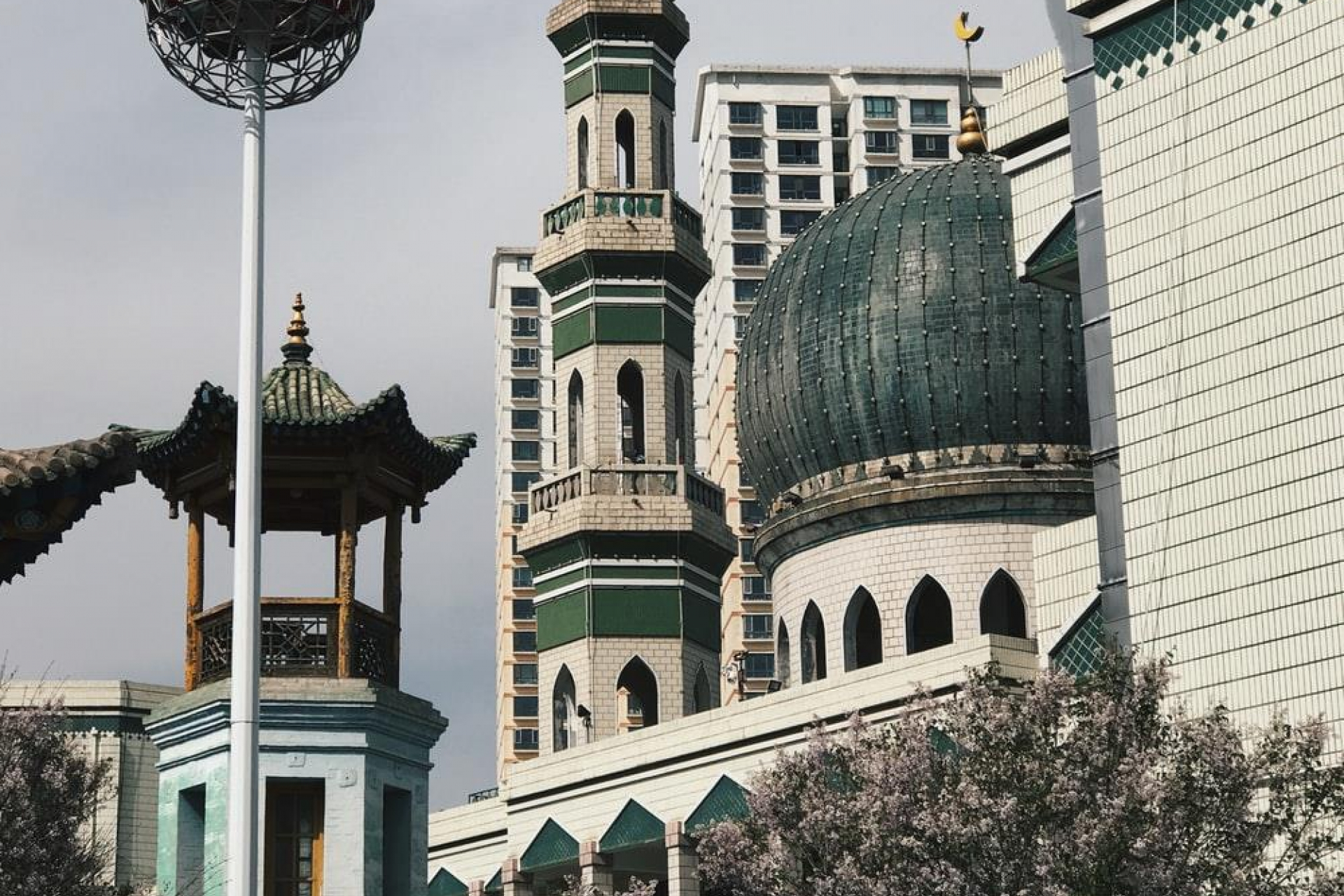
According to official estimates, China had some 20 million Muslims, 35,000 registered places of Islamic worship, and over 45,000 imams across China in 2002.138 The Chinese government takes some measures to show consideration for the religious beliefs and
associated cultural practices of China's Muslims. Most notably, the government permits and sometimes subsidizes Muslims to make the Hajj to Mecca. According to official Chinese figures, 5,000 Chinese Muslims made the Hajj in 1998. In the subsequent 5 years, however, independent reports estimated that far fewer Chinese Muslims made the Hajj. The China Islamic Association reports that 2,000 Chinese Muslims took part in the Hajj with official delegations in 2001.(139) Other Muslims may not
have been counted in official statistics if they made the Hajj through
neighboring countries such as Pakistan. Cost and passport issuance
restrictions often deter Chinese Muslims who wish to make the trip to
Mecca. Unofficial sources say that most Chinese Muslims who make the Hajj
are from the Hui, another one of China's minority groups, rather than
Uighurs. Unofficial accounts also suggest that Muslims who are allowed to
make the Hajj and who are subsidized for it generally must be loyal
government officials, active or retired.
Despite permitting some Muslims to make the Hajj, the
Chinese government continues to limit the religious freedom of Xinjiang's
Muslim Uighurs, who constitute nearly half of China's Muslim population.
Anti-separatism and anti-terrorism crackdowns persist, contributing to the
harsh repression of Uighur religious activities in the region. These
campaigns extend to stanching "religious extremism" and "illegal religious
activities." While the government justifies its crackdowns on religious
activities under the rubric of fighting "splittism" or "terrorism," many
observers believe that the Chinese government is using the global war
against terrorism as a pretext to suppress non-violent Uighur religious
activity in Xinjiang.
In 2002, Party and government officials in the Xinjiang Uighur Autonomous Region emphasized more stringent supervision of religious affairs. In Yili Prefecture, authorities ordered increased scrutiny of Muslim religious ceremonies such as weddings, funerals, circumcisions, and house moving rituals.(140)
Xinjiang authorities launched a campaign to dissuade Muslims from wearing
religious attire such as veils and discouraged religious marriage
ceremonies. Government officials also continued to restrict mosque
building in Xinjiang.
The government continues
to strictly regulate religious education and participation in religious
activities by young people, preventing parents from exercising full
freedom over the religious aspects of their childrens' upbringing.
Authorities prohibit Uighurs under the age of 18 from entering mosques in
Xinjiang. Signs reportedly posted at the entrances of most mosques
announce the ban. University students found worshipping in mosques or
participating in other religious activities face expulsion from their
schools. Officials also limit participation in religious activities by
teachers and professors. The government restricts religious teaching and
periodically censors sermons given by imams. Authorities closely monitor
the activities of imams, and local branches of the state-controlled
Islamic Association of China must approve the appointment of imams.
Government authorities continued to conduct mandatory political study
sessions for imams and religious personnel during 2003.
While government policy limits the religious
activities of Xinjiang's Uighur population, Hui Muslims throughout China
enjoy greater religious freedom than Uighur Muslims. Mosques in areas with
sizable Hui populations reportedly lack the signs common in Uighur areas
prohibiting those under the age of 18 from entering mosques. Furthermore,
reports indicate considerable mosque construction and renovation in
predominantly Hui areas. Observers concede that the Hui appear to enjoy a
greater degree of religious freedom than their Uighur Muslim
coreligionists, to whom the Chinese government often attributes separatist
and terrorist sentiments and actions.
Spiritual Movements
The crackdown on the Falun Gong spiritual movement continues, although the vitriolic media campaign that characterized the government's anti-Falun Gong efforts between 1999 and 2001 has subsided. Nevertheless, a June 2003 commentary in the state-run newspaper People's Daily accused the group of deliberately trying to spread the SARS virus.(141) Chinese authorities continue to confine
Falun Gong practitioners in prisons or psychiatric institutions for long
periods. Police reportedly torture some practitioners in an effort to
coerce them into renouncing their beliefs.
Footnotes
122: White House News Release, "President Bush, Chinese President Jiang Zemin Discuss Iraq, N. Korea," 25 October 2002, (23 September 2003).
123: Department of State Press Statement, "Six Nations Listed As Severe Violators of Religious Freedom," 5 March 2003, (23 September 2003).
124: United States Commission on International Religious Freedom, 2003 Annual Report, 1 May 2003, (23 September 2003).
125: "China Arrests 12 Members of Unauthorized Church," Agence France Presse, 19 June 2003.
126: Ibid.
127: Erik Eckholm, "Jailed Religious Leader in China in Poor Health, New York Times, 11 June 2003.
128: John Pomfret, "Evangelicals on the Rise in Land of Mao," Washington Post, 24 December 2002.
129: Ibid.
130: "Cardinal Sodano Says Relations Between Holy See, China 'At Standstill,'" Union of Catholic Asian News, 12 June 2003.
131: "China Tightening Its Grip on Catholics," Zenit.org, 28 May 2003, (24 September 2003).
132: Ibid.
133: Ibid.
134: Congressional-Executive Commission on China Hearing, Will Religion Flourish Under China's New Leadership?, 24 July 2003, Written Statement of Randall Schriver.
135 : "After Five Decades, Tibet's Monks Still Bristle Under Chinese Rule," Agence France-Presse, 18 August 2002, in FBIS, Doc ID CPP20020818000009. ("When the 'Panchen Lama'... went to the Jokhang, the monastery at the centre of Lhasa in June [2002], soldiers armed with machine guns surrounded the building," [the monk] said. "Many monks were not even permitted to be there to receive him." Ibid. Another public but uncirculated report by Kate Saunders, "Security surrounds visit of Chinese choice of Panchen Lama to Kumbum," 18 August 2003, provides details about Gyaltsen Norbu's visit to Kumbum Monastery (Chinese: Ta'ersi) in August 2003.
136: Congressional-Executive Commission on China Topic Paper, "The Execution of Lobsang Dondrub and the Case Against Tenzin Deleg: The Law, the Courts, and the Debate on Legality," 10 February 2003.
137: According to a draft translation by the International Campaign for Tibet of Sonam Phuntsog's official sentencing document dated 20 November 2002 (gan zhong xin yi chu zi No. 11, 2002), "Even though the accused and his lawyer denied that he delivered the words "Tibet independence," his actions showed that the accused advocated separating the country and undermining the unity of our nationalities.(6 August 2003).
138: Bureau of Democracy, Human Rights, and Labor, U.S. Department of State, "International Religious Freedom Report - 2002, China (Includes Hong Kong and Macau)," 7 October 2002, (8 October 2002).
139: Bureau of Democracy, Human Rights, and Labor, U.S. Department of State, "Country Report on Human Rights Practices - 2002, China (Includes Hong Kong and Macau)," 31 March 2003, (1 April 2003).
140: Human Rights Watch World Report 2003: China and Tibet, January 2003, (15 January 2003).
141: "Falun Cult Condemned for Hindering SARS Control,"
People's Daily, (English edition) 11 June
2003.
|