 |
Xinjiang-Uighurs
The
Chinese government supports the U.S.-led global war on terrorism, but
critics argue that Beijing is using terrorism as an excuse to crack down
on human rights and religious freedoms of the Uighur Muslim population in
Xinjiang.
The Uighurs, a Muslim Turkic people, are the dominant ethnic group in China's westernmost region, the Xinjiang Uighur Autonomous Region. They have a different ethnic, cultural, historical, and linguistic background than Han Chinese and have resisted Beijing's
authority since Qing Dynasty troops first took control of the Uighurs' homeland in 1759.(187) Resistance to Chinese rule continued after the Qing officially gained control of the area in 1884 and renamed it Xinjiang.(188) Uighurs managed to regain independence briefly in the 1930s and again in the 1940s.(189) Many Uighurs today identify more strongly with their Central Asian neighbors than with China. However, while many Uighurs are unhappy with Beijing's controls, they manifest their discontent through different means, from deep personal immersion into Islamic traditions to advocating independence through violent methods.(190) Yet "only a very few Uighurs have turned to militancy," as Dr. Justin Rudelson, former executive director of the University of Maryland's Institute for Global Chinese Affairs, told a Commission roundtable.(191)
Uighur separatists have committed occasional acts of violence in recent years, and a few have been linked to terrorist groups. In August 2002, the U.S. government designated the East Turkestan Islamic Movement as a foreign organization that supports terrorism and placed this obscure Xinjiang separatist group under an executive order blocking its financial transactions and freezing its assets in the United States.(192) China's state-controlled media have alleged that Osama bin Laden is an active sponsor of Xinjiang separatists.(193) However, there is little evidence to substantiate the Chinese government's claims that thousands of Uighurs are associated with al-Qaeda and other terrorist organizations,(194) or that "the majority of [Xinjiang] separatists are engaged in terrorist activities," as asserted by Zhang Guobao, vice-chairman of China's State Development Planning Commission.(195) President Bush has cautioned Chinese President Jiang Zemin that "the war on terrorism must never be an excuse to persecute minorities."(196)
According to China's official 2000 census, approximately 45 percent of the 19 million people in Xinjiang are Uighurs. The Han Chinese population has swelled to around 40 percent now, up from approximately six percent in 1949. In the past, the increase in the
Han Chinese population was largely due to government-initiated migration to Xinjiang. Now, however, many Han Chinese workers are moving to Xinjiang in search of new economic opportunities, as development there has become a priority for the central government under the Great Western Development campaign.(197) This demographic shift is a source of the growing tension and resentment Uighurs feel towards Han Chinese and the Chinese government. A July 2002 Financial Times article stated, "Settlers and migrant
workers are pouring in from the east at such a rate... that Uighurs are beginning to feel like aliens in their own land."(198)
Although Xinjiang has benefited from the central government's economic development policies, Uighurs contend that Han Chinese are the primary beneficiaries, often depriving Uighurs of jobs.(199) Uighurs are also concerned about the economic and environmental impact of large extraction projects, such as a $5.6 billion, 2,500 mile pipeline to transport natural gas from the Tarim Basin in Xinjiang to Shanghai.(200) They believe it will simply exploit the region's natural resources and provide little economic benefit to local Uighur people.(201) Many observers also question the pipeline's viability.(202)
Events in May 2002 amplified Uighur concerns. Article 4 of the Chinese Constitution guarantees cultural and linguistic protections for all nationalities. However, the practical effect of such protections is questionable. Western media reports describe a massive
book-burning rally in the Xinjiang city of Kashgar in May.(203) Officials claim that the books promoted separatism and threatened stability. Uighurs claim that the books related to their history and culture. Also in May, officials reportedly ordered Xinjiang University, the largest in the region, to cease all instruction in the Uighur language.(204) Nearly half of the 32,000 students are from ethnic minority groups, mainly Uighur,(205) making this ban a
threat to Uighur linguistic preservation and Uighur identity.
Uighur separatist activity, both non-violent and
violent, occurred long before September 11, 2001, and Chinese government
campaigns to suppress separatist actions and religious extremism have been
in full effect for years. The government justifies its actions under
Chinese law, such as Article 52 of the Chinese Constitution, which
requires all Chinese citizens "to safeguard the unity of the country and
the unity of its nationalities," Article 36, which protects only "normal
religious activities" as determined by the state, and Article 13 of the
Criminal Law, which criminalizes separatist beliefs.
In April 2001, the Chinese government renewed its Strike Hard anti-crime campaign. While on the national level the campaign targets crime (see the "Criminal Justice" section of this report), in Xinjiang the crackdown extends to separatists and "illegal religious activities."(206) Abulahat Abdurixit, chairman of the regional government, told the Xinjiang Legal Daily in April 2001 that the Strike Hard campaign in Xinjiang would specifically target "national splittists," "violent terrorists," and "religious extremists." In January 2002, Abdurixit announced that artists, writers, performers, historians, and others who advocate separatism through art would also become Strike Hard targets.(207) The campaign exacerbated the rate of sentencing and arrests in the region. Official accounts note that in May 2001, more than 3,000 cases were undergoing prosecution in Xinjiang and massive public sentencing rallies were held throughout the region, with attendance reaching over 300,000.(208)
Strike Hard intensified in Xinjiang after September 11, 2001. Within a month, authorities announced heightened measures against separatists, terrorists, "illegal religious activities," and "extremist religious forces."(209) Senior Xinjiang Justice Department officials told visiting Commission staff in Urumqi that "illegal religious activities include splitting the country and endangering national
security and unity under the pretext of religion."(210) Punishable
activities targeted during the crackdown include looting, rioting, possessing and publishing materials containing separatist views, engaging in campaigns for religious wars, illegally setting up organizations, and anything perceived by authorities to be "endangering state security or unity."(211) Participation in such activities can lead to long prison sentences or execution. Senior Xinjiang Justice Department officials also told Commission staff that approximately 1,000 people are currently in prison in Xinjiang for "carrying out concrete activities toward splitting or endangering the country," mostly through violent means.(212) The sweeping scope of such charges makes
it difficult to discern which cases are legitimate and peaceful and which
may be criminal and violent.
The case of Rebiya Kadeer exemplifies the nebulous legal environment. Kadeer is a prominent Uighur businesswoman who was active in organizing grassroots campaigns to address Uighurs' social concerns.(213) She is also a former member of the provincial-level Chinese People's Political Consultative Conference and was a Chinese
government-appointed delegate to the 1995 United Nations World Conference on Women in Beijing. In August 1999, Chinese authorities arrested her while she was on her way to meet a visiting U.S. Congressional staff delegation. In March 2000, a Xinjiang court sentenced her to eight years in prison for "passing state secrets" to foreigners. According to an official Chinese news report, the alleged "state secrets" included local newspaper articles and names of people whose cases the courts had handled.(214) Many observers believe Kadeer was targeted
for her activism in the Uighur community and for her husband's support in
the United States for Uighur causes and involvement with Radio Free
Asia.
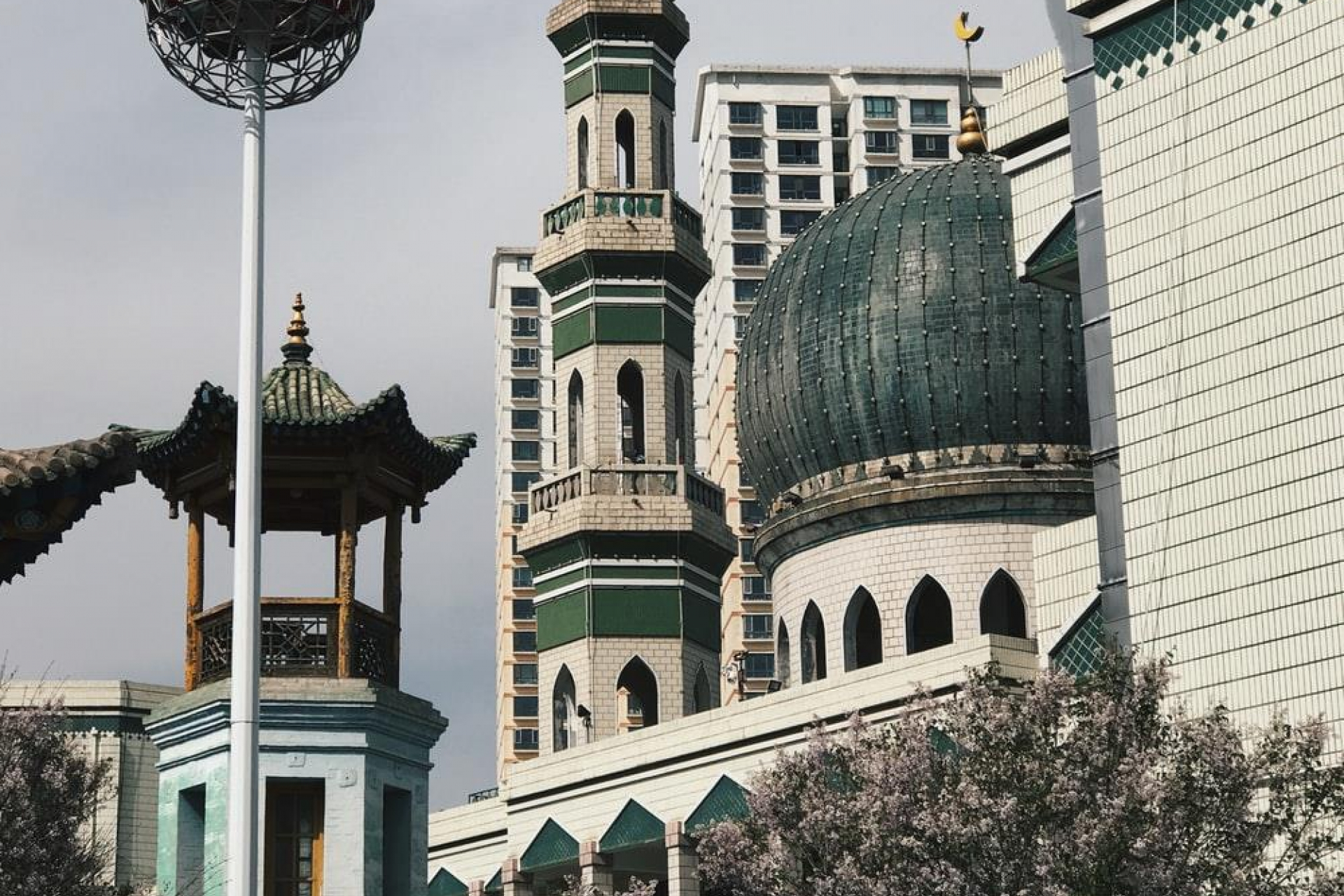
Restrictions on religious activity in Xinjiang have a serious impact on Uighurs, whose culture and ethnic identity are closely tied to Islam. Regulations tightly control places of worship, activities of religious leaders, religious education, and participation in religious activities.(215) Officials restrict the building of mosques in Xinjiang, and, according to unofficial reports, mosques have been torn down as part of a crackdown on religious activity.(216) The Chinese government closely monitors and guides activities of Islamic religious leaders (imams), all of whom must be approved by local branches of the state-controlled Islamic Association of China. From March through December 2001, the government implemented an imam "patriotic re-education" campaign in Xinjiang. Imams were required to attend 20-day sessions to study patriotism, Communist Party ideology, and how to combat separatism.(217) The China Islamic Affairs Steering Committee was set up in March 2001 under the administration of the Islamic Association of China to conform Islam to Chinese political ideology.(218) The Committee is charged with translating religious texts in accordance with Chinese law and Islamic doctrine, and preparing sermons for distribution, according to the China Daily, "to help the imams improve themselves."(219)
According to unofficial sources, no one under the age of 18 is allowed to enter mosques, and official sources verify that religious education is tightly restricted,(220) under the Chinese government's assumption that religion interferes with education per Article 36 of the Chinese Constitution. Heavy restrictions on religious activities extend to teachers and university students. Dr. Tashpolat Tiyip, Vice President of Xinjiang University, told visiting Commission staff that at Xinjiang University, "We do not allow for religious activities inside the school" and that any student found participating in religious activities at the university would be dismissed. "They all obey the school rules and none participates in religious activities."(221)
(Illustrative legal provisions include: PRC
Constitution, Articles 36, 51, 52, 53, 54, 112-122, and 134; PRC Law on
Regional National Autonomy-1984, amended 2001, Article 7; PRC Criminal
Law-1979, amended 1997, Articles 13 and 102-113. For an illustrative list
of national laws and regulations affecting religious organizations, see
the Religious Freedom section.)
Footnotes
187: James Millward and Peter Perdue, "Political History and Strategies of Control, 1884-1978," Address at the Conference of the JHUĦ§CSAIS Central Asia Caucasus Institute on Xinjiang: Muslim and Turkic Unrest in China's "New Territory," 27 March 2002.
188: Dewardric McNeal, Congressional Research Service, China's Relations with Central Asian States and Problems with Terrorism, Report for Congress, 17 December 2001, 1.
189: James Millward and Peter Perdue, "Political History and Strategies of Control, 1884-1978," Address at the Conference of the JHU-SAIS Central Asia Caucasus Institute on Xinjiang: Muslim and Turkic Unrest in China's "New Territory," 27 March 2002.
190: Ethnic Minorities in China: Commission Roundtable, Testimony of Justin Rudelson, Executive Director, Institute for Global Chinese Affairs, University of Maryland.
191: Ibid.
192: Press Briefing of Richard Boucher, Spokesman, U.S. Department of State, 26 August 2002.
193: "Fresh Claims of bin Laden link to Uyghur Separatists Emerge," South China Morning Post, 25 July 2002, (26 July 2002).
194: See, e.g., Dewardric McNeal, Congressional Research Service, China's Relations with Central Asian States and Problems with Terrorism, Report for Congress, 17 December 2001, 7-12; Chien-peng Chung, "China's 'War on Terror': September 11 and Uighur Separatism," Foreign Affairs (July/August 2002): 8-12; Dexter Roberts, "Beijing Stokes the Fires of Ethnic Tensions," Business Week, 29 May 2002, (31 May 2002); Human Rights Watch, China Human Rights Update, 10.
195: Vivien Pik-Kwan Chan, "Top Cadre Issues Xinjiang Warning," South China Morning Post, 17 October 2001, (1 August 2002).
196: President George W. Bush, "U.S., China Stand Against Terrorism," Remarks at the Press Conference of President Bush and President Jiang Zemin, 19 October 2002, (3 September 2002).
197: See, e.g., State Department Human Rights Report, China, 32; Matthew Forney, "One Nation - Divided," TIME Asia, 25 March 2002, (20 March 2002).
198: John Congreve, "Enter the Dragon," Financial Times, 27 July 2002, (30 July 2002).
199: See, e.g., State Department Human Rights Report, China, 32; Congreve, "Enter the Dragon."
200: Agence France-Presse, "ExxonMobil to Take Stake in 4,000 km Chinese Gas Pipeline Project," 1 July 2002, (3 July 2002). $5.6 billion is the investment for just the gas pipeline's construction. Another estimated $3.1 billion will be spent on gas extraction, and up to $9.6 billion will be spent on construction of the distribution network.
201: Ethnic Minorities in China: Commission Roundtable, 10 June 2002, Testimony of Dolkun Kamberi, Director of the Uighur Service, Radio Free Asia.
202: See, e.g., John Schauble, "China's $A40b Gas Line is on the Way," The Age, 6 June 2002, (6 June 2002); Agence France-Presse, "ExxonMobil to Take Stake in 4,000 km Chinese Gas Pipeline Project," 1 July 2002, (3 July 2002).
203: See, e.g., "China Orders End to Instruction in Uyghur at Top Xinjiang University," Agence France-Presse, 28 May 2002, in FBIS, Doc. ID CPP20020528000103; Radio Free Asia News Release, "Chinese Authorities Burn Thousands of Uyghur Books," 5 June 2002; Ethnic Minorities in China: Commission Roundtable, Kamberi Testimony.
204: See, e.g., "China Orders End to Instruction in Uyghur at Top Xinjiang University," Agence France-Presse, 28 May 2002, in FBIS, Doc. ID CPP20020528000103; "Xinjiang University Drops Instruction in Uyghur Language," RFA Reports, June 2002, 3; Open Forum Staff Roundtable of the Congressional-Executive Commission on China, 5 August 2002, Written Statement Submitted by Sokrat Saydahmat, Member, Board of Directors, Uyghur American Association.
205: Commission Staff Meeting with Dr. Tashpolat Tiyip, Vice President of Xinjiang University, 16 May 2002 [hereinafter "Staff Meeting with Dr. Tashpolat Tiyip"].
206: See, e.g., State Department Human Rights Report, China, 7; Human Rights Watch, Human Rights Concerns in Xinjiang; Amnesty International, "China's Anti-Terrorism Legislation and Repression in the Xinjiang Uighur Autonomous Region," March 2002, 10-12, (1 April 2002).
207: Human Rights Watch, China Human Rights Update, 11.
208: State Department Human Rights Report, China, 31.
209: Amnesty International, "China's Anti-Terrorism Legislation and Repression in the Xinjiang Uighur Autonomous Region."
210: Staff Meeting with Xinjiang People's Congress and Justice Department.
211: Ibid.
212: Ibid.
213: See, e.g., State Department Human Rights Report, China, 31; Amnesty International, "China: Uighur Businesswoman Rebiya Kadeer Sentenced to Eight Years After Secret Trial," 10 March 2000, (20 March 2002).
214: State Department Human Rights Report, China, 31.
215: See, e.g., Regulations on Managing Places for Religious Activities [Zongjiao huodong changsuo guanli tiaoli], issued 31 January 1994; Measures for the Registration of Places for Religious Activities [Zongjiao huodong changsuo dengji banfa], issued 13 April 1994; State Department Human Rights Report, China, 21.
216: Human Rights Watch, China Human Rights Update, 11.
217: See, e.g., Vivien Pik-Kwan Chan, "Mosque Leaders' Re-education Campaign Stepped Up," South China Morning Post, 14 November 2001, (1 August 2002); Human Rights Watch, China Human Rights Update, 11.
218: See, e.g., "Committee to Spread True Koran," China Daily, 24 April 2002; Human Rights Watch, China Human Rights Update, 11.
219: "Committee to Spread True Koran."
220: Staff Meeting with Xinjiang People's Congress and Justice Department. 221: Staff Meeting with Dr. Tashpolat
Tiyip. |
|
|
 |