
China Monitor
Contents:
Party Watch: Fourth Plenum reveals extent of recent leadership purges.
Threats to Americans: PRC use of arbitrary exit bans continues to escalate and includes U.S. citizens and residents.
Tech Companies Helped Build China’s Surveillance State: New data leak demonstrates U.S. companies enabled human rights abuses prompting calls for tighter government oversight.
Exporting Authoritarian Governance: PRC police launch pilot project in Solomon Islands exporting the “Fengqiao Experience” promoting social and political control in the name of improving security.
- PRC pressures U.K. university to end XUAR research.
- Kevin Yam, former CECC witness, disbarred by Hong Kong disciplinary tribunal
- Taiwan legislator, Puma Shen, is under investigation for “separatism” in the PRC’s escalating cross-border pressure on Taiwanese people.
Religious Freedom: Online Code of Conduct for Clergy released just weeks before crackdown on Zion church and detention of 30 practitioners and clergy
Highlighted Political Prisoner Case—Gao Zhisheng (高智晟)
Party Watch
The Fourth Plenary Session: Record-Low Attendance and a New Wave of Purges. The Fourth Plenary Session of the 20th Chinese Communist Party (CCP) Central Committee, held from October 20 to 23, 2025, recorded an attendance of only 315 out of 376 members. According to Bloomberg, this marks the lowest attendance rate since the Cultural Revolution, reflecting the extent of recent purges.
Prior to the session, China’s Ministry of Defense announced that nine senior People’s Liberation Army’s (PLA) generals—including General He Weidong, Vice Chairman of the Central Military Commission (CMC), and Admiral Miao Hua, who had served as the Director of the CMC’s Political Work Department—were purged, ostensibly on charges of corruption. Both had been appointed by Xi Jinping and were associated with the “Fujian clique” of the PLA, giving rise to speculation as to who had initiated the purges.
Cai Xia, former Professor at the Central Party School of the Chinese Communist Party with a PLA family background, argued on the “Bumingbai” (不明白) podcast that CMC Vice Chairman Zhang Youxia was behind the purges rather than Xi Jinping, saying that there was no motivation for Xi to remove his own appointees.
She noted that many of the purged generals, including He Weidong and Miao Hua, previously served in the former 31st Group Army (now the 73rd Group Army). The 73rd Group Army is the frontline unit facing Taiwan and is based in Fujian province—the Eastern Theater Command—where Xi started his political career.
At the same time, Chang Wu-Ueh, Associate Professor at Tamkang University’s Graduate School of China Studies, noted that the scale of the purge reveals deep structural problems within the CCP system. With near-absolute power concentrated in a single faction, “lower-level actors compete for resources and report on one another,” creating growing internal fractures. Chang said that “the purge within the military is not over yet.”
Gao Zhen Still Subject to Detention Without Trial, Family Subject to Exit Bans. PRC authorities detained Gao Zhen in 2024, an artist and U.S. permanent resident, and subsequently placed an exit ban on his wife, Zhao Yaliang, a U.S. resident, and their son Gao Jia, a U.S. citizen, on alleged “national security” concerns. Human Rights Watch (HRW) reported in October 2025 that Gao was still being held in the Sanhe City Detention Center and that his wife and son still remained subject to an exit ban in China. PRC authorities denied Gao’s application for medical bail—despite the fact that he suffers from chronic back pain and potentially arteriosclerosis—and placed him in a cramped cell with 14 detainees. HRW said that “the authorities have not yet announced a trial date for Gao, though it is expected to be in the next few months.”
The case of Gao and his family is just one example of the PRC’s continual use of exit bans to inhibit the freedom of movement of U.S. citizens and residents in China. Official data from the Supreme People’s Court offers a partial view into the scale of the PRC’s use of exit bans. At least 53,000 individuals, including PRC citizens and foreigners, were subject to exit bans in 2024, a figure that has risen every year since 2018. The Dui Hua Foundation estimated that the PRC kept over 30 Americans subject to exit bans as of September 2024, although the actual figure is likely higher. According to Michael Kovrig, a Canadian citizen previously detained in China, “Party-state secrecy and family privacy requests mean that uncounted numbers of other cases [involving exit bans] go unreported.” The U.S. Department of State has said that the PRC utilizes exit bans to “compel individuals to participate in PRC government investigations; pressure family members of the restricted individual to return to the PRC from abroad; resolve civil disputes in favor of PRC citizens; and gain bargaining leverage over foreign governments.” The PRC’s use of exit bans serves as a de facto form of hostage taking that violates Article 12 of the International Covenant on Civil and Political Rights.
- U.S. Citizen Released. In September, Chenyue Mao, a U.S. citizen and managing director at Wells Fargo’s Atlanta office, returned to the United States after the PRC government subjected her to an exit ban in July 2025. A representative of the PRC Ministry of Foreign Affairs said without elaboration that Mao was required to stay in China to cooperate with the investigation of a criminal case. The PRC government has also prevented a U.S. Commerce Department employee from leaving China since April 2025.
- Chairs Send Letter to President on Unjustly Detained Americans. In October 2025, CECC Chair and U.S. Senator Dan Sullivan (R-AK), Co-Chair and U.S. Representative Chris Smith (R-NJ), as well as U.S. Representative John Moolenaar (R-MI), Chair of the House Select Committee on the Strategic Competition Between the United States and the Chinese Communist Party, wrote a letter to U.S. President Donald Trump asking the President to personally raise the cases of Gao Zhen and his U.S.-citizen child and wife, as well as the U.S. government employee subjected to an exit ban.
Tech Companies Helped Build China’s Surveillance State
Mass Surveillance Systems. Classified government blueprints taken out of China by a whistleblower and reviewed by Associated Press (AP) showed that “American tech companies to a large degree designed and built China’s surveillance state, playing a far greater role in enabling human rights abuses than previously known,” including by introducing “predictive policing” technologies to China, which authorities have used to carry out mass detention in the Xinjiang Uyghur Autonomous Region (XUAR). Companies identified in the AP exposé include the following:
- IBM, Cisco, Oracle, and Microsoft sold products to PRC police to upgrade its “Golden Shield” policing systems. IBM, however, said that it had prohibited sales to police in the XUAR since 2015.
- “Nvidia and Intel chips remain critical for Chinese policing systems, procurements show.”
- Thermo Fisher Scientific marketed DNA kits to PRC police capable of identifying ethnic minorities like Uyghurs and Tibetans.
- Seagate sold to PRC police hard drives designed for AI video systems that enabled police to “control key persons.”
- Hewlett-Packard and Esri, among others, sold geographic and mapping software to PRC police for detecting movement of blacklisted Uyghurs, Tibetans, or dissidents.
- “Dell and then-subsidiary VMWare sold cloud software and storage devices to police and entities providing data to police in Tibet and Xinjiang, even in 2022 after abuses there became widely known.”
The AP report prompted bipartisan calls for tighter oversight and new laws restricting the export of repression-enabling technologies. In October 2025, Representatives Chris Smith (R-NJ) and John Moolenaar (R-MI) wrote to the Solicitor General urging that a case against Cisco Systems be allowed to proceed so that plaintiffs, who have been waiting since 2011, have the chance to prove their claims that the company’s “custom-designed tool” facilitated religious persecution at the hands of the CCP.
Exporting Authoritarian Governance
Solomon Islands Implements Social Control Project. In September 2025, Reuters reported that PRC police launched a pilot project in the Solomon Islands throughout the past year with the goal of implementing the “Fengqiao Experience” model to promote granular social and political control through grassroots-level organizations. PRC police visited several villages and introduced residents to “population management, household registration, community mapping, and the collection of fingerprints and palm prints . . ..” Training provided by PRC police included riot control conducted in Malaita province that experienced anti-PRC riots in 2021, which underscored the tension created by PRC operations there. The goal as stated by the Royal Solomon Islands Police Force is to improve security, and the pilot project is expected to expand to other areas in the country.
Also of note, the former Premier of Malaita province and target of PRC lawfare, Daniel Suidani, passed away on October 21, 2025. Suidani was a vocal critic of the PRC, opposing the Solomon Islands’ cutting of diplomatic ties with Taiwan in 2019 and accusing the PRC of orchestrating a political operation to oust him from his post in 2023. He also called for the U.S. to counter PRC malign influence and political warfare, briefing the CECC in April 2023 along with his colleague, Mr. Celsus Talifilu. He passed away just one day before a Solomon Islands court was scheduled to adjudicate on unlawful assembly charges against him, which he believed were “politically motivated.”
Human Rights Researcher Silenced. The BBC reported in November 2025 that PRC authorities pressured Sheffield Hallam University to halt academic Dr. Laura Murphy’s research on Uyghur forced labor in the Xinjiang Uyghur Autonomous Region (XUAR). Murphy, professor of human rights and contemporary slavery at Sheffield Hallam, previously published reports into Uyghur forced labor, widely cited by western governments and lauded by Sheffield Hallam as “groundbreaking.”
In late 2024, following PRC state pressure and a defamation lawsuit brought by a PRC company, Sheffield Hallam decided not to publish a final report by Murphy’s team of researchers, also known as the Forced Labour Lab, on Uyghur forced labor in critical minerals. Sheffield Hallam administrators in early 2025 then informed Murphy that she could not continue her research into supply chains and forced labor in China, and the website for her team was taken down. The report was eventually published by the original grantor of funding for the research in June 2025, though the restrictions on Murphy and her team remained.
While the university pointed to safety concerns for staff in China and unsustainable insurance for continued defamation lawsuits from Chinese companies as the reasons for the research freeze, Murphy and others believe financial considerations and pressure from PRC authorities contributed to the decision. An internal email between university officials at Sheffield Hallam in July 2024 acknowledged it was “untenable” to retain access to the Chinese student market and publish Murphy’s research. Sheffield Hallam experienced a significant decline in Chinese student enrollment in recent years, while PRC authorities ramped up a pressure campaign against the university due to Murphy’s research. According to internal university correspondence, in April 2024, PRC authorities interrogated and threatened staff at the Sheffield Hallam office in Beijing.
In October 2025, following eight months of halted research and threats of legal action from Murphy, Sheffield Hallam lifted the restrictions on her research and apologized. However, this case has highlighted the chilling effects of the PRC government’s attempts to silence dissent abroad, especially through western education institutions. In an interview with The Wire, Murphy stated, “I know that I’m not alone. I’ve heard from people all over the UK, who work on China in particular, that they are suffering maybe subtler versions of this kind of pressure, but certainly feeling the pressure . . . on their work.”
- Hong Kong, Kevin Yam Disbarred. In July 2025, a three-member disciplinary tribunal in Hong Kong decided to disbar Kevin Yam in an apparent attempt to retaliate against his activism overseas. The Hong Kong government previously issued an arrest warrant for Yam in 2023, shortly after he had testified at a CECC hearing where he described the rapidly deteriorating legal system in Hong Kong. Hong Kong authorities’ targeting of Yam is part of a broader pattern of transnational repression against the CCP’s critics who peacefully express their opinions outside of China. Of particular concern in this case is the connection between Yam’s testimony in front of the U.S. Congress and repercussions taken against him by Hong Kong authorities in response.
- Taiwanese legislator investigated. In October 2025, the Chongqing Municipal Public Security Bureau announced it had launched an investigation into Taiwanese legislator Puma Shen for the crime of “separatism” in accordance with China’s Criminal Law and the Opinion on Lawfully Punishing Obstinate “Taiwan Independence” Offenders for Committing or Inciting Separatism (“22 Guidelines”) which became effective on June 21, 2024. The investigation hinges on Shen’s work co-founding Kuma Academy, a non-governmental organization that provides training for Taiwanese civilians in preparation of a possible conflict with the PRC.
- Taiwanese citizen convicted of “separatism”. Previously, in August 2024, shortly after the 22 Guidelines became effective, activist Yang Chih-yuan, who was detained while traveling in Zhejiang Province, became the first Taiwanese citizen to be convicted of “separatism” by a mainland court and was sentenced to nine years imprisonment. As previously examined by the CECC, the 22 Guidelines represent the PRC’s intents to legitimize “long-arm” enforcement of PRC laws, while also increasing danger for foreign citizens traveling to and within the PRC.
- Bounties for Taiwanese Influencers. More recently, in November 2025, PRC authorities issued a wanted notice for two Taiwanese influencers, Wen Tzu-yu and Chen Po-yuan, whom they accused of “separatism.” Quanzhou Municipality PSB officials offered a reward of up to 250,000 yuan (US$35,000) for information that could significantly contribute to their capture.
Religious Freedom
- Zion Church Pastors and Members Detained Following Issuance of New Clergy Restrictions. On September 15, the National Religious Affairs Administration (NRAA), which operates under the United Front Work Department, issued a new Online Code of Conduct for Clergy (translation here). The new rules, which apply to religious professionals across all religious groups—including imams, pastors, priests, monks and nuns, and others—consist of 18 articles that require clergy to uphold “core socialist values” and ethnic harmony, among other principles. Less than one month later, starting October 10, police conducted sweeping raids across China, detaining over 20 pastors, staff members, and congregants of the Zion Church network. The criminal detention notices for lead pastor and founder, Mingri “Ezra” Jin and others detained in thecrackdown listed the reason for detention as “illegal use of information networks.” Zion is known for its hybrid church model: after the physical church was shut down by authorities in 2018, it began offering services and other resources online, with small communities forming around the country to worship as part of a diffuse network. It is likely that the vast reach of its hybrid model was seen as a threat by the Chinese Communist Party and government, leading to the crackdown. On November 18, authorities formally arrested Pastor Jin and 17 others, charging them with “illegal use of information networks,” which carries a sentence of up to three years’ imprisonment.
- Targeting Online Religious Activity. The new Code of Conduct followed on the heels of other Party and government efforts to target online religious activity—including the Measures on the Administration of Internet Religious Information Services (2022)—and religious activity in general. While the Zion Church detentions do not directly cite to the Code of Conduct, authorities’ decision to charge the pastors with a crime related to their internet use suggests that the new rules will bolster official efforts to severely limit online religious activity, already one of the few remaining spaces for religious expression.
Highlighted Political Prisoner Case—Gao Zhisheng (高智晟)
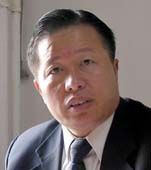
As documented in the CECC’s Political Prisoner Database, in mid-August 2017, Gao Zhisheng—a former lawyer whose license was suspended in 2005—disappeared in Jia county, Yulin municipality, Shaanxi province, where authorities were holding him under home confinement. On September 7, Gao’s brother said officials told him they were detaining Gao in Beijing municipality. Prior to his most recent disappearance, Gao had been the target of arbitrary detention by PRC authorities. Since August 2006, authorities have held Gao under various forms of detention, reportedly for representing farmers in land expropriation cases and for writing open letters condemning persecution against Falun Gong practitioners and Christians. In December 2011, the Beijing No. 1 Intermediate People’s Court ordered Gao to serve a three-year prison sentence, which it previously suspended in December 2006 for five years. In August 2014, after releasing Gao from Shaya Prison in Shaya county, Akesu (Aksu) prefecture, XUAR, authorities placed him under home confinement, initially in Urumqi municipality, XUAR, and later in Jia county, where he remained until his 2017 disappearance. Authorities reportedly tortured Gao during detention.
Since Gao’s 2017 disappearance, the PRC government has stonewalled attempts by his family and international observers to obtain information on Gao’s condition and his status in custody. In response to an inquiry from several U.N. special rapporteurs and the Working Groups on Arbitrary Detention and Enforced or Involuntary Disappearances, in April 2025 the PRC government offered a non-response, writing only that Gao had been released from prison in 2014, and asserting that in China “there are no issues of so-called ‘enforced disappearance’ or ‘arbitrary detention.’” In 2012, the Working Group on Arbitrary Detention found Gao’s prior detention arbitrary, holding that he had been denied the right to a fair trial, and that his detention resulted from his exercise of internationally recognized freedoms.
PRC officials’ punishment of Gao due to his career defending the rights of the marginalized and those targeted by state power illustrates the perilous state of Chinese rights lawyers, and his lengthy arbitrary detentions and enforced disappearance demonstrate how the PRC considers rights advocates a threat to Party and state power. In addition to U.N. rights bodies, the international community has repeatedly called for Gao’s release and an end to enforced disappearances in China.
Commissioners Introduce Legislation to Boost Political Prisoner Advocacy. In September 2025, Representatives Chris Smith (R-NJ), Tom Suozzi (D-NY), and John Moolenaar (R-MI) introduced Bill H.R.5303 to encourage and support advocacy efforts by the U.S. Government for Gao Zhisheng and other political prisoners through the comprehensive use of prisoner lists and a government-wide strategy for embedding political prisoner advocacy into all diplomatic encounters with the PRC.
The Congressional-Executive Commission on China (CECC) is mandated to monitor human rights and the rule of law in China. This newsletter contains the work of professional Commission staff and does not necessarily imply endorsement by any individual CECC Commissioner, or any Commissioners’ professional staff.