China Monitor #7
A publication to keep Members of Congress and the public informed about critical human rights and legal developments in China
August 20, 2026
Contents
- Party Watch: Anti-Corruption Campaign Continues Sweep Across the PLA, Politburo, and Elsewhere
- China’s War on Religion: Pastor Jin Released as Suppression of “House Church” Worship Continues
- American Detained in China: PRC Detains Academics Amid Suppression of Academic Freedom
- Transnational Repression: Attacks Against Women Expand the Scope of PRC's Transnational Repression
- Xinjiang Uyghur Autonomous Region: American Drug Trials Take Place in the XUAR Against a Backdrop of Repression
- Rule of Law Developments: New Model Cases Omit Discussion of Compulsory Measures for Juvenile Drug Users and Offenders
- Highlighted Political Prisoner Cases—Zion Church Leaders
Party Watch: Anti-Corruption Campaign Continues Sweep Across the PLA, Politburo, and Elsewhere
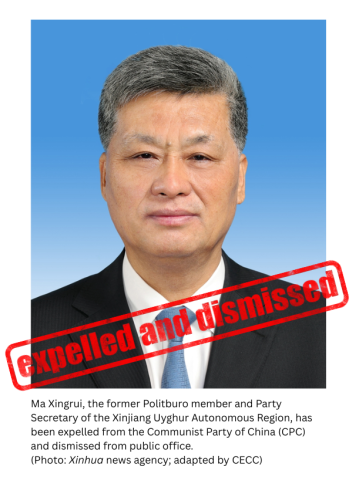
The Chinese Communist Party (CCP or Party) has continued to widen its campaign of removals and investigations at the highest levels of the Party and the People’s Liberation Army (PLA), seemingly to stress adherence to Party ideology and warn that no one will be spared scrutiny. At the closing ceremony of the first-ever PLA training course focused on the ideological transformation of senior officers, Central Military Commission Vice Chairman Zhang Shengmin emphasized the need to “deepen ideological rectification and advance political training,” among other objectives. On June 26, the Standing Committee of the National People’s Congress announced the removal of 13 members from the legislature, including 6 PLA officers. The South China Morning Post said that since 2023, 26 generals have been investigated, with 12 disappearing from public view or missing meetings.
General Secretary Xi used the removal of Politburo member and former Party Secretary of the Xinjiang Uyghur Autonomous Region Ma Xingrui to send shockwaves through the highest levels of the Party. On July 14, the CCP expelled Ma from the Party after accusing him of a slew of corrupt practices. Joseph Torigian, an associate professor at American University, said that Ma is the first civilian member of the Politburo to be removed since the 1976 “purge of the Gang of Four.” Torigian stated that Xi is hoping to signal “that even [P]olitburo members, no matter who you are, can be touched by this kind of crackdown.”
Xi’s continued mission of eliminating perceived corrupt elements appears to be driven by fear that a lack of ideological rigidity will lead to the corrosion and subsequent downfall of the Party, and also by a desire to remove rivals who could potentially undermine his own political power. On July 6, the PLA Daily published an essay titled Carry the Rectification of Thought Through to the End that warned against “ideological degeneration,” “wavering stances,” “the mentality of privilege,” and “a lack of substance in one’s thinking.” The essay invoked the fall of the Soviet Union as a cautionary tale, saying that Soviet cadres had abandoned their “theoretical grounding and political convictions, repudiat[ed] revolutionary history, and embrac[ed] Western-style ‘liberal democracy,’” ultimately contributing to the Soviet Union’s collapse. The Party had long sought to study the lessons of the Soviet Union’s collapse prior to Xi becoming the PRC’s paramount leader in 2013. Xi continued to echo the Party’s fears at the beginning of his tenure as General Secretary, saying at an internal Party meeting in 2013 that the Soviets’ “ideals and convictions wavered.”
China’s War on Religion: Pastor Jin Released as Suppression of “House Church” Worship Continues
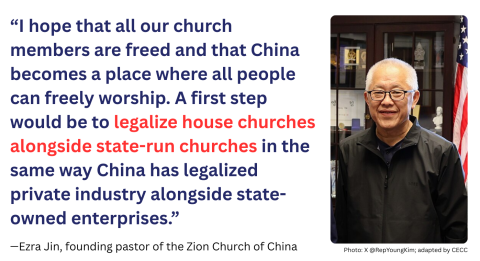
The PRC released Pastor Ezra Jin in July 2026, six weeks after President Trump raised his case with Xi Jinping during their Beijing summit. His release, however, should not be understood as a broader shift in the PRC’s treatment of unregistered Protestant “house churches.” CECC Co-Chair Chris Smith welcomed Jin’s release while calling attention to the “many others detained” for their religious beliefs. Indeed, Jin’s release coincided with police raids targeting Early Rain Covenant Church (ERCC), a prominent house church based in Chengdu, Sichuan province, as well as multiple unregistered congregations in Yueyang, Hunan province.
On June 14, 2026, at least 50 local government authorities raided an ERCC service in Jiangyou, a city about 100 miles northeast of Chengdu. More than 30 ERCC practitioners were detained and transported to the Jiangyou Detention Center. Authorities prevented the remaining worshippers from leaving, checked their identification, and pressured them to sign a written statement whose contents remain undisclosed. In similar raids, police in Yueyang detained a number of house church worshippers from multiple congregations, subjecting them to lengthy interrogations and compelling them to provide personally identifying information, including fingerprints, blood samples, and voice recordings. While most of those detained in the Jiangyou and Yueyang incidents were released within two days, two ERCC church leaders, Yan Hong and Wu Wuqing, received administrative detention penalties of about two weeks for “organizing and participating in illegal gatherings.” Six Yueyang church leaders reportedly remain in detention as of July 2026.
These incidents are only the most recent in a coordinated nationwide crackdown on unregistered churches over the last year. ERCC has been a particular target—at least nine ERCC leaders and members were detained in January 2026. Two church leaders, Li Yingqiang and Dai Zhichao, were formally arrested on national security charges and remain in detention, and two others, Ye Fenghua and Jia Xuewei, were placed under “residential surveillance at a designated location.” Since 2019, ERCC’s founding pastor, Wang Yi, has been serving a nine-year prison sentence following his publication of a statement, signed by over 100 other Chinese pastors, criticizing the persecution of Chinese Christians in the wake of the 2017 revision to the Regulation on Religious Affairs.
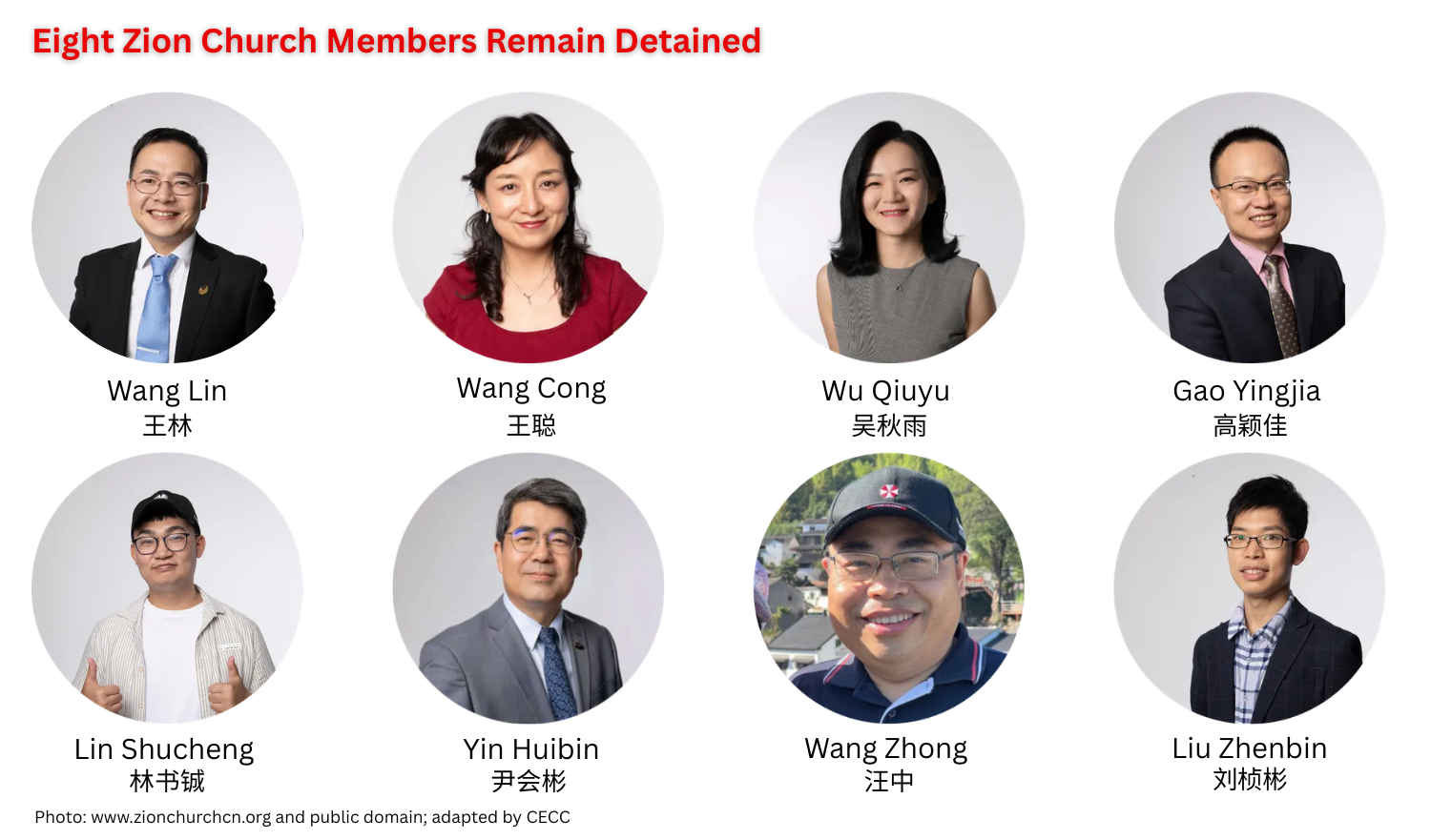
Despite Ezra Jin’s release, eight Zion Church leaders remain in detention: This suppression of house church worship will likely persist as long as the ruling Chinese Communist Party perceives these congregations as a competing source of moral authority. Undeterred, Pastor Jin has said he “won’t rest” until the remaining leaders “see freedom.”
American Detained in China: PRC Detains Academics Amid Suppression of Academic Freedom
China is one of the largest wrongful detainers of Americans in the world, holding 13 U.S. citizens as of 2025, according to the Foley Foundation. In another case of wrongful detention, reports emerged in July concerning the detention of an American scholar, seismologist Dr. Youlin Chen, whom Chinese authorities have been holding for nearly two years. Dr. Chen was detained in November 2024 under suspicion of “espionage.” In June 2026, Chinese authorities detained U.S. citizen Min Zin, the executive director of a think tank focusing on Burma (Myanmar). Min Zin was also detained under suspicion of “espionage” after traveling to Kunming municipality, Yunnan province, for an academic conference.
Both Min Zin and Dr. Chen had reportedly regularly traveled to China previously without no incident, and both were engaged in research sensitive to the PRC. Min Zin’s think tank has critically analyzed Chinese infrastructure investments in Burma, and Dr. Chen—whom Secretary of State Rubio has officially designated as “wrongfully detained”—has done contract research for the U.S. Government on North Korean underground nuclear tests.
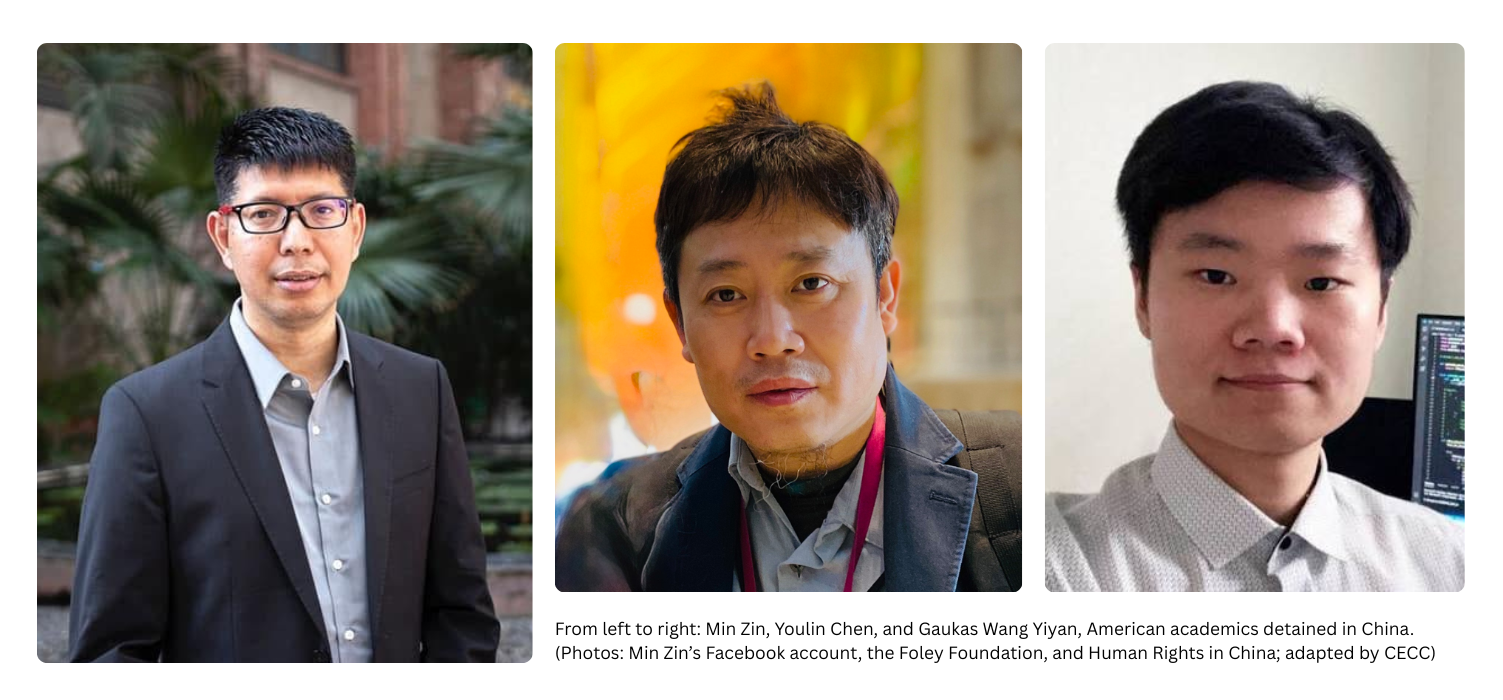
These detentions reflect a worrying trend of the PRC punishing academics for activity outside of China. In the summer of 2024, University of Colorado Boulder Ph.D. student Gaukas Wang Yiyan—whose work focuses on censorship circumvention tools—disappeared while traveling in China. In late 2024, PRC authorities detained University of Sydney student Cheng Fangwei and later sentenced him to six years in prison on “separatism” charges for participating in pro-democracy protests in Australia. In July 2025, incoming SOAS University of London graduate student Zhang Yadi was detained on suspicion of “inciting separatism” in China after advocating for Tibetan rights while abroad.
The potential fallout of this trend extends beyond these detentions. Those engaging in academic work or student activity abroad that is deemed unacceptable by Chinese authorities may be monitored and later punished, deterring open inquiry and travel to China, and causing lasting damage to research, academic exchange, and the free pursuit of information.
Transnational Repression: Attacks Against Women Expand the Scope of PRC's Transnational Repression
The PRC is increasingly using social media harassment and AI-generated non-consensual intimate imagery to intimidate and discredit critics, particularly women, and drive them off social media or diminish their online visibility.
Apple Peiqing Ni, founder of the UK-based China Dissent Network, was targeted by an X account that spread fabricated allegations of drug use, promiscuity, and animal abuse. The campaign combined falsehoods with accurate personal details—such as that Ni owns a cat—to lend the accusations credibility. One post also falsely claimed that she had been violently attacked in London and described the purported assault as “the perfect retribution” for her activism.
Human rights advocate Laura Harth of Safeguard Defenders has similarly reported becoming the target of AI-generated non-consensual intimate images posted on social media. Citing evidence from OpenAI, democratic governments, and independent research institutes documenting other activities, Harth linked the campaign to broader PRC-backed influence operations, including a connection to state-linked Spamouflage. Activist Su Yutong was exposed every day to non-consensual intimate images claiming to be her. Similar images purporting to be Canada-based political commentator Zang Xihong were sent to audience members in the middle of her speech at a democracy event.
A Canadian government investigation reinforces those concerns. Global Affairs Canada (GAC), the department of the Government of Canada that manages Canada's international relations, attributed a 2025 Spamouflage campaign to the Chinese government ‘‘with high confidence.’’ This was the first instance of a government attributing the deployment of bots and non-consensual intimate images against critics to a PRC-linked influence operation. The finding builds on growing evidence connecting state-linked Spamouflage to PRC transnational repression efforts to manipulate online discourse and intimidate overseas dissidents.
During a June 2026 Congressional-Executive Commission on China briefing, one participant described how PRC-linked influence operations used intimate images to comment on social media posts criticizing the Chinese government, in an apparent effort to trigger platform moderation systems and reduce the visibility of those posts, a practice known as ‘‘shadow banning.’’ Beyond suppressing content, such campaigns can inflict lasting reputational and psychological harm on activists.
As generative AI becomes cheaper and more capable, AI-generated non-consensual intimate images are likely to become an increasingly common tool of transnational repression. Although no evidence has emerged that Chinese authorities created the images examined here, the PRC-linked Spamouflage network has exploited them to advance PRC objectives. By using such images to intimidate women, damage reputations, suppress online speech, and drive critics from public life, these campaigns send a broader warning to diaspora and human rights communities: Speaking out can invite deeply personal retaliation.
Since at least 2010, American and other international pharmaceutical companies have conducted clinical drug trials in the Xinjiang Uyghur Autonomous Region (XUAR), where repressive policies call into question the free consent of drug trial participants. The forced labor, compulsory medical testing, biodata collection, and other state-directed abuses prevalent in the region highlight the inability of Uyghurs and other Turkic Muslims to refuse participation without punishment from authorities.
Drug trials in the XUAR appear to have increased sharply as mass atrocity crimes intensified, according to data compiled by The Wire China. The number of trials rose in 2016 and 2017, as authorities detained Uyghurs and other predominantly Muslim ethnic groups on a mass scale and subjected them to forced sterilization and other coercive measures—abuses that later contributed to the U.S. Government’s determination that the PRC was committing genocide in the region.
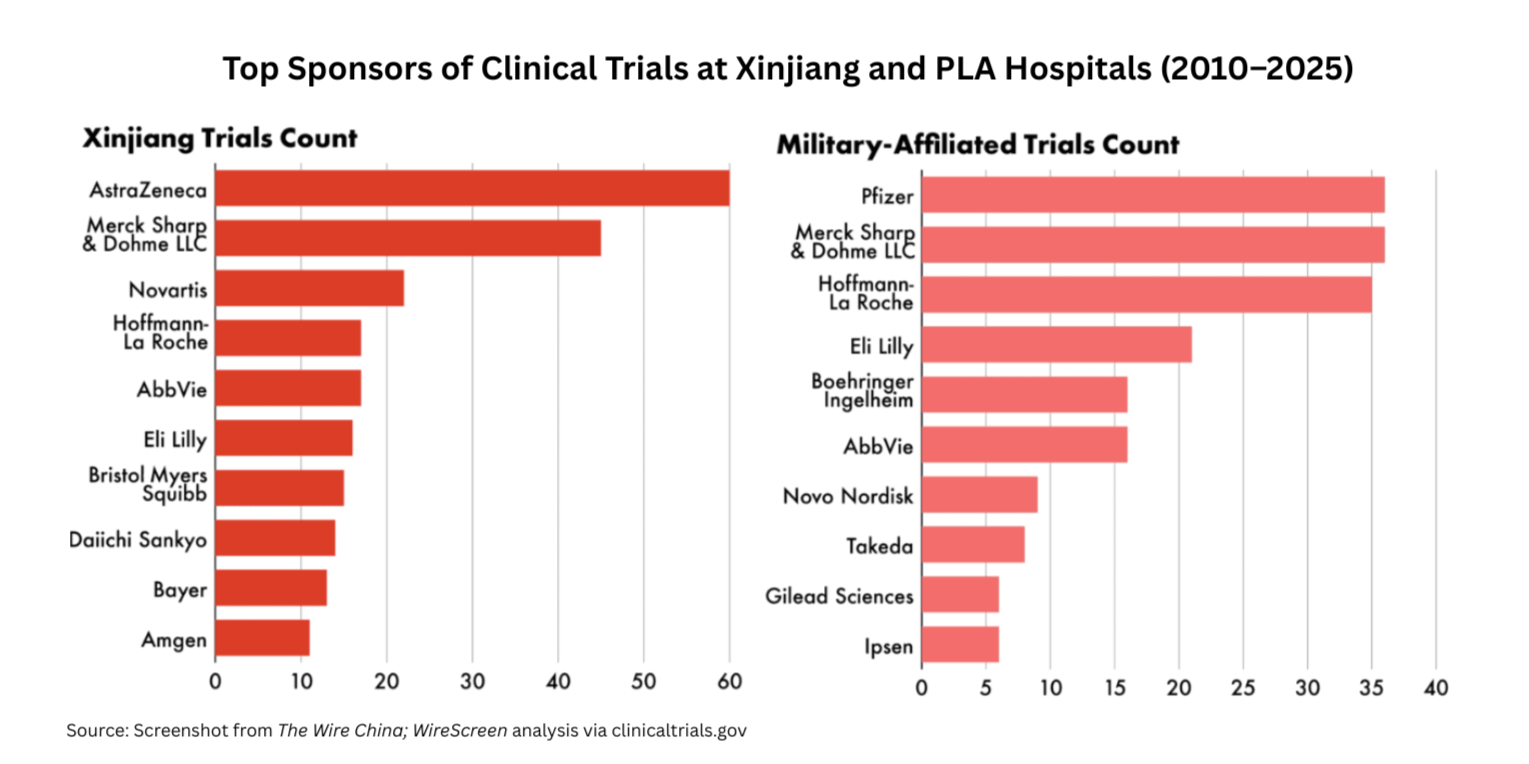
The following five American companies conducted the highest number of clinical trials at hospitals in the XUAR between 2010 and 2025, listed from highest to lowest: Merck Sharp & Dohme LLC (Merck), AbbVie, Eli Lilly, Bristol Myers Squibb, and Amgen. International companies AstraZeneca, Novartis, Hoffmann-La Roche, Daiichi Sankyo, and Bayer were also included among the companies listed by The Wire China.
In June 2026, Merck, AbbVie, Eli Lilly, Bristol Myers Squibb, and Pfizer each received a congressional letter seeking information regarding the drug trials they conducted in the XUAR and in People’s Liberation Army (PLA) hospitals and questioning what strategies they had put in place to ensure they were meeting ethical standards. With regard to PLA hospitals, the letters question how data obtained from clinical drug trials “could fuel the CCP’s military biotechnology research, experimentation, and capability development.” While there is no evidence that the companies engaged in illegal conduct, questions remain about informed consent and voluntary participation, ethical issues that have plagued the clinical drug trial system in China. The letter to Pfizer noted that the company had decided that it will no longer conduct drug trials in the XUAR or at PRC military hospitals.
International ethical standards and regulations governing drug development and human research prohibit the use of coercion in clinical drug trials. As American companies are drawn to the speed and low cost of conducting clinical trials in China, and as the scale of drug development and innovation in China outpaces that of the U.S., companies must not forgo the ethical concept of “do no harm” and must ensure that trial participants provide voluntary and informed consent.
Ahead of the International Day Against Drug Abuse and Illicit Trafficking, China’s Supreme People’s Court (SPC) and Supreme People’s Procuratorate (SPP)—the country’s highest judicial and prosecutorial bodies—released separate collections of model cases with examples addressing juvenile drug abuse. Such cases are published to guide lower-level courts and prosecutors in handling similar matters. Both collections emphasize prevention, treatment, and rehabilitation rather than relying solely on punishment. But they do not address involuntary commitment of juveniles, which is authorized under PRC laws, and official data about it is sparse.
The SPC cases focus primarily on how courts should respond to offenses involving newly popular addictive substances, including nitrous oxide (“laughing gas”), pregabalin, and e-cigarettes containing the anesthetic etomidate. The relevant SPP cases took a broader approach, treating juvenile drug abuse not only as a criminal justice issue but also as a problem requiring intervention by schools, families, regulators, and local governments. They illustrate an expanded role for prosecutors: Beyond bringing criminal charges, procuratorates may identify regulatory gaps, urge law enforcement agencies to act, and recommend that provincial authorities adopt new legislation. The SPP described this approach as a shift from reacting to individual cases to building systems intended to prevent drug abuse. The model cases, however, omit discussion of other coercive measures available under PRC laws.
Under the PRC Anti-Drug Law, people with drug dependency are required to undergo “compulsory isolated drug rehabilitation” (qiangzhi geli jiedu, 强制隔离戒毒) if less restrictive measures are unsuccessful. Involuntary commitment to a rehabilitation facility can span up to two years, with the possibility of a maximum one-year extension. For persons under 16 years of age, the imposition of this measure is discretionary, but the law does not exempt juveniles from the provision that authorizes labor as part of the rehabilitation program.
Some juvenile offenders are subject to compulsory placement under the PRC Juvenile Delinquency Prevention Law. Juveniles who engage in criminal conduct but are exempt from punishment on account of their age may be placed in “specialized corrective education” (zhuanmen jiaozhi jiaoyu, 专门矫治教育). While authorities maintain that these specialized corrective schools are not detention facilities, students are managed by government agencies including public security and justice departments, and reports confirm police presence in at least some schools. The law does not limit the duration of this form of “education.”
Little is known about the extent of these types of involuntary commitment. As of November 2025, there were 316 specialized corrective education facilities across China (a threefold increase since 2023), with a capacity of over 28,000 students. The PRC government provided some data concerning juvenile drug users between 2014 and 2019 but has since withheld comparable data despite juvenile drug use remaining a prominent problem. As of 2023, there were 779 compulsory isolated drug rehabilitation facilities, 8 of which house juveniles exclusively. In 2020, thirteen UN entities noted that people in Asia and the Pacific often are held in drug rehabilitation facilities without sufficient due process, and “detention in these centres has been reported to involve forced labour, lack of adequate nutrition, physical and sexual violence, and denial or comparatively lower access to and quality of healthcare services.”
Highlighted Political Prisoner Cases—Zion Church Leaders
In June 2026, eight months into the nationwide crackdown on Zion Church that began with the mass detention of church members and leaders, authorities released nine of the original detainees on bail, while moving the cases of nine others forward for prosecution. Just over two weeks later, authorities released Pastor Ezra Jin Mingri (金明日), who was among those set to be prosecuted, allowing him to reunite with his family in the United States. Yet eight church members remain in PRC custody at Beihai No. 1 and No. 2 PSB Detention Centers in Yinhai district, Beihai municipality, Guangxi Zhuang Autonomous Region (GZAR): Gao Yingjia, Lin Shucheng, Liu Zhenbin, Wang Cong, Wang Lin, Wang Zhong, Wu Qiuyu, and Yin Huibin.
In early October 2025, as part of a campaign targeting unregistered Christian churches, PRC authorities detained nearly 30 Zion Church members and leaders, some on charges of “illegal use of information networks.” Members were initially detained across multiple locations in China, including Shanghai and Beijing municipalities; Zhejiang, Shandong, Sichuan, and Henan provinces; and the GZAR, and were later transferred to the Beihai detention centers. Authorities have harassed and sanctioned lawyers representing the group, including by revoking attorney Zhang Kai’s law license and suspending six attorneys for six months. In June 2026, authorities changed the remaining detainees’ charges from “illegal use of information networks” to charges of “illegal business operations” and “fraud.” In July, the Yinhai District People’s Procuratorate completed its review of the case and transferred it to the Yinhai District People’s Court for trial without notifying defense attorneys for the eight remaining Zion defendants. Relatives have expressed concern over poor conditions and mistreatment at the detention centers, including exposure to extreme temperatures, malnutrition, and the denial of access to necessary medical care.
Zion Church was founded by Pastor Ezra Jin Mingri in 2007 and quickly became one of China’s largest and most influential unregistered churches, with 1,500 people attending weekly services. In 2018, authorities shut down the church and seized its assets, but it continued to operate both on site and online. During the COVID-19 pandemic, the church’s congregation grew to nearly 10,000 people across 40 cities. Police have engaged in persistent harassment of Zion pastors, leaders, and members. Public security officials reportedly brought more than 150 church members to police stations in the months prior to the October 2025 nationwide raids. In September 2025, the National Religious Affairs Administration issued the new Online Code of Conduct for Religious Clergy, which sought to more tightly control online religious expression and prevent religious groups and leaders operating outside the Party from gaining influence. With the crackdown on Zion occurring immediately after the issuance of the new Code, it is likely that PRC officials targeted the church for its online growth and geographic reach.